North Dakota Rig Count Holds at 38, Up Six from Last Month
The state's active drilling rig total showed no daily change but continues a steady climb from levels seen earlier in the fall.
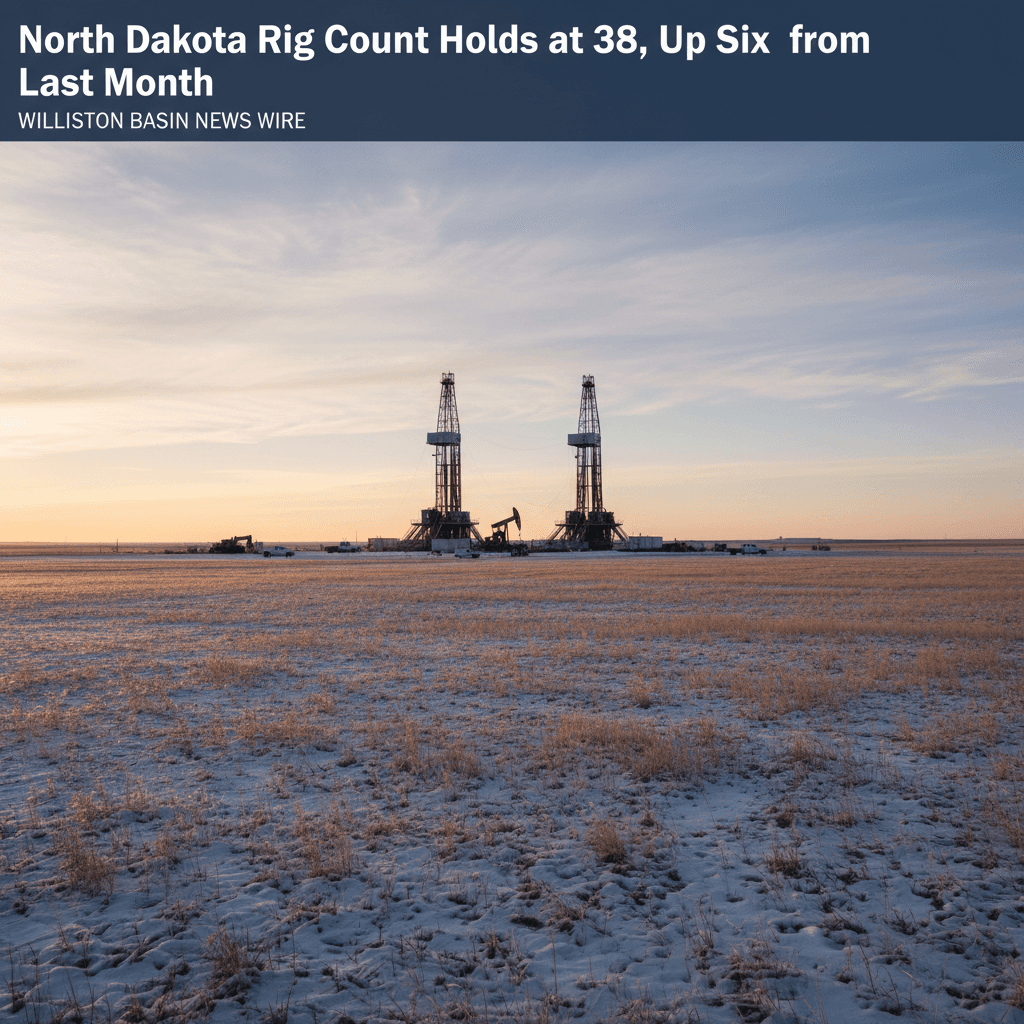
North Dakota's active drilling rig count held steady at 38 on Wednesday, October 21, according to live rig data from Bakken Wire. The total showed no change from the previous day, with no new rigs added, none removed, and none reporting a change in location.
The current count represents an increase of three rigs from one week ago, when the state reported 35 active rigs on October 14. Compared to one month ago, the activity level has risen more significantly. On September 21, the active rig count stood at 32, meaning six rigs have been added over the past four weeks.
The sustained increase over the past month signals a continued commitment by operators to drilling programs in the Bakken formation and wider Williston Basin. Rig count is a key leading indicator of future oil production, as new wells take months to drill, complete, and bring online. A stable or rising count suggests operators are maintaining capital spending on development despite fluctuations in commodity prices.
The current level of 38 rigs, while up from recent lows, remains well below the historical peaks seen during previous boom cycles. It reflects a modern industry focused on capital discipline and efficiency, where operators aim to maximize output from each rig. The incremental gains over recent weeks may point to a measured response to supportive oil prices or the execution of planned drilling campaigns for the fourth quarter.
For service companies and mineral owners, the steady upward trend from last month is a positive signal for ongoing activity. More rigs running typically translates to more wells being drilled, supporting jobs across the oilfield supply chain and future royalty payments. The lack of day-to-day movement is normal, as rig contracts and moves are planned over longer periods.
The focus for Bakken operators remains on drilling in the core counties of McKenzie, Mountrail, Williams, and Dunn, where the highest-quality rock yields the best economic returns. The rig count will continue to be monitored as a barometer of industry health heading into the winter months, when operations can be challenged by North Dakota's harsh weather.
Source
Bakken Wire Live Rig Data, Historical Context Data