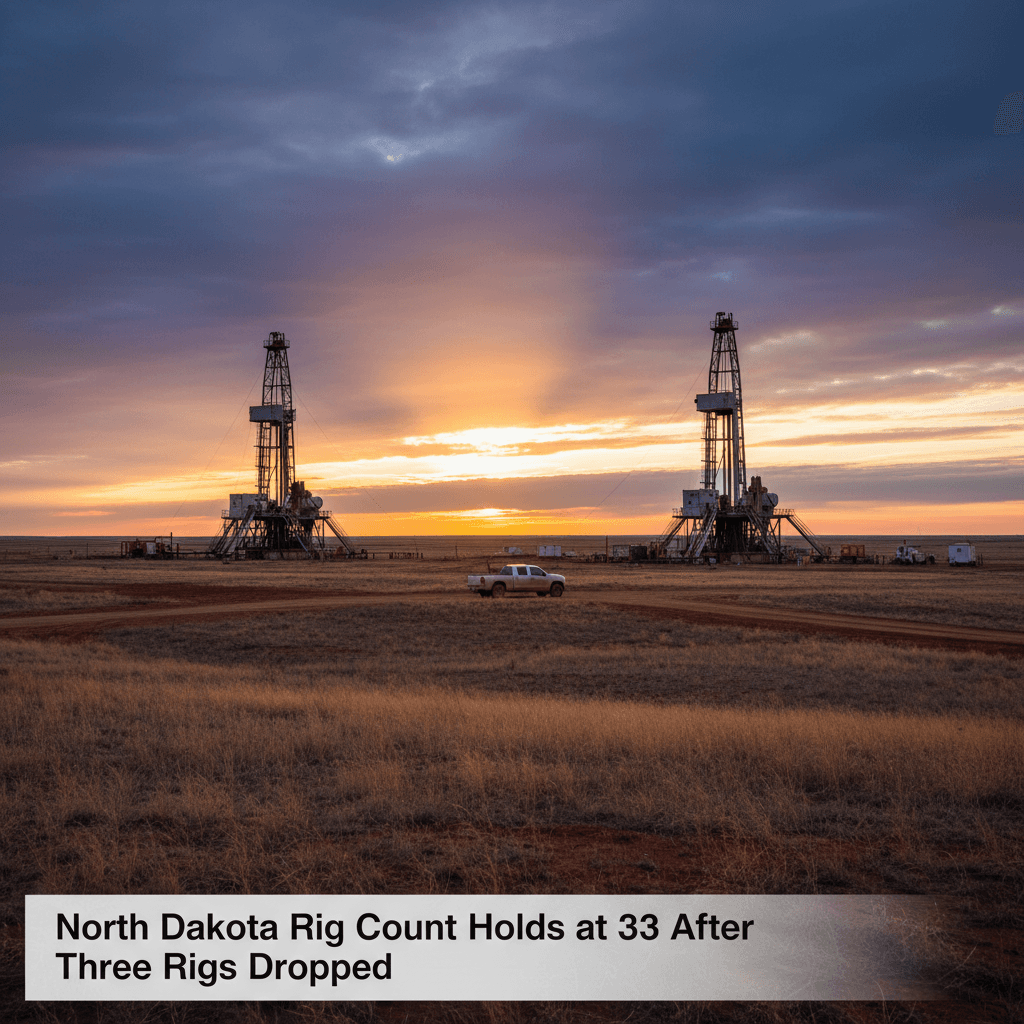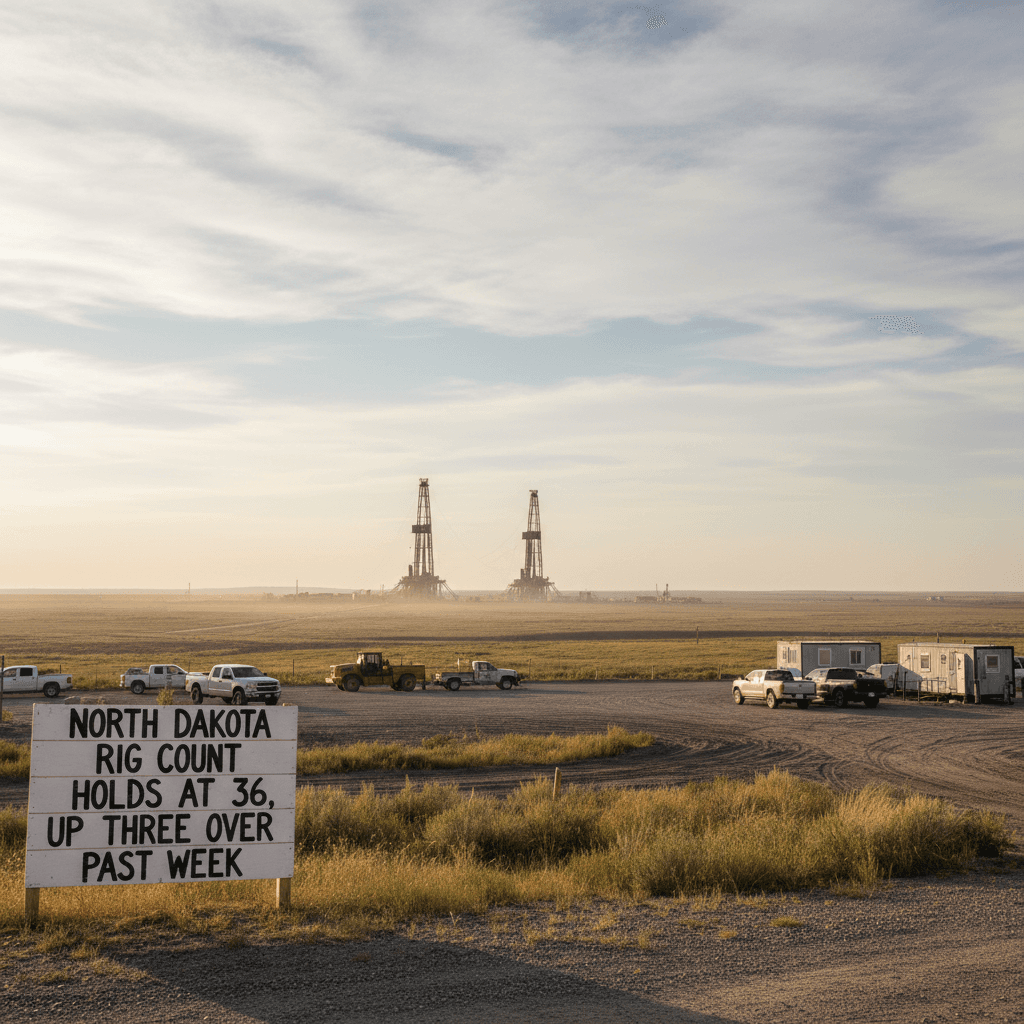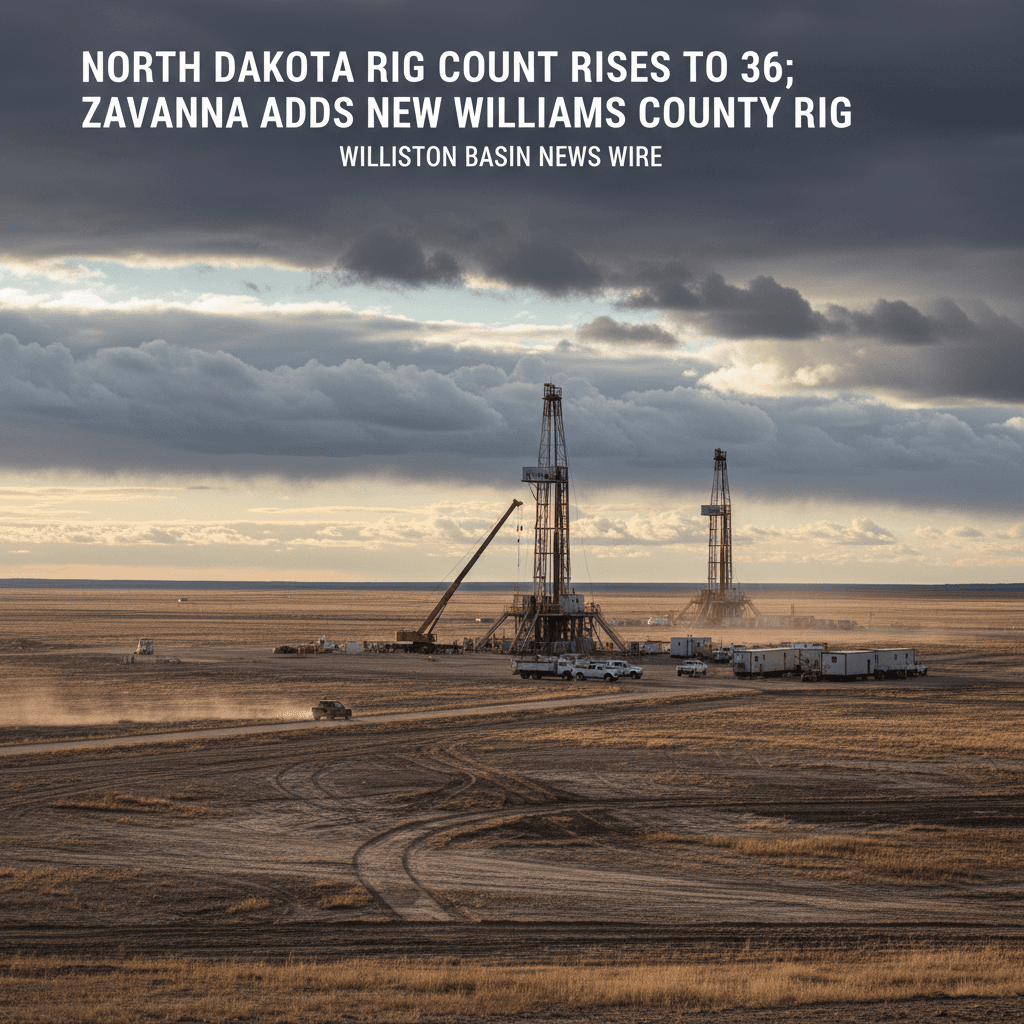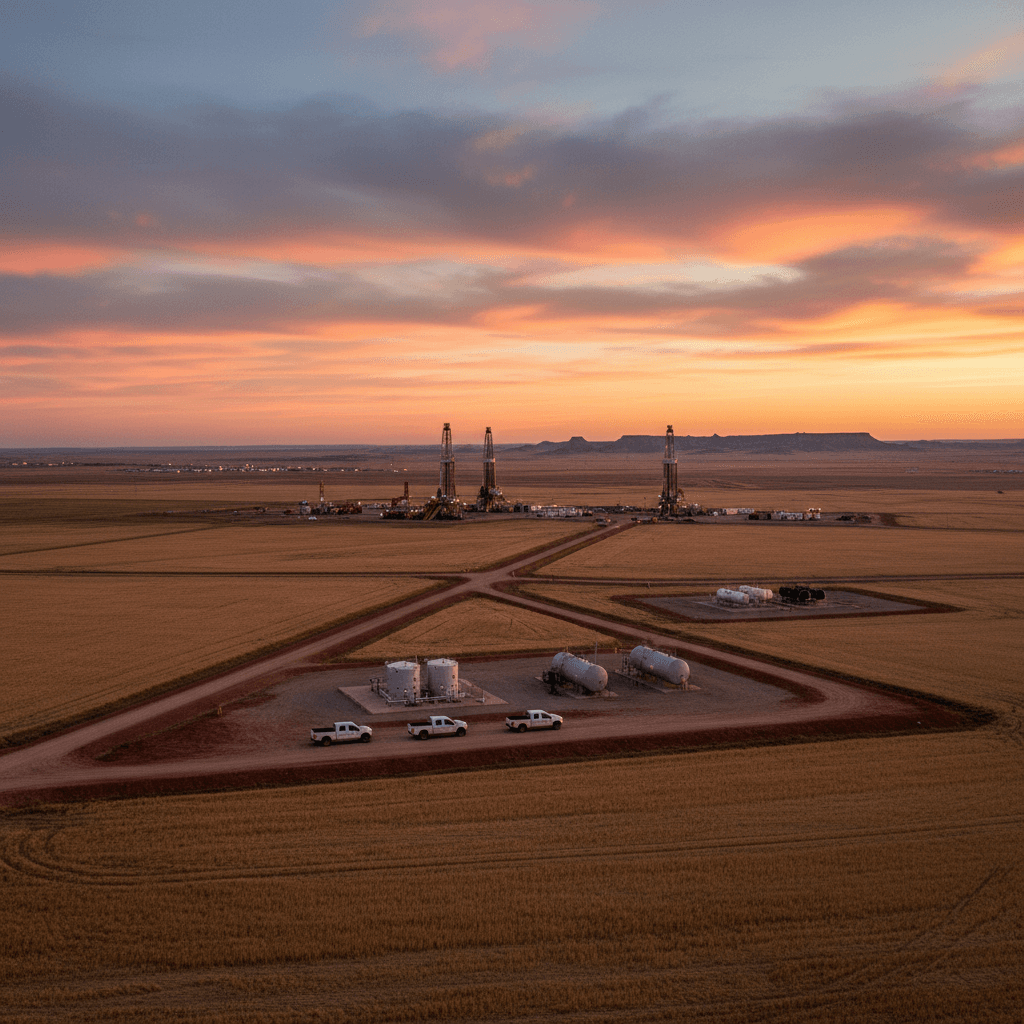
North Dakota Rig Count Holds Steady at 25
The state's active drilling fleet shows no daily movement, maintaining a level slightly below that of a month ago.
North Dakota's active drilling rig count held steady at 25 on Saturday, July 18, 2026, according to live data from Bakken Wire. There were no new rigs added, no rigs removed, and no rigs that moved location compared to the previous day's activity.
The current count of 25 rigs represents a decrease of one rig compared to one month ago, when 26 rigs were active on June 18, 2026. However, the count is up by one rig from the level seen one week ago on July 11, 2026, when 24 rigs were reported active.
The stability in the rig count reflects a period of measured capital discipline among operators in the Bakken formation. Rig activity is a leading indicator of future oil production, and a count in the mid-20s suggests a focus on maintaining core production levels from the most productive acreage rather than pursuing aggressive growth. This activity level is consistent with recent years, where operators have prioritized free cash flow generation and shareholder returns over rapid volume expansion.
The Williston Basin's rig count often serves as a barometer for operator sentiment, balancing commodity price signals with the need to hold leases by production. The current count indicates a stable, if cautious, operating environment. Major Bakken operators typically concentrate their drilling programs in the core counties of McKenzie, Mountrail, Williams, and Dunn, where well economics remain strongest.
With no rigs moving location reported today, it suggests a continuation of ongoing drilling programs without significant shifts in focus between field development areas. The rig fleet's consistency week-over-week provides a degree of predictability for oilfield service companies and local economies dependent on drilling activity.
The broader context of the North American rig market and global crude oil prices will continue to influence future decisions by Bakken operators on whether to adjust their drilling pace. For now, the steady count suggests a holding pattern as companies evaluate second-quarter earnings and plan for the latter half of the 2026 calendar year.
Source
Bakken Wire live rig data and historical context