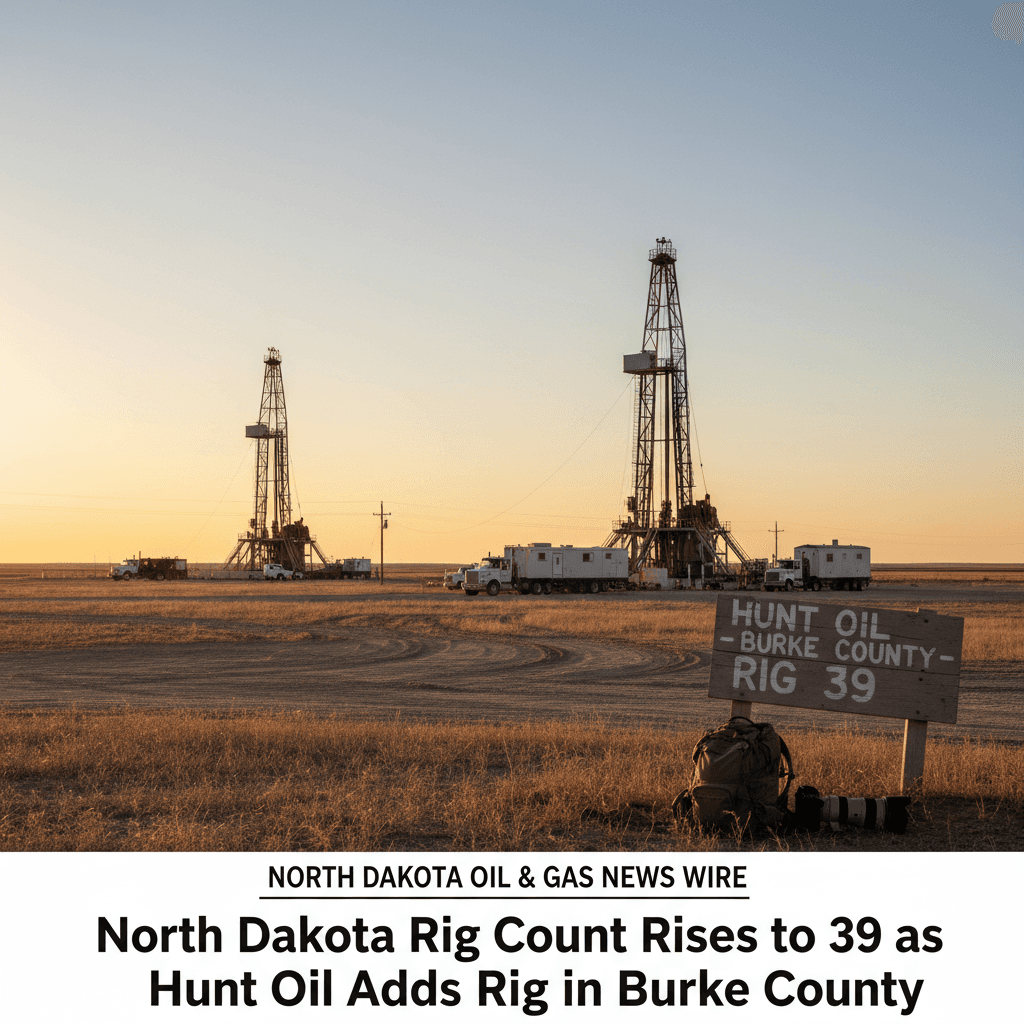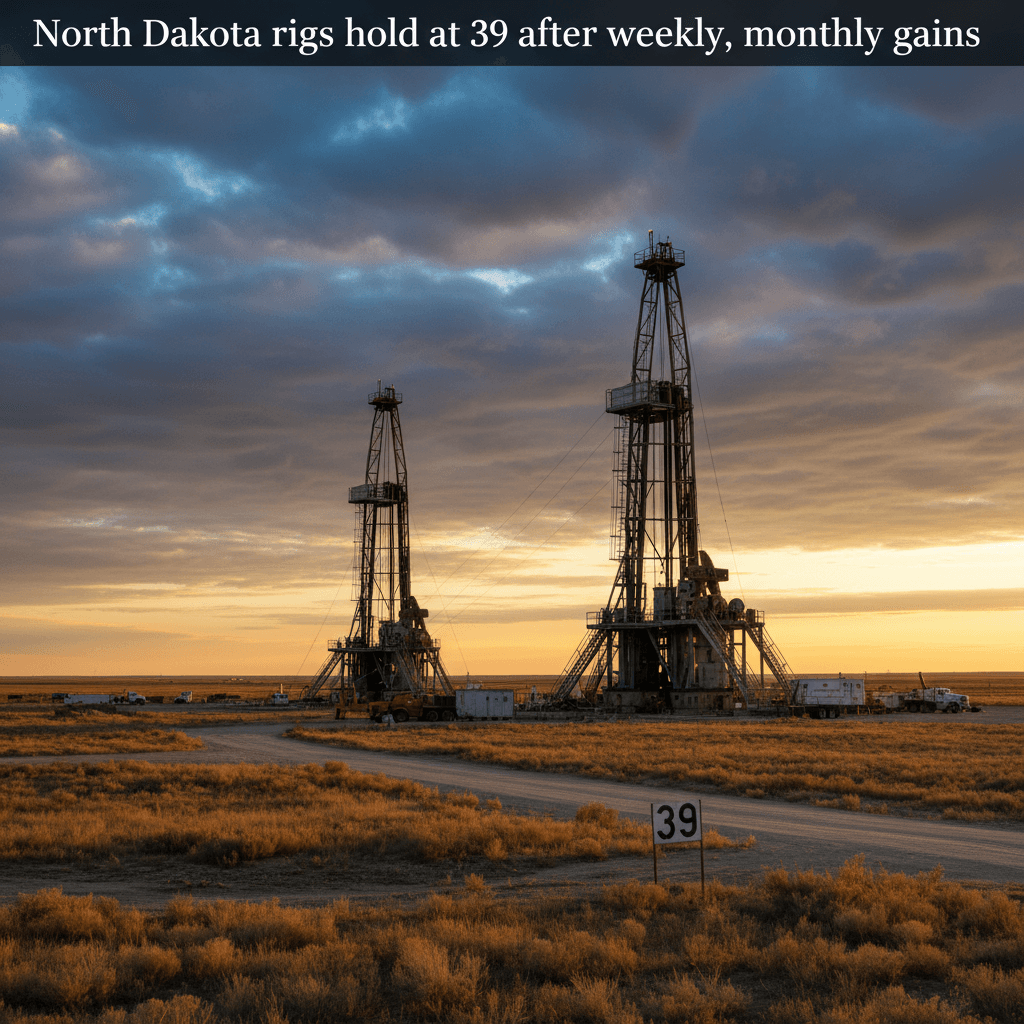
North Dakota rigs hold at 39 after weekly, monthly gains
Active rig count unchanged day-over-day but remains higher than late September and last week.
North Dakota’s active drilling rig count stood at 39 on Friday, according to the latest rig data, with no day-over-day movement reported.
The data showed zero new rigs, zero rigs removed and zero rigs that moved location. That left the count unchanged from the previous day, but not unchanged from recent weeks.
One week earlier, on Oct. 23, 2026, North Dakota had 37 active rigs. The current count is therefore two rigs higher than that weekly benchmark. One month earlier, on Sept. 30, 2026, the state had 33 active rigs, meaning the count has risen by six rigs over the past month.
The pattern suggests a drilling footprint that expanded since late September but has paused at its current level rather than continuing to add rigs in the most recent daily reporting period. The data do not identify specific rigs, operators, fields or well locations, so the movements cannot be tied to named projects.
For Bakken operators, rig counts are a simple but important gauge of how much field activity is underway. Each active rig represents a crew engaged in drilling operations, and changes in the count can influence demand for drilling services, pressure pumping, sand, water, logistics and other basin supply chains. The Bakken formation remains North Dakota’s primary oil-producing region, and the Williston Basin’s stacked pay intervals are a central focus of the state’s upstream activity.
For royalty owners, the six-rig increase over the month may point to continued interest in drilling new wells during the autumn. The flat Friday count, however, means that broader monthly gain was not extended on the day. Royalty owners often watch rig trends as an early indicator of future well additions, although rig counts alone do not show production volumes, completion schedules or the mix of drilling and completion activity.
The unchanged day-over-day figure also highlights the difference between daily volatility and longer-term trends. A single day with no new rigs, no removals and no reported moves can look quiet, even when the basin has added several rigs over a month. The weekly comparison shows the count has moved upward since Oct. 23, while the monthly comparison shows the largest change over the period examined.
The 39-rig level is the latest benchmark as October ends. It follows the 37-rig count recorded on Oct. 23 and the 33-rig count recorded on Sept. 30. Those comparisons show that the basin’s drilling footprint has expanded over the past month, while Friday’s data show no immediate daily movement.
The latest data show a basin that has added rigs since the end of September but has not added any in the most recent daily update. The flat day-over-day count leaves the current rig level unchanged while preserving the weekly and monthly gains.
Source
Bakken Wire live rig data