Oil, Gas Prices Fall as Supply Outweighs Summer Heat-Driven Demand
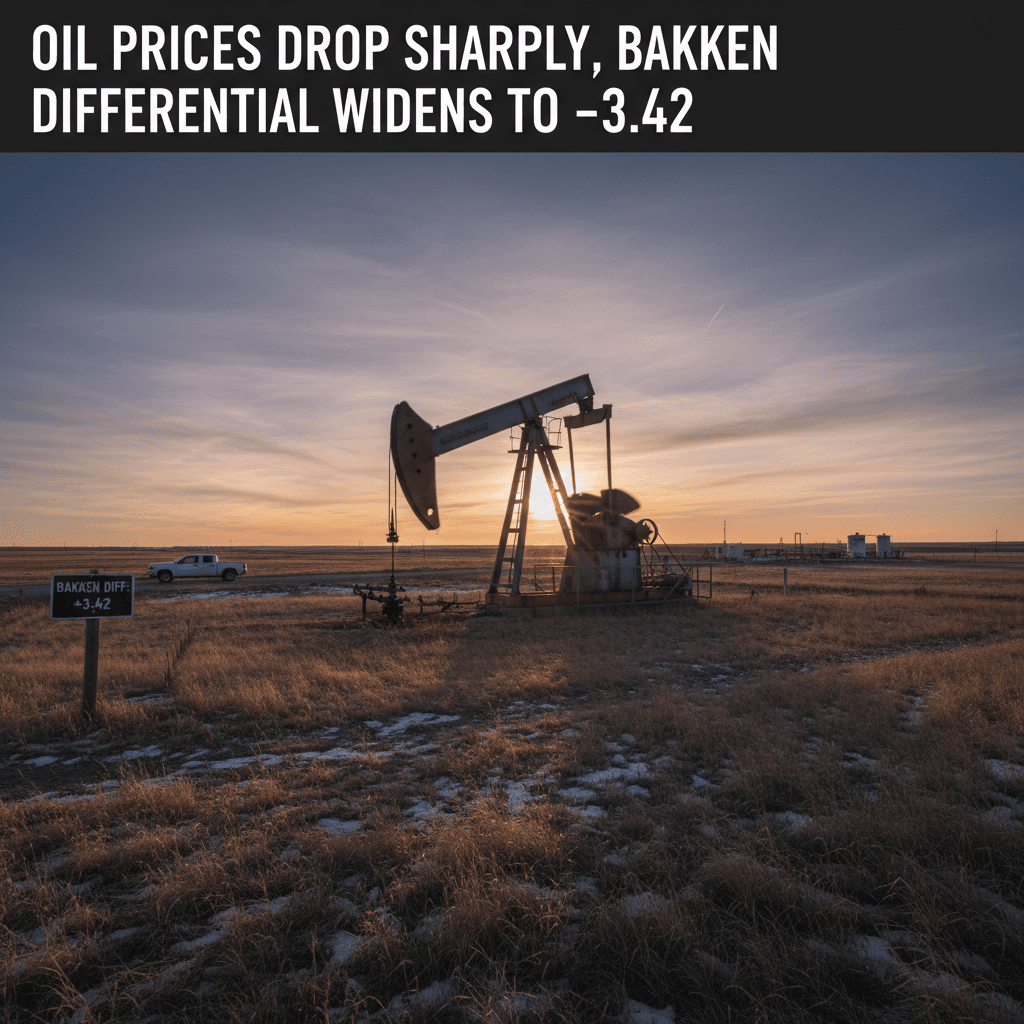
WTI crude dropped over 2% to $92.41, while natural gas and Bakken crude differentials also declined amid robust production and storage.
Oil prices fell sharply on Friday, with North Dakota's key benchmark losing ground. West Texas Intermediate crude closed at $92.41 per barrel, a drop of $2.20 or 2.33%, according to live price data. Brent crude fell 2.76% to $97.45. The Bakken crude differential narrowed to a discount of $3.42 versus WTI.
The price drop comes despite a summer of record heat that boosted electricity demand for air conditioning. According to a report from OilPrice.com, the Lower 48 experienced its hottest July on record, with average temperatures reaching 77°F. This pushed natural gas-fired power generation higher, but failed to significantly lift prices.
Natural gas prices followed oil lower, falling $0.13 to $3.24 per MMBtu. The summer average for Henry Hub natural gas was $2.93 from June through August, which was 6% below the same period last year, OilPrice.com reported.
Increased renewable energy generation and robust natural gas supply largely offset the heat-driven demand. Solar generation increased by an estimated 19.4 billion kilowatt-hours this summer compared to 2025, while wind added another 9.3 BkWh, according to data from the Energy Information Administration cited by OilPrice.com. The combined increase from wind and solar was nearly four times the 7.5 BkWh increase from natural gas-fired generation.
U.S. dry natural gas production also ran ahead of last year, averaging 2.7 billion cubic feet per day more from June through August, a 2% increase. The Energy Information Administration expects dry gas production to average a record 111.2 Bcf/d for all of 2026.
Strong storage levels further pressured the market. Working gas inventories entered the injection season 4% above the five-year average and continued to build, with the EIA projecting a storage level of 3.985 trillion cubic feet by October's end, about 5% above average.
For Bakken operators, the lower crude price and persistent differential represent a tightening of cash flow margins. The decline in natural gas prices also reduces the value of associated gas produced from the region's oil wells. The market dynamics underscore that even significant weather-related demand can be overwhelmed by ample supply from both traditional and renewable sources, keeping a lid on hydrocarbon prices.
Source
Live price data, OilPrice.com report citing NOAA and EIA data