WTI Crude--
Brent Crude--
Natural Gas--
ND Rig Count--
WTI Crude--
Brent Crude--
Natural Gas--
ND Rig Count--
Oil Prices Drop Sharply, Bakken Differential Widens to -$3.42 - Bakken Wire
Oil Prices

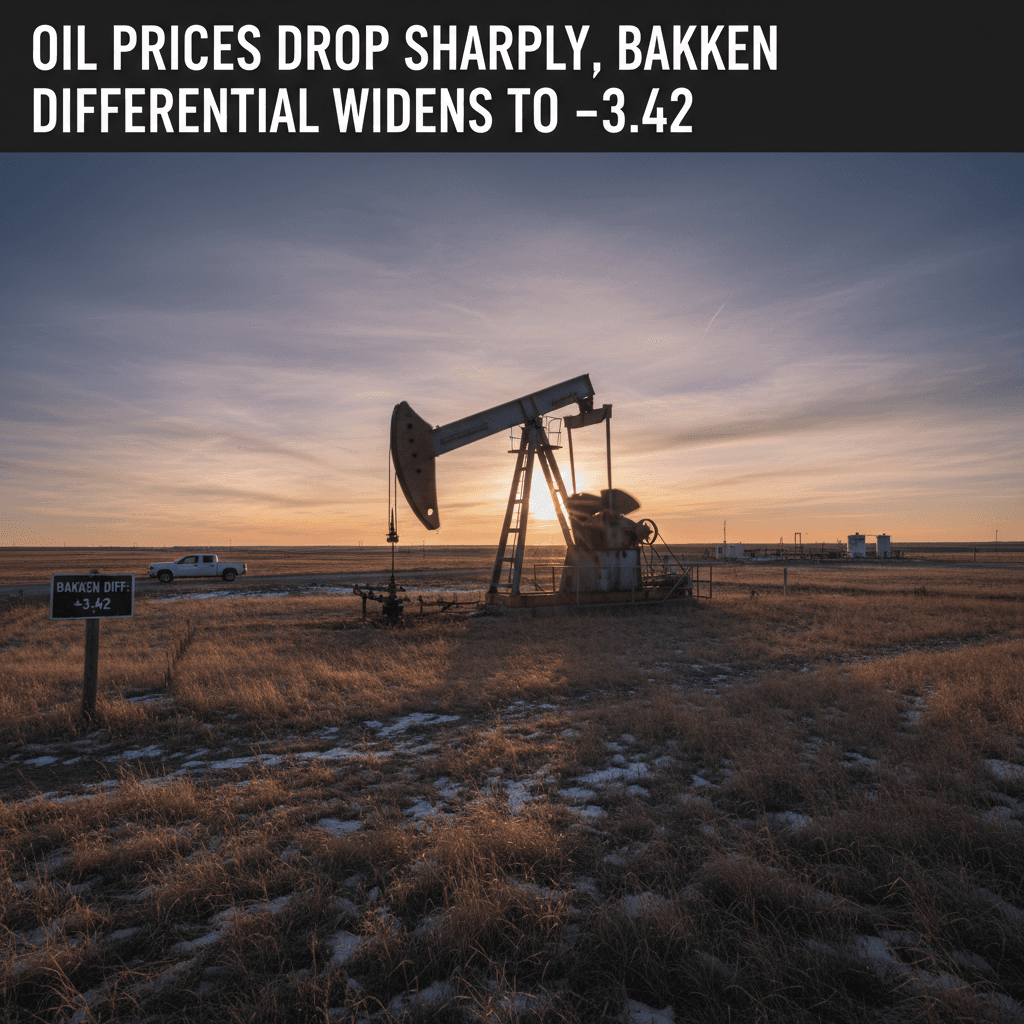
Oil Prices Drop Sharply, Bakken Differential Widens to -$3.42

WTI falls 2.8% to $91.96 amid European demand concerns, while Bakken crude trades at a wider discount.

Bakken Wire Staff·🔆Midday Wire·

Oil prices fell sharply in midday trading Friday, with West Texas Intermediate (WTI) crude dropping $2.65 to settle at $91.96 per barrel, a decline of 2.8%. Brent crude fell $3.17 to $97.05, according to live price data. The price for Bakken crude at the Clearbrook, Minnesota, hub traded at a discount of $3.42 per barrel versus WTI.

The midday sell-off coincides with growing concerns over European fuel demand and refining disruptions. According to a report from OilPrice.com, Italy’s government is summoning refining executives for an emergency meeting on October 8 to discuss boosting diesel and gasoline output as consumer prices soar. The average price of gasoline in Italy has hit the equivalent of nearly $10 per gallon, with diesel prices even higher.

The European fuel crisis is being driven by a perfect storm of supply constraints. OilPrice.com reported that refinery capacity is constrained in the Middle East due to Iranian strikes on regional refineries and restricted fuel flows through the Strait of Hormuz. Simultaneously, Ukrainian drone strikes have severely restricted refining capacity in Russia, which has banned diesel exports at least through the end of September and is likely to extend the ban.

For Bakken operators, the immediate impact is a weaker realized price. With the Bakken differential widening to -$3.42, the wellhead price for a barrel of Bakken crude is effectively below $88.54 based on the midday WTI price. This compression in margins comes despite the underlying global crude market remaining tight, as evidenced by Brent holding above $97.

The European situation presents a mixed signal. Record-high prices at the pump are beginning to crush demand, with the OilPrice.com report noting a 52.2% year-over-year surge in battery electric vehicle sales in Europe for August as drivers shift away from expensive gasoline and diesel. This nascent demand destruction may be contributing to the downward pressure on crude benchmarks today.

Natural gas prices also declined, falling $0.17 to $3.20 per MMBtu.

Looking ahead, Bakken producers will watch whether the European refining crunch and corresponding consumer response mark a temporary setback or the beginning of a more significant demand slowdown. The upcoming Italian government meeting with refiners underscores the political pressure mounting to alleviate the crisis, which could lead to policy interventions affecting global fuel trade flows and, ultimately, crude pricing.

Source

Live Price Data, OilPrice.com
wtibrentbakken differentialoil pricesrefiningeuropeitalynatural gas

Share this article

Related Articles

Oil Prices Edge Higher; Bakken Differential Holds Steady - Bakken Wire
Oil Prices

Oil Prices Edge Higher; Bakken Differential Holds Steady

Oil prices climbed moderately in midday trading Sunday, with global benchmark Brent crude holding above $104 per barrel. West Texas Intermediate (WTI) crude rose 39 cents, or 0.39%, to trade at $91.85. Brent crude gained 44 cents, or 0.42%, to reach $104.72, according to live price data. The price support continues to be driven by heightened geopolitical risks in key producing regions and ongoing supply discipline from major exporters. These factors are providing a floor under the market despite concerns over global economic growth. The sustained premium of Brent over WTI reflects tighter physical supplies in the Atlantic Basin and continued strong demand for waterborne crude. For Bakken producers, the local price benchmark remains directly tied to WTI. The Bakken differential—the discount at which Bakken crude trades compared to the WTI benchmark—was recorded at -$3.42. This means Bakken crude is priced at approximately $88.43 per barrel. A stable, narrow differential...

🔆Midday Wire·Oct 11
Oil Prices Edge Higher as U.S. Crude Inventories Tighten - Bakken Wire
Oil Prices

Oil Prices Edge Higher as U.S. Crude Inventories Tighten

Oil prices gained ground in early trading Sunday, with global benchmark Brent Crude holding above $104 per barrel. West Texas Intermediate (WTI) crude rose 0.39% to $91.85, while Brent increased 0.42% to $104.72, according to live price data. The price support follows a reported drawdown in U.S. commercial crude inventories last week. According to Rigzone, citing Energy Information Administration (EIA) data, commercial crude oil stocks, excluding the Strategic Petroleum Reserve, fell to 424.134 million barrels for the week ending October 2. This represents a decline of over 3 million barrels from the prior week. For Bakken producers, the price of crude at the wellhead is directly influenced by the Bakken differential to WTI. The current differential stands at -$3.42 per barrel versus the WTI benchmark. This means Bakken crude is priced at approximately $88.43 per barrel, based on today's WTI settlement. The tightening U.S. supply picture, as indicated by the...

☀️Morning Wire·Oct 11
Oil Prices Gain as Brent Surpasses $104, Bakken Discount Narrows - Bakken Wire
Oil Prices

Oil Prices Gain as Brent Surpasses $104, Bakken Discount Narrows

Oil prices posted modest gains in weekend trading on October 10, 2026, with global benchmark Brent crude holding above the $104 per barrel mark. West Texas Intermediate (WTI) crude traded at $91.85, a gain of $0.36 or 0.39% from its previous close. Brent crude advanced by $0.44 to settle at $104.72, according to live price data. The price for natural gas also moved higher, adding $0.05 to reach $3.22 per MMBtu. The Bakken crude differential, which represents the discount at which North Dakota's light sweet crude trades versus WTI, was recorded at -$3.42 per barrel. The sustained strength in Brent prices, which maintains a premium of nearly $13 over WTI, continues to support the international crude complex. This spread often influences the pricing and export viability of Bakken crude, which competes in global markets. For Bakken operators, the relatively narrow differential of just over $3 below WTI is a positive...

🌅Afternoon Wire·Oct 10