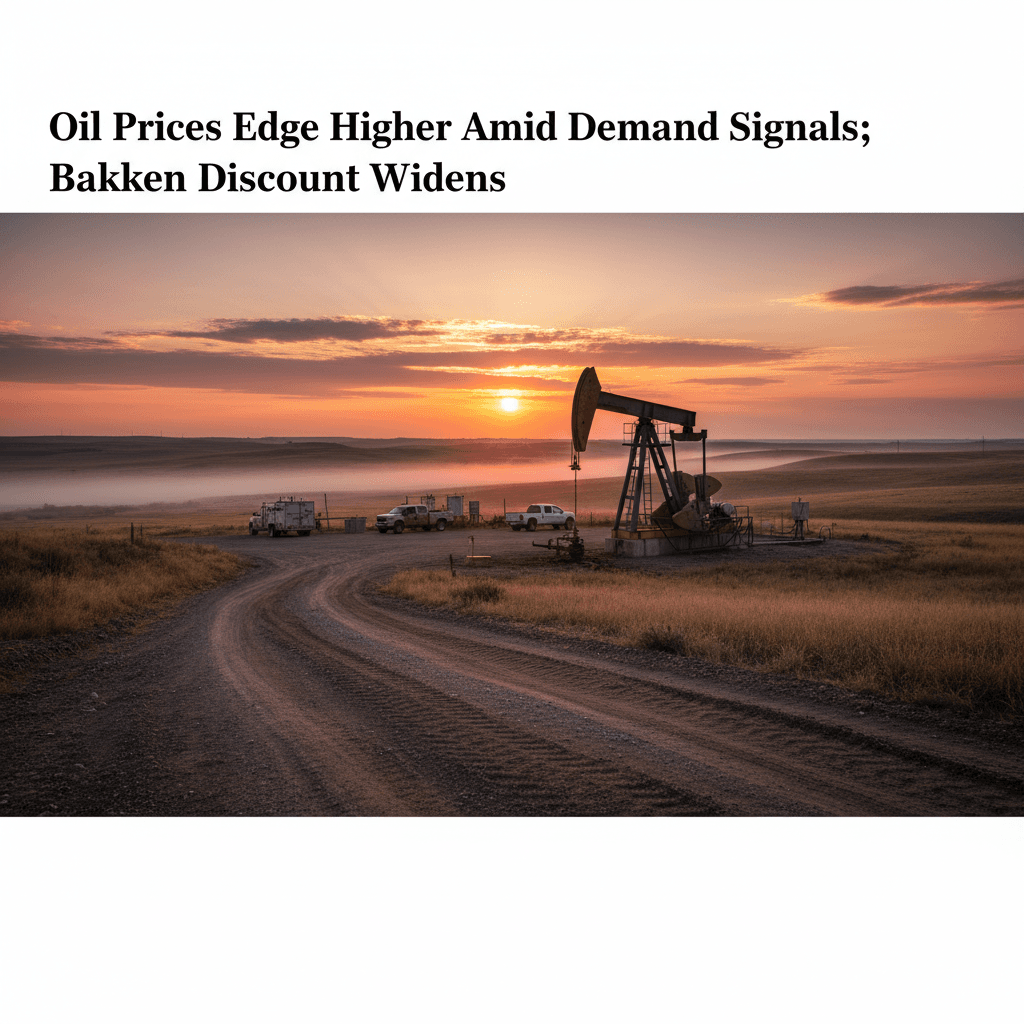
Oil Prices Edge Higher Amid Demand Signals; Bakken Discount Widens
WTI and Brent crude gained ground Tuesday, but the Bakken differential widened to $3.42 below WTI as Chinese buying patterns shift.
Oil prices posted modest gains on Tuesday, with global benchmarks lifted by ongoing demand signals. West Texas Intermediate (WTI) crude settled at $89.94 per barrel, a gain of $0.51 or 0.57%. The international benchmark Brent crude rose to $101.21, up $0.89 or 0.89%, according to live price data.
The price movement comes as market participants assess global supply and demand balances. A key development influencing crude flows is a shift in buying patterns from a major consuming nation. According to a report from Rigzone, China's independent refiners are turning to Iraqi crude. This shift in procurement can affect the relative value of different crude grades worldwide, including those produced in North Dakota.
For Bakken operators, the local price benchmark showed a widening discount. The Bakken differential was reported at $3.42 below the WTI price on Tuesday. This means Bakken crude is priced at approximately $86.52 per barrel at the wellhead, before further transportation costs. A wider differential can pressure netbacks for producers in the play.
Natural gas prices also saw an increase, with the benchmark rising $0.06 to $3.12 per MMBtu. This provides some support for operators with significant gas production in the Bakken, where associated gas is a common byproduct of oil drilling.
The steady price environment above $85 for WTI continues to provide a supportive backdrop for drilling and completion activity in the Williston Basin. However, the widening differential highlights the importance of market access and the competitiveness of Bakken crude on the global stage. Changes in demand from key importers like China can influence which crude streams are most sought after.
The premium for Brent crude over WTI remained substantial at over $11 per barrel, reflecting different market dynamics and tighter supplies in the Atlantic Basin. This spread can influence export economics for U.S. producers.
Source
Live price data; Rigzone report published October 6, 2026.