Oil Prices Edge Higher Amid Supply Fears; Bakken Discount Holds
WTI gains slightly as tensions in Libya and Iraq threaten Mediterranean supply, while Chinese buying provides underlying support.
Crude oil futures posted modest gains in midday trading Tuesday, with Brent crude rising above $87 per barrel as fresh geopolitical tensions provided a floor under prices. According to live price data, West Texas Intermediate (WTI) was trading at $80.36 per barrel, up $0.19, while Brent crude rose $0.43 to $87.11. The discount for Bakken crude versus the WTI benchmark held at $3.42.
The primary upward pressure came from escalating risks to oil supply in the Mediterranean, according to a report from OilPrice.com. The source indicated that sentiment is the weakest since late August, with Brent struggling to break above $90, but trading has turned volatile. Libya appears on the verge of renewed civil strife, while Iraq's federal government has ordered a surprise takeover of Kurdish-controlled oilfields and exports—a move rejected by Kurdish leaders.
These developments threaten fresh disruptions in a region already seen as fragile, the report stated. Meanwhile, underlying demand support was noted from Asia. According to a summary from Rigzone, Chinese state-owned and independent refiners have boosted oil purchases this month to refill stockpiles, snapping up cut-price cargoes.
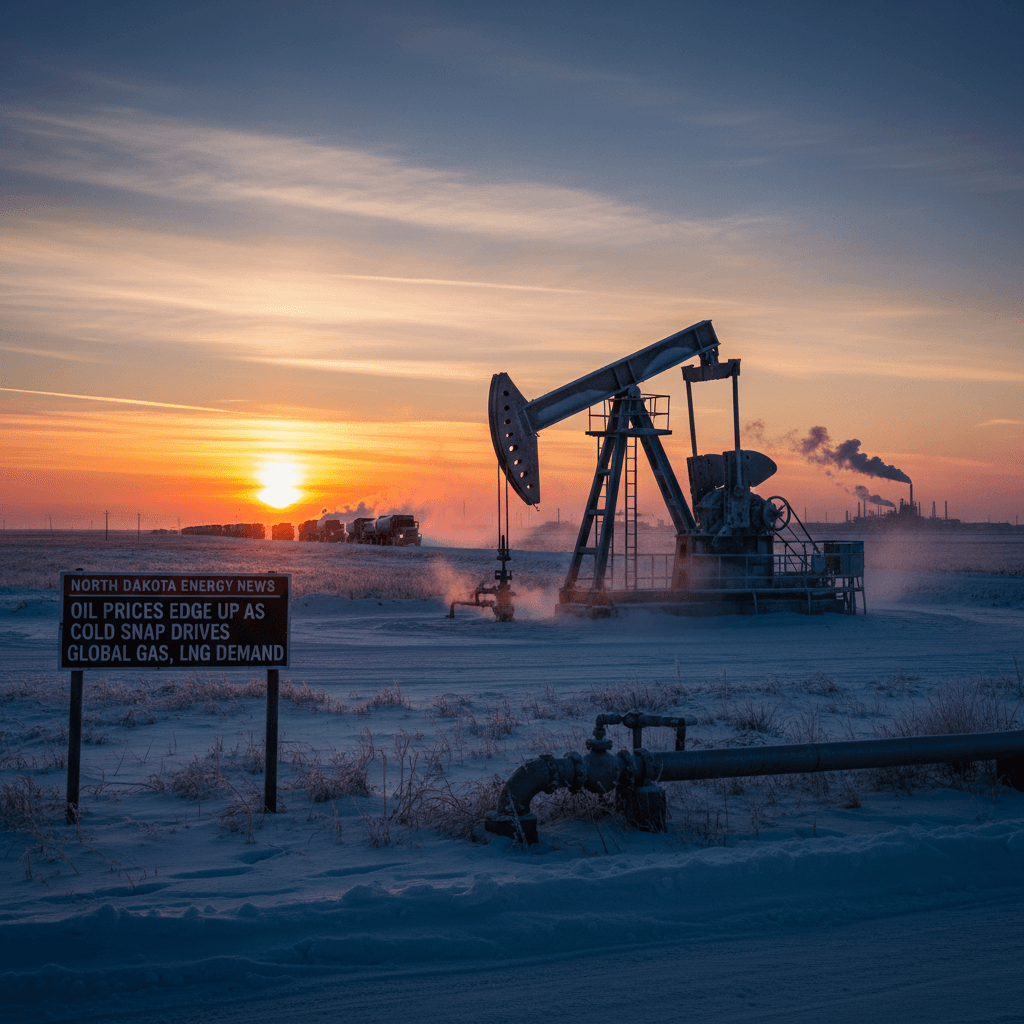
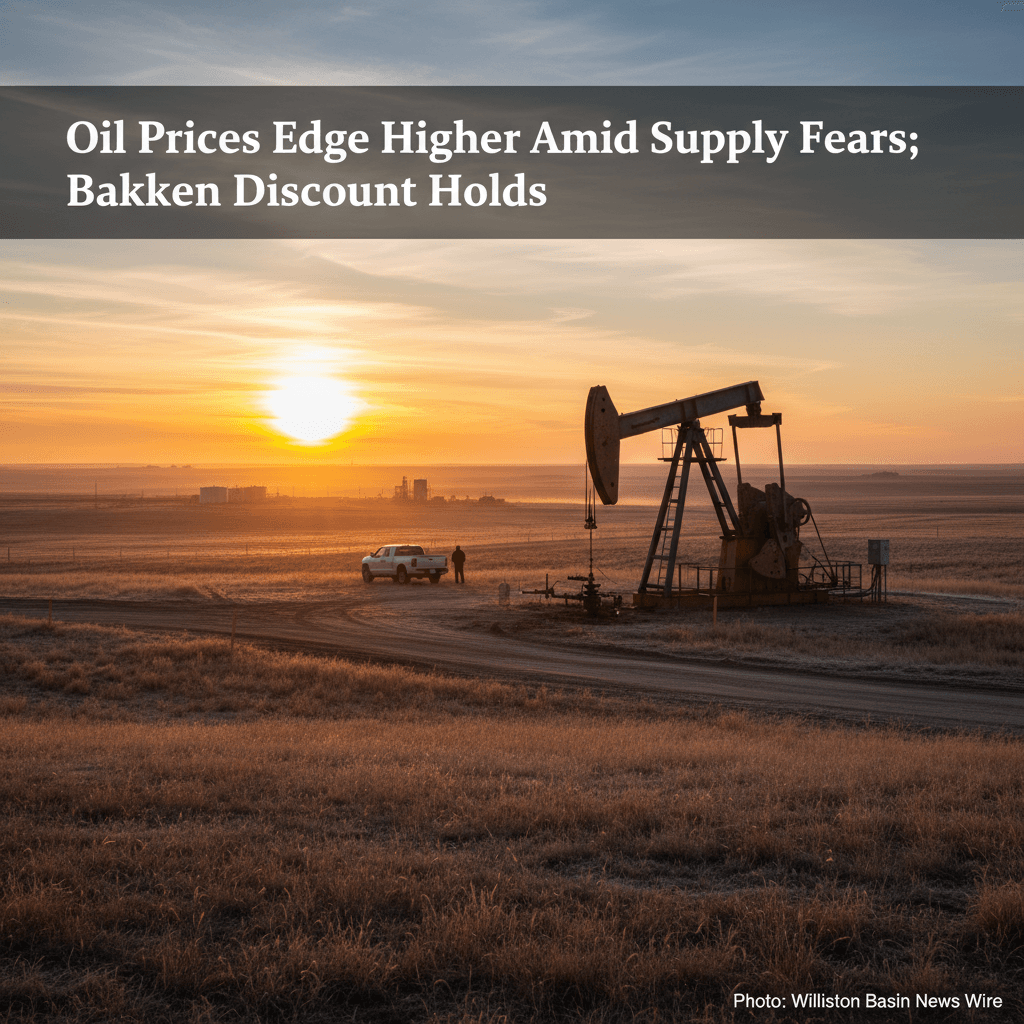
For Bakken operators, the steady differential near $3.50 below WTI maintains the region's competitive position for crude moving to market. The combination of stable pipeline takeaway capacity and a consistent price relationship to the benchmark supports predictable cash flows. The geopolitical premium in global prices, driven by events in Libya and Iraq, indirectly benefits North Dakota producers by supporting the overall price level, even as local crude trades at its typical discount.
In natural gas, U.S. prices showed strength, rising $0.21 to $3.73 per MMBtu. This move contrasts sharply with extreme volatility in other global markets. A separate OilPrice.com report detailed that European gas prices have surged 163% from October 2025 levels, with benchmark TTF futures hitting a four-year high last month. The report, citing the Gas Exporting Countries Forum (GECF), attributed the spike to supply constraints, colder weather, and low storage levels. As of November 23, EU gas storage was just 68.9% full, well below the five-year average of 89%.
The report also noted a related cold snap in Japan, pushing power prices to peaks not seen since 2022 and forcing LNG buyers to scramble for prompt shipments. While these dynamics currently have a limited direct impact on the U.S. Henry Hub benchmark, they illustrate a tight global gas balance that could influence LNG export economics long-term.
For the near term, Bakken oil markets remain focused on the stability of the regional differential and the direction of WTI, which is being tugged between geopolitical supply fears and broader macroeconomic concerns keeping a lid on rallies above $90 for Brent.
Source
Live Price Data, OilPrice.com (November 24, 2026), Rigzone (November 24, 2026)