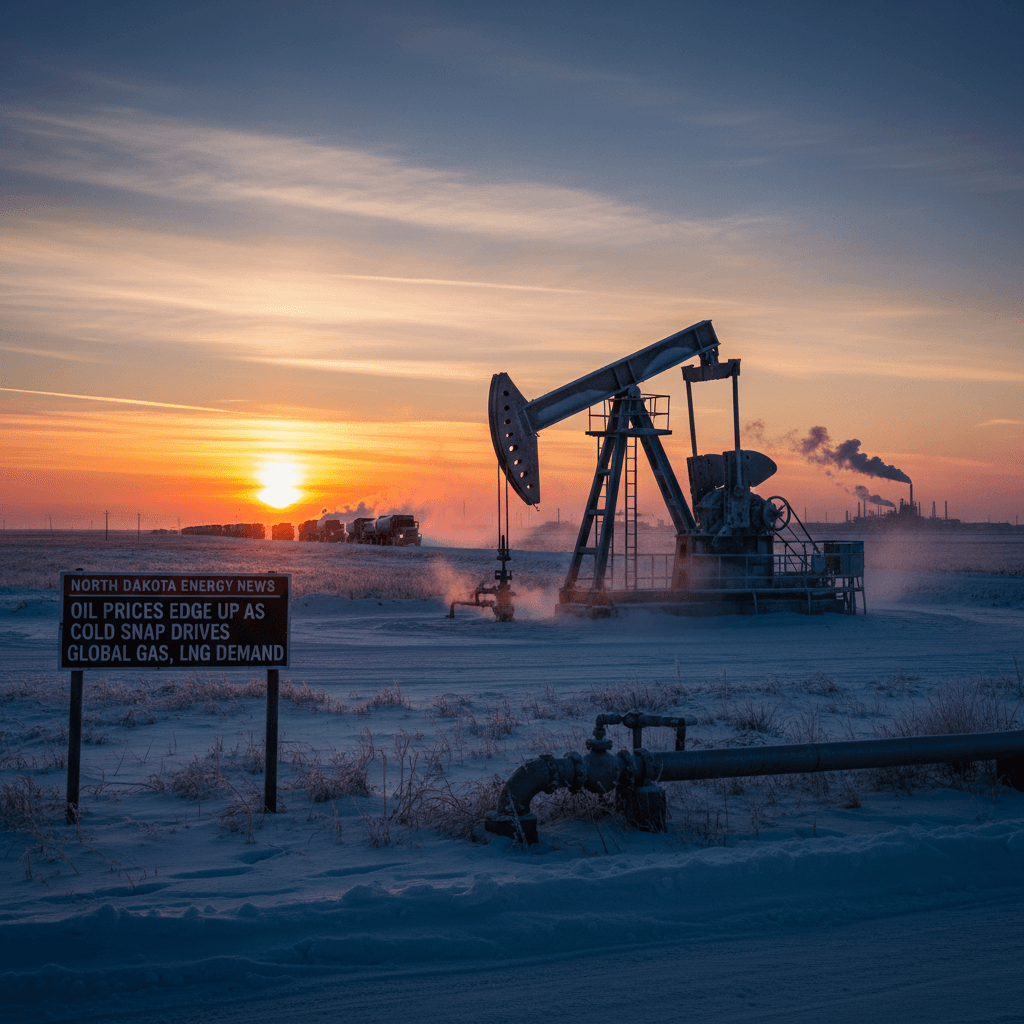
Oil Prices Edge Up as Cold Snap Drives Global Gas, LNG Demand
WTI crude holds above $80 as surging Asian and European natural gas prices and supply diversifications underpin energy markets.
Oil prices posted modest gains Tuesday morning, with global supply concerns and strong natural gas demand providing support. West Texas Intermediate (WTI) crude traded at $80.46 per barrel, up $0.29, while Brent crude rose $0.43 to $87.11, according to live price data. The Bakken crude differential was $3.42 below WTI. Natural gas prices also climbed, with the benchmark rising $0.08 to $3.60.
The gains come amid a significant surge in global natural gas demand driven by an early cold snap. In Europe, benchmark gas prices at the Dutch Title Transfer Facility (TTF) rose for a fourth consecutive session, topping $98.77 per megawatt-hour, according to OilPrice.com. European gas storage sites were only 68.9% full as of November 23, far below the five-year average of 89%, raising concerns that rapid withdrawals this week could deplete inventories ahead of peak winter demand.
Simultaneously in Asia, Japanese utilities are poised to ramp up spot purchases of liquefied natural gas (LNG) as surging electricity prices have made gas-fired power generation profitable for the first time since the Iran war began, OilPrice.com reported. Spot electricity prices in Japan hit their highest level since August 2022 on Monday. The benchmark price for spot LNG delivery into North Asia has tripled from a year ago to about $30 per million British thermal units (MMBtu).
This surge in global gas demand and prices supports broader energy market sentiment, which is also being shaped by continued supply chain adjustments. South Korea's Ministry of Trade, Industry and Resources stated Tuesday that it has secured crude oil supplies for November and December at 90% of last year's levels, despite disruptions from the Middle East crisis, according to OilPrice.com. Notably, the share of U.S. crude oil in South Korean imports topped 20% for the first time in April and has remained above that level since, as the country diversifies away from Middle Eastern suppliers.
For Bakken operators, the price environment remains constructive. WTI holding above $80 per barrel, combined with the ongoing diversification of Asian importers toward U.S. crude, provides a stable revenue outlook. The relatively narrow Bakken differential of -$3.42 vs. WTI suggests healthy regional demand and efficient takeaway capacity. Furthermore, the global scramble for natural gas, particularly in Asia, underscores the value of associated gas production in the Bakken, where gas capture and processing infrastructure continues to be a focus for operators and midstream companies.
Source
Live Price Data, OilPrice.com (Japan Poised to Ramp Up LNG Buying as Power Prices Surge, South Korea Says Its Crude Supply Is Stable Through the Winter, European Gas Prices Climb as Cold Snap Threatens Depleted Reserves)