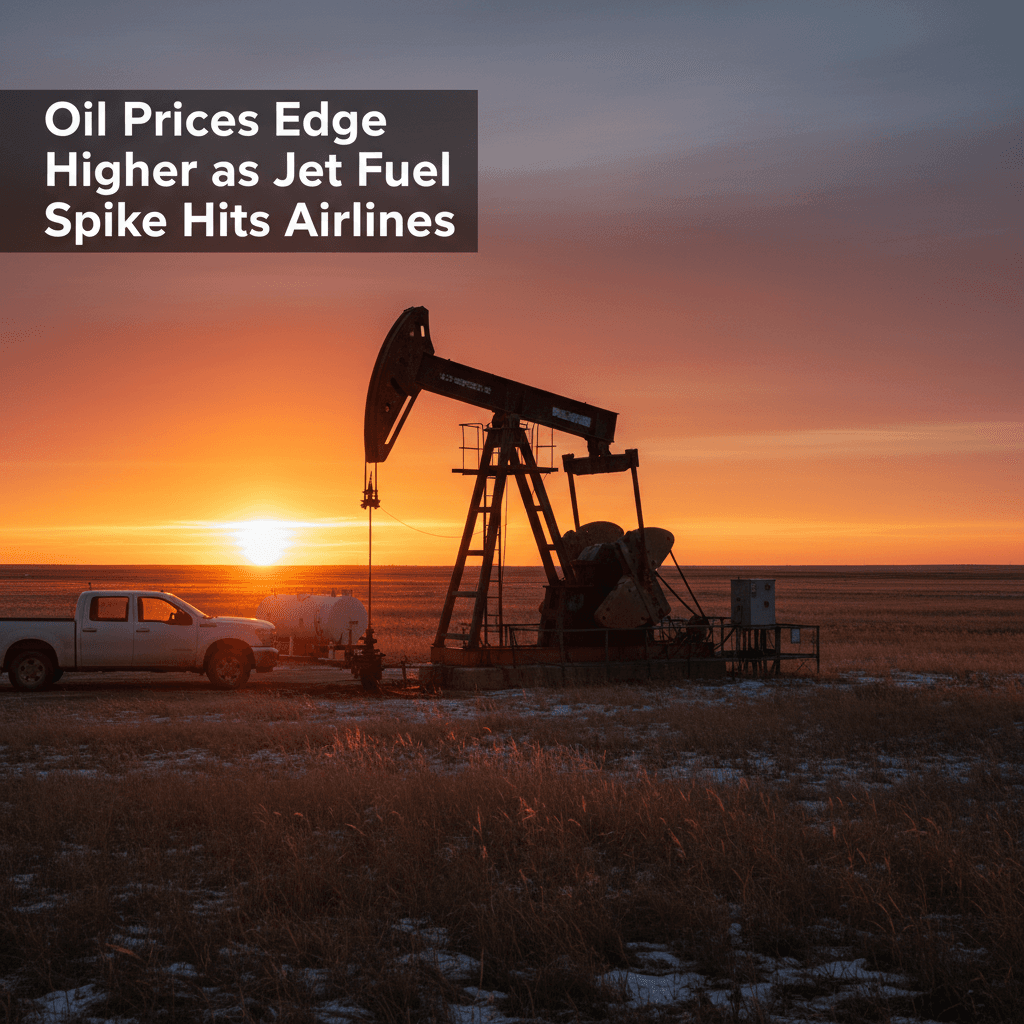
Oil Prices Edge Higher as Jet Fuel Spike Hits Airlines
WTI trades above $90; Bakken discount narrows as Middle East conflict continues to pressure global fuel supplies.
Oil prices gained ground on Wednesday, with global benchmark Brent crude approaching $96 per barrel amid ongoing supply concerns stemming from the conflict in the Middle East. West Texas Intermediate (WTI) rose 0.52% to $90.69, while Brent climbed 0.9% to $95.50, according to midday price data. The discount for Bakken crude versus WTI was $3.42.
The primary driver for sustained high oil prices remains the disruption to crude and product flows from the Middle East following the return of hostilities in mid-July, which shattered a brief U.S.-Iran diplomatic pause. According to a report from OilPrice.com, the closure of the Strait of Hormuz is creating a shortage in kerosene supply, leading to a significant spike in jet fuel prices.
This is having a direct and severe impact on the global airline industry. Ryanair, Europe's largest low-fare airline, warned on Wednesday that some less well-hedged competitors could struggle to survive the coming winter due to high fuel costs, according to OilPrice.com. The airline, which has hedged 80% of its fuel at $67 per barrel, said its remaining unhedged exposure is to jet fuel prices currently near $140 per barrel. In response, Ryanair cut its winter traffic target.
Major carriers are facing billions in additional costs. Lufthansa Group expects the jet fuel price surge to cost an extra $2 billion this year, while Air France-KLM anticipates a $2.4 billion jump in its fuel bill, OilPrice.com reported.
For Bakken operators, the elevated global crude price environment is supportive for wellhead economics. The narrowing Bakken differential to -$3.42 versus WTI indicates strong regional demand or improved takeaway capacity, allowing producers to capture more of the benchmark price. Sustained prices above $90 for WTI provide significant cash flow for drilling and completion activities in the Williston Basin.
Natural gas prices also saw a modest increase, rising $0.06 to $2.96 per MMBtu. While not a primary driver for most Bakken operators, who are primarily oil-directed, higher associated gas prices improve the overall revenue stream from each well.
The market continues to reflect a premium for geopolitical risk, with no immediate resolution in sight for the Hormuz crisis. This structural support for prices, coupled with strong refinery demand for distillates like jet fuel, creates a favorable backdrop for North Dakota's oil production sector, albeit one contributing to broader economic inflationary pressures.
Source
Live price data, OilPrice.com report dated September 2, 2026.