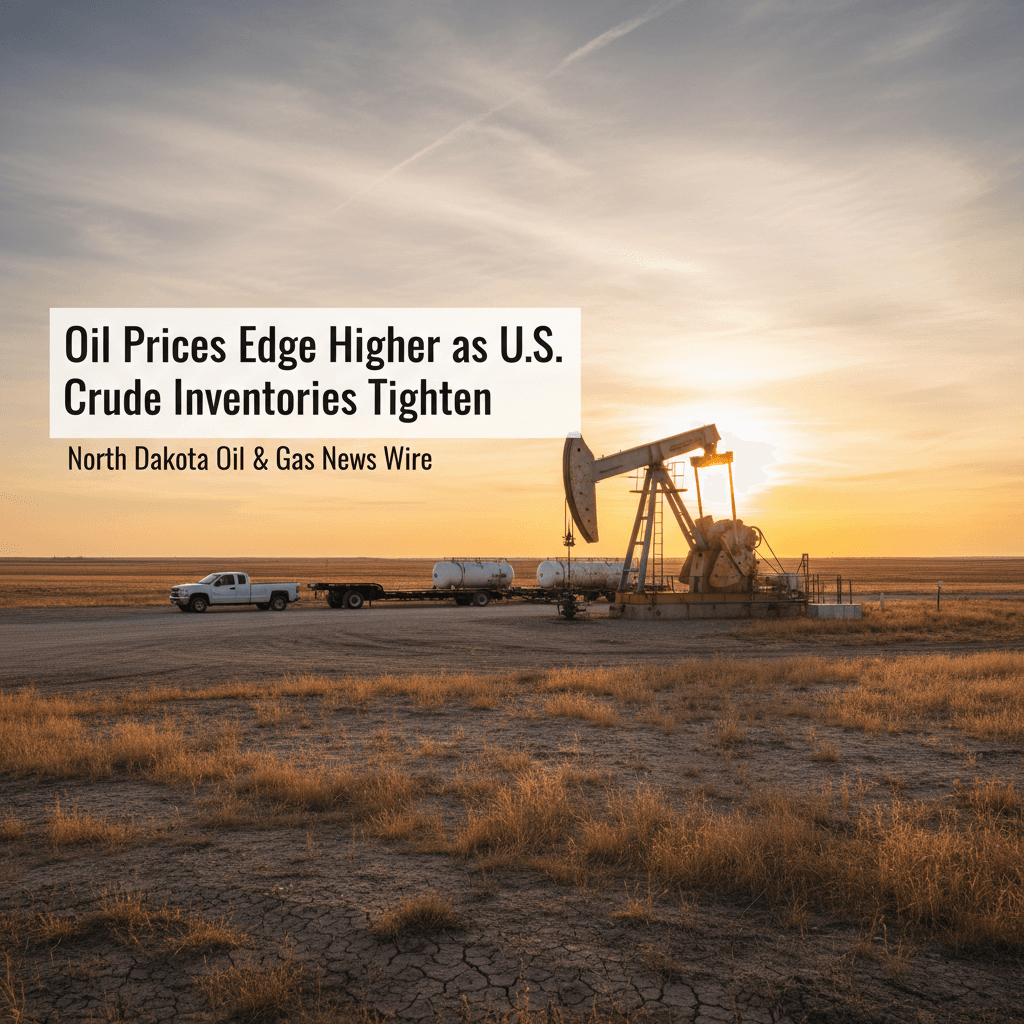
Oil Prices Edge Higher as U.S. Crude Inventories Tighten
WTI nears $92, Brent tops $104 amid stock draw, supporting Bakken operators with a differential of -$3.42.
Oil prices gained ground in early trading Sunday, with global benchmark Brent Crude holding above $104 per barrel. West Texas Intermediate (WTI) crude rose 0.39% to $91.85, while Brent increased 0.42% to $104.72, according to live price data.
The price support follows a reported drawdown in U.S. commercial crude inventories last week. According to Rigzone, citing Energy Information Administration (EIA) data, commercial crude oil stocks, excluding the Strategic Petroleum Reserve, fell to 424.134 million barrels for the week ending October 2. This represents a decline of over 3 million barrels from the prior week.
For Bakken producers, the price of crude at the wellhead is directly influenced by the Bakken differential to WTI. The current differential stands at -$3.42 per barrel versus the WTI benchmark. This means Bakken crude is priced at approximately $88.43 per barrel, based on today's WTI settlement.
The tightening U.S. supply picture, as indicated by the inventory draw, is a key factor underpinning current price strength. Lower stockpiles typically signal stronger demand or constrained supply, putting upward pressure on benchmark prices.
Sustained prices above $90 per barrel for WTI provide a robust economic environment for operators across the Williston Basin. At these levels, even with the regional discount, most drilling in the core Bakken formation remains highly profitable.
The strength in natural gas prices also offers a positive signal for producers, as associated gas is a significant byproduct of Bakken oil production. Natural gas prices were up $0.05 to $3.22 per MMBtu in Sunday's trading.
The significant premium for Brent Crude over WTI, now near $13 per barrel, continues to make U.S. crude, including Bakken barrels, competitively priced on the global export market. This differential supports the economics of shipping crude from North Dakota to coastal refineries and export terminals.
Market participants will be watching for the next official U.S. inventory report this week for confirmation of the supply trend. For North Dakota operators, the current price structure supports steady production and cash flow generation.
Source
Live Price Data, Rigzone (EIA inventory report for week ending October 2, 2026)