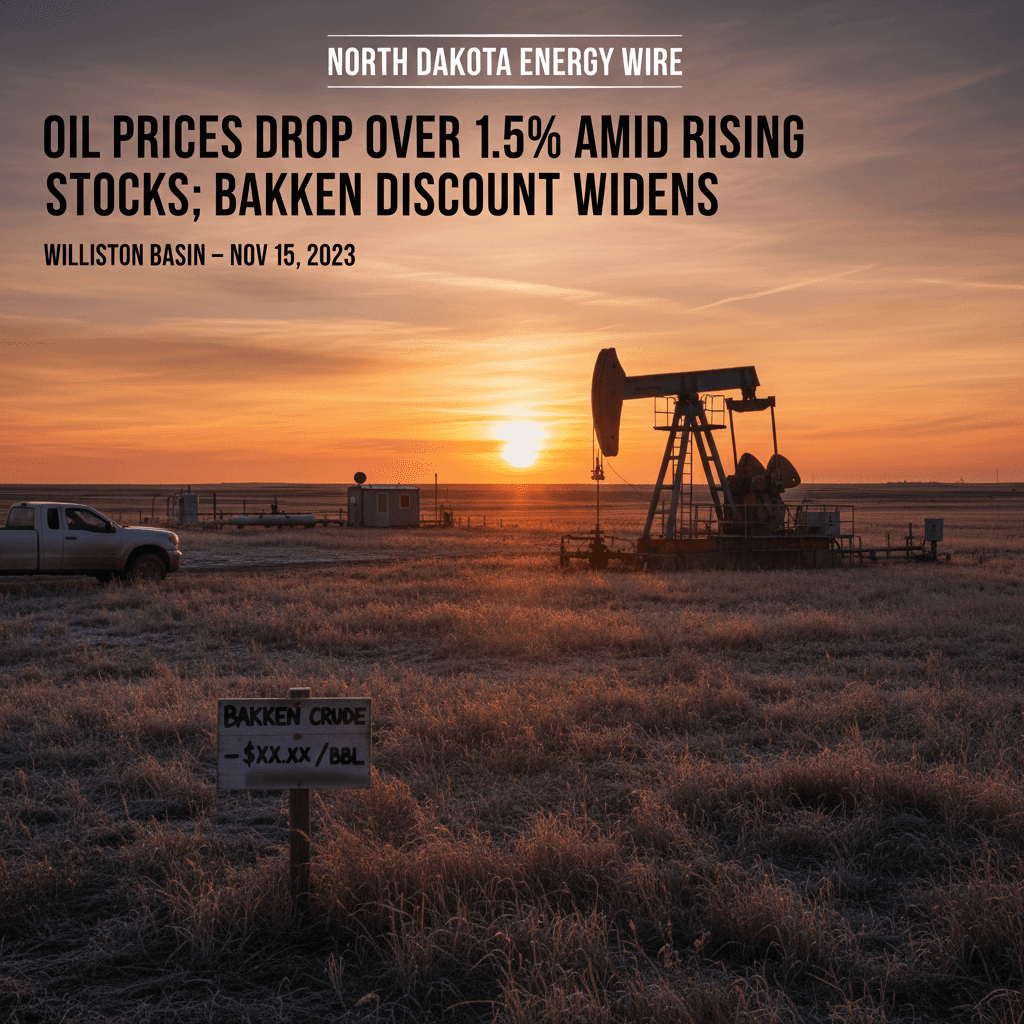
Oil Prices Drop Over 1.5% Amid Rising US Stocks; Bakken Discount Widens
WTI crude falls to $82.14 as domestic inventory build and easing sour crude premium pressure benchmarks, while European gas volatility highlights global energy uncertainty.
Front-month WTI crude oil prices fell 1.52% to $82.14 per barrel in Monday morning trading, a decline of $1.27. The international Brent benchmark followed, dropping 1.59% to $88.52. The price for Bakken crude at the Clearbrook, Minnesota, hub traded at a discount of $3.42 per barrel to WTI.
The decline follows a reported build in U.S. commercial crude inventories. According to Rigzone, citing the U.S. Energy Information Administration's latest weekly report, crude stocks, excluding the Strategic Petroleum Reserve, rose to 417.797 million barrels for the week ending November 13. The over 3-million-barrel weekly increase suggests ample domestic supply, weighing on prices.
Further pressure on the complex comes from the fading premium for sour crude grades. Rigzone separately reported that the "war premium" for U.S. sour crude has vanished as of November 20. This normalization removes a source of price support that had been in place, contributing to the broader market pullback.
While oil markets softened, global natural gas markets exhibited sharp volatility. According to OilPrice.com, European natural gas prices surged 8.6% on Monday as forecasts pointed to a looming cold snap. The benchmark TTF price rose to 96.075 euros per MWh, equal to $105.49 per MWh. Europe enters the heating season with its lowest gas storage levels in over a decade, with storage sites only 69.17% full as of Sunday, according to official data from Gas Infrastructure Europe cited in the report. The supply situation is set to tighten further with a ban on Russian gas imports effective in January.
For Bakken operators, the immediate price move is negative. The combination of lower outright WTI prices and a wider local differential of -$3.42 directly reduces the wellhead revenue for barrels sold today. The inventory build indicates robust production is meeting or exceeding current refinery and export demand, a fundamental headwind for prices. However, the extreme volatility in global gas markets, driven by geopolitical disruptions and weather, underscores the interconnected and unstable nature of the broader energy complex that can quickly shift sentiment.
The current price environment offers a mixed picture: sufficient near-term oil supply is pressuring benchmarks, but underlying vulnerabilities in global energy supply, particularly for natural gas, remain a significant wild card for the winter ahead.
Source
Live price data, OilPrice.com (November 23, 2026), Rigzone (November 20, 2026)