Oil Prices Jump Over 2% as Mideast Ceasefire Collapses, Straining Supply
WTI and Brent crude surge on renewed Hormuz disruptions and Russian refinery attacks, boosting Bakken operator margins.
Global oil prices rallied sharply on Tuesday, with Brent crude surging over 2.5%, as the collapse of a U.S.-Iran ceasefire reignited supply fears centered on the critical Strait of Hormuz. The price move directly benefits Bakken shale producers, who are seeing stronger realized prices for their crude.
West Texas Intermediate (WTI) crude settled at $79.59 per barrel, up $1.45 or 1.86% for the session. The international benchmark, Brent crude, rose more sharply to $85.40, a gain of $2.10 or 2.52%. Bakken crude at the wellhead traded at a differential of -$3.42 versus WTI, according to midday price data. Natural gas prices saw a modest increase to $2.91.
The primary catalyst for the rally is the breakdown of the tentative U.S.-Iran ceasefire, which has sparked renewed military conflict and disrupted shipping, according to a report from OilPrice.com. U.S. forces have struck Iranian targets, and Iran has responded with attacks on U.S.-linked facilities across several Gulf states. Maritime intelligence indicates vessel traffic through the Strait of Hormuz has fallen by roughly 50%, raising immediate concerns over global crude flows.
"The collapse of the U.S.-Iran ceasefire has reopened one of the world’s biggest oil supply risks," the OilPrice.com report stated. The situation has already impacted U.S. consumers, with AAA data showing the national average gasoline price rising to $3.8590 per gallon on Tuesday, its first increase since May.
Global energy supplies are facing concurrent pressures. Ukrainian drone attacks continue to cripple Russian refining infrastructure, with independent analysts estimating around one-third of Russia's refining capacity has been disabled. Last week, Russia announced a ban on diesel exports to stabilize its domestic market.
These geopolitical tensions are overshadowing signals of increased production from within OPEC. The United Arab Emirates informed OPEC that its oil production surged by 80 percent last month, according to a summary from Rigzone. This increase, however, appears insufficient to calm markets focused on immediate disruption risks.
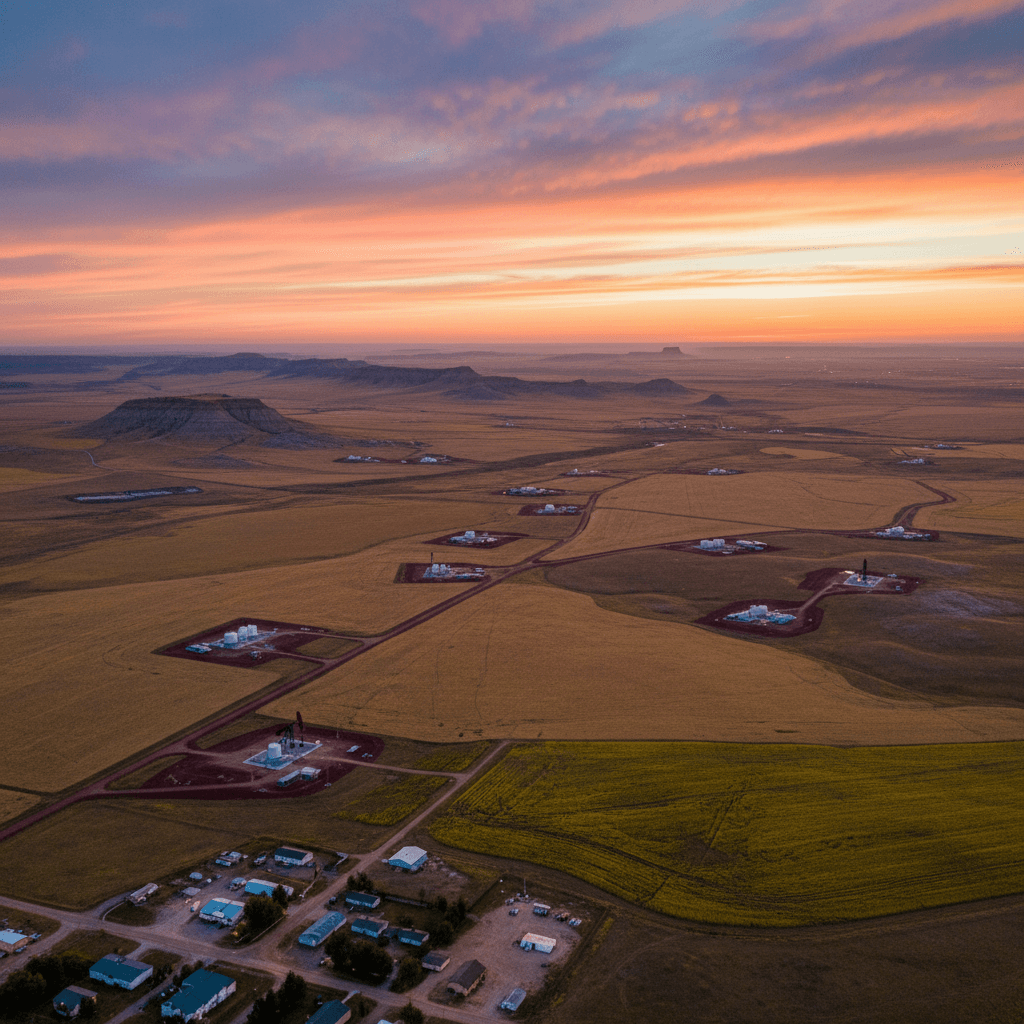
For operators in North Dakota's Bakken formation, the rising benchmark prices improve cash flow and drilling economics. The stronger WTI price, coupled with a stable differential, translates to higher realized prices per barrel. The renewed focus on global supply security also underscores the role of stable, non-OPEC production from regions like the Williston Basin.
Market analysts caution that the situation remains volatile. "While the pace of increases doesn’t yet appear likely to match what motorists experienced in March and April, fresh Ukrainian attacks on additional Russian refineries will only add to the pressure," Patrick De Haan, head of petroleum analysis at GasBuddy, noted on Tuesday.
Source
Live Price Data, OilPrice.com, Rigzone