WTI Crude--
Brent Crude--
Natural Gas--
ND Rig Count--
WTI Crude--
Brent Crude--
Natural Gas--
ND Rig Count--
Oil Prices Surge Over $3 as European Energy Crisis, Saudi Pricing Moves Rattle Markets - Bakken Wire
Oil Prices

Oil Prices Surge Over $3 as European Energy Crisis, Saudi Pricing Moves Rattle Markets

WTI crude closes above $78, boosting Bakken crude value, as heatwave-induced power shortages in Europe and OPEC+ supply signals drive volatility.

Bakken Wire Staff·🌅Afternoon Wire·

Crude oil prices rallied sharply on Thursday, with the U.S. benchmark gaining over $3 a barrel, driven by a deepening energy crisis in Europe and ongoing supply-side developments from major producers. West Texas Intermediate (WTI) crude for September delivery settled at $78.35 per barrel, a gain of $3.13 or 4.16%. The global benchmark, Brent crude, rose $4.25 to close at $83.70 per barrel, according to live price data.

The price surge coincides with reports of severe electricity shortages in Europe triggered by a prolonged heatwave and drought. According to a report from OilPrice.com, intense summer conditions are crippling nuclear and hydropower generation across the continent. Hungary was forced to shut down its Paks nuclear power plant over the weekend due to critically low water levels in the Danube River, cutting 40% of the country's electricity generation overnight and causing regional power prices to spike to €500 per megawatt-hour. France has also faced significant nuclear output reductions. This crisis has increased the potential for substitution demand for oil-powered generation, supporting crude prices.

Simultaneously, market participants are digesting pricing moves from OPEC+ leader Saudi Arabia. Rigzone reported that Saudi Arabia cut its official selling price for its main crude grade on Thursday. Analysts often view such cuts as an effort to maintain market share or respond to competitive pressures, particularly as some Persian Gulf producers continue to export barrels amid regional tensions.

For Bakken operators in North Dakota, the rally directly improves the wellhead value of their production. The Bakken crude differential, the discount at which local crude trades against WTI, was reported at -$3.42 on Thursday. This means Bakken crude priced at approximately $74.93 per barrel. The significant jump in the underlying WTI price provides a substantial boost to cash flows and can influence drilling and completion decisions, especially for operators near the margin of profitability.

The European energy situation underscores a broader theme of growing global energy insecurity linked to climate volatility. OilPrice.com quoted energy experts warning that such heatwaves and water stress are becoming "the new normal" for the world's fastest-warming continent, potentially leading to more frequent disruptions in traditional power sources and intermittent increases in demand for alternative fuels like oil.

The combination of these fundamental factors—geopolitical supply signals from the Middle East and a acute, weather-driven demand shock in Europe—created a bullish sentiment that overpowered any bearish pressure from the Saudi price adjustment, leading to Thursday's sharp gains. Market attention will now turn to weekly U.S. inventory data and any further developments regarding European power grid stability as the heatwave persists.

Source

Live Price Data, OilPrice.com, Rigzone
oil priceswtibrentbakken differentialopeceuropeenergy crisisnatural gas

Share this article

Related Articles

Oil Prices Surge Over 2%, WTI Tops $90 on OPEC+ Cuts and Geopolitical Risk - Bakken Wire
Oil Prices

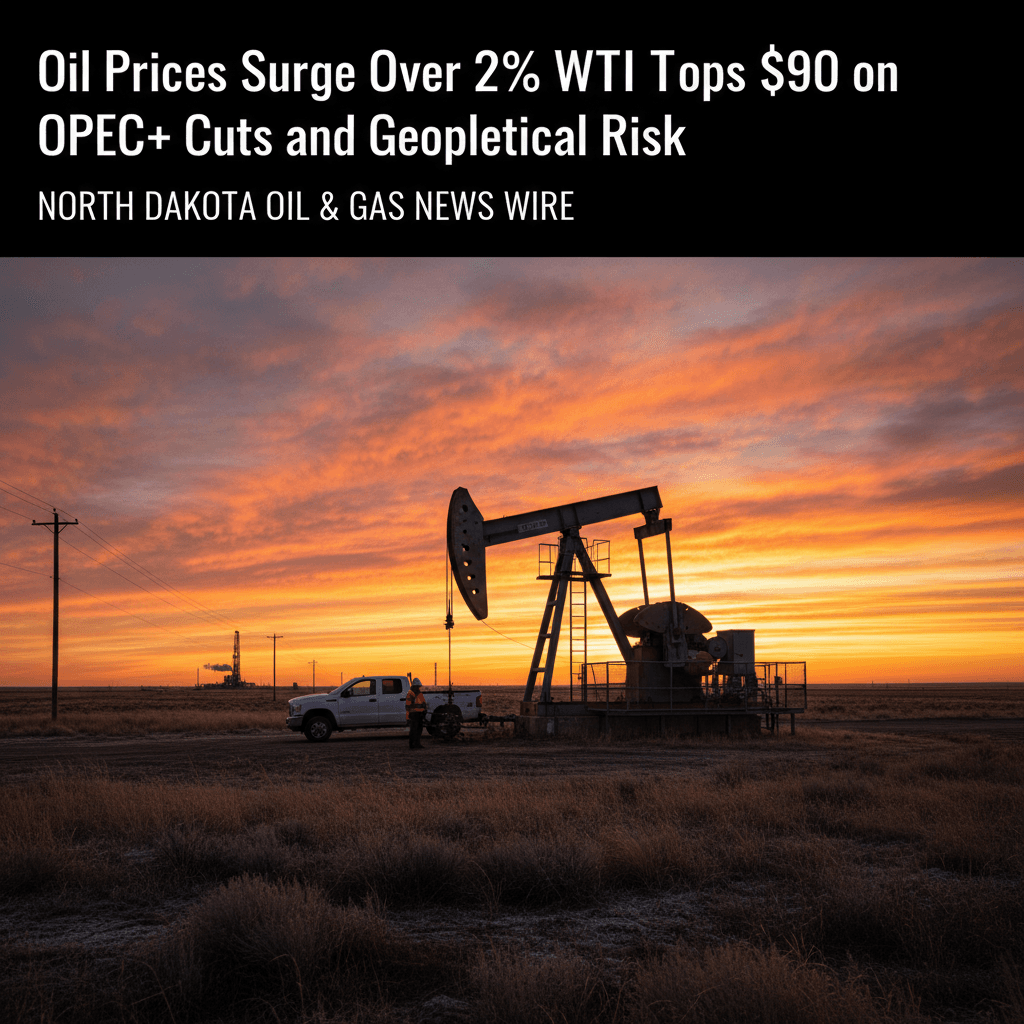
Oil Prices Surge Over 2%, WTI Tops $90 on OPEC+ Cuts and Geopolitical Risk

Front-month WTI crude oil futures surged 2.14% to trade at $90.01 per barrel at midday Thursday, November 5, 2026, marking a significant gain of $1.89. The global benchmark, Brent crude, followed closely, rising 2.09% to $96.60 per barrel, according to live price data. The rally is largely attributed to ongoing supply discipline from the OPEC+ producer group and heightened geopolitical tensions in the Middle East. These factors are tightening the physical market and overriding concerns about global economic demand. For Bakken operators, the strong rise in the underlying benchmarks is a positive signal for revenue. However, the region's crude is trading at a discount. The Bakken differential was quoted at -$3.42 per barrel versus WTI, meaning Bakken crude is priced around $86.59 based on the midday WTI price. The OPEC+ alliance, which includes Saudi Arabia and Russia, is currently maintaining its collective production cuts. This deliberate restraint is removing barrels...

🔆Midday Wire·Nov 5
Oil Prices Rebound After Election-Day Selloff - Bakken Wire
Oil Prices

Oil Prices Rebound After Election-Day Selloff

Oil prices moved higher Thursday after a sharp election-day decline, according to live market data and a Rigzone report citing Saxo Bank. WTI crude was trading at $89.50, up $1.38, or 1.57%. Brent crude was at $96.97, up $2.35, or 2.48%. Natural gas was at $2.95, down $0.01. The Bakken differential was listed at -$3.42 versus WTI. The Brent-WTI spread was $7.47, with Brent trading at a premium to the U.S. benchmark. The only immediate context provided in the source material concerned the prior day. Rigzone reported that Saxo Bank highlighted that oil prices “tumbled” eight percent yesterday following the U.S. midterm elections. The live prices show WTI and Brent rising Thursday after that drop. The Brent-WTI spread is a common reference point for global crude markets, but the live data did not provide further context for today’s move. For Bakken producers, the key question is how the benchmark move...

☀️Morning Wire·Nov 5
WTI Falls Nearly 8.3% as Bakken Crude Trades $3.42 Below Benchmark - Bakken Wire
Oil Prices

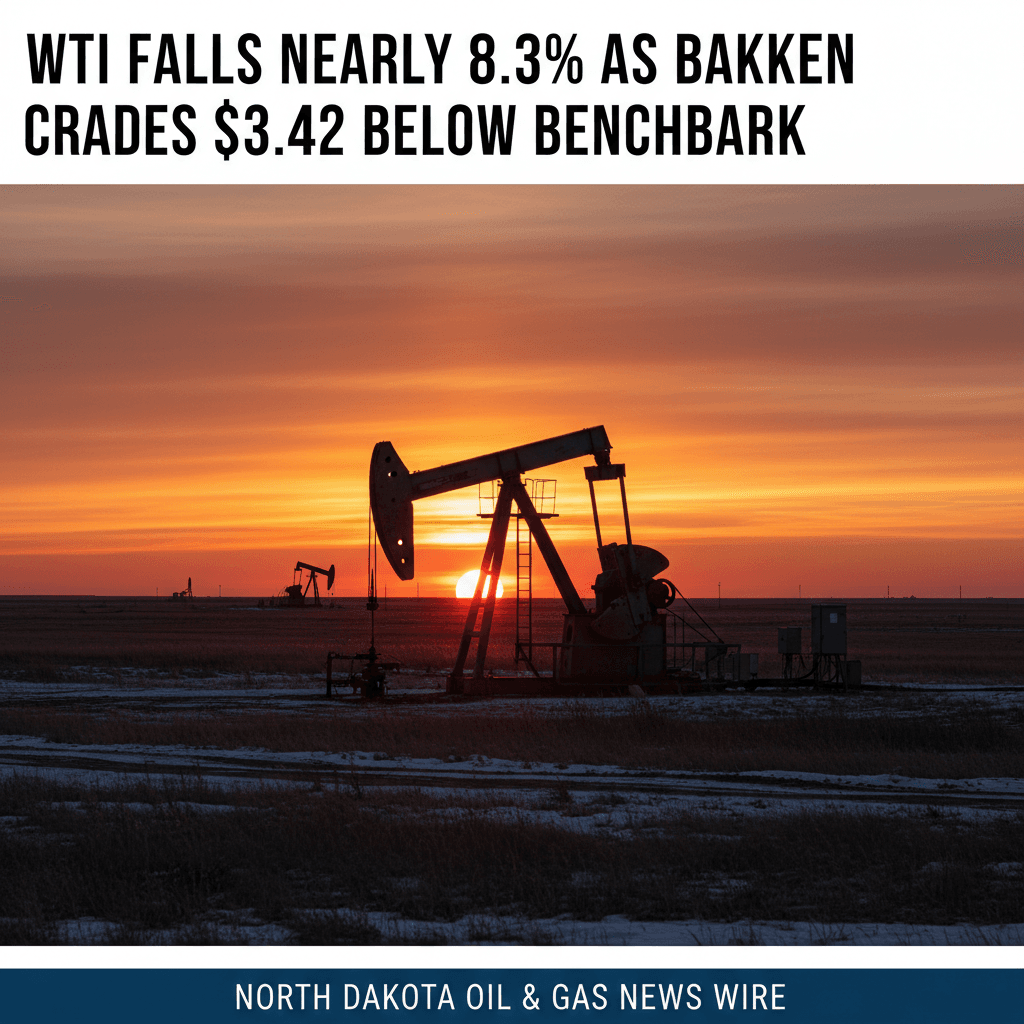
WTI Falls Nearly 8.3% as Bakken Crude Trades $3.42 Below Benchmark

Bakken operators faced a steep crude price decline Wednesday, with WTI at $88.14, down $7.95, or 8.27%, according to Bakken Wire live price data. Brent crude fell $8.90, or 8.59%, to $94.70, reinforcing a broad repricing of global oil benchmarks rather than a region-specific move. The Bakken differential was reported at -$3.42 versus WTI, meaning Bakken crude traded below the main U.S. benchmark by $3.42 per barrel. Based on the live WTI price, that places an implied Bakken benchmark level near $84.72. For Williston Basin producers, the combination of a lower WTI reference and a negative regional spread cuts into realized oil prices at the field and pipeline trading points. Natural gas moved in the opposite direction. Natural gas data in the live pricing feed showed gas at $2.95, up $0.05. The modest gain offered some offset to operators with associated gas production, but the decline in crude revenue was...

🌅Afternoon Wire·Nov 4