
WTI Crude--
Brent Crude--
Natural Gas--
ND Rig Count--
WTI Crude--
Brent Crude--
Natural Gas--
ND Rig Count--
Oil Prices Tumble Over 2% as OPEC+ Signals Output Increase - Bakken Wire
Oil Prices

Oil Prices Tumble Over 2% as OPEC+ Signals Output Increase

WTI crude falls below $101, pressuring Bakken differentials as markets react to potential supply boost.

Bakken Wire Staff·🔆Midday Wire·

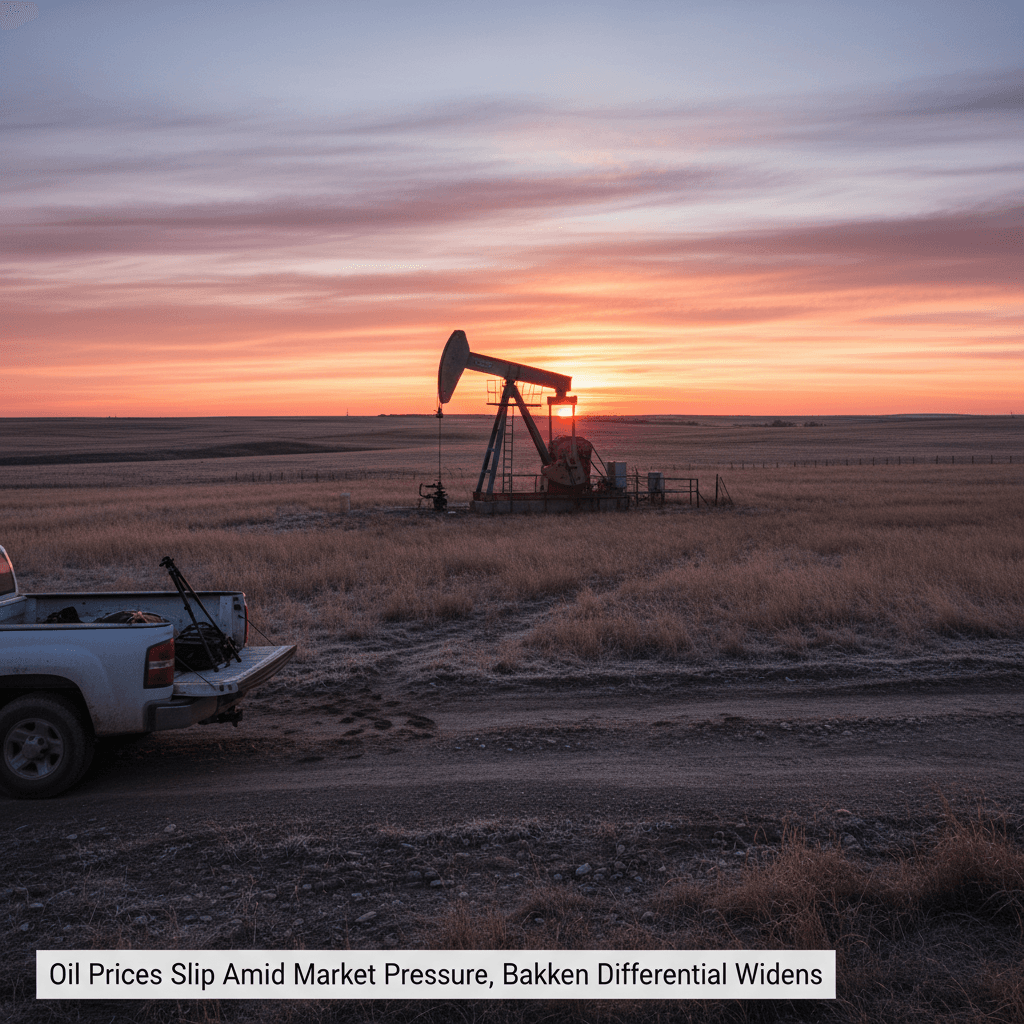
Oil prices fell sharply in midday trading Saturday, with West Texas Intermediate (WTI) crude dropping more than 2% to trade near $100 per barrel. The decline pressures Bakken wellhead economics as the local price differential holds steady.

WTI crude for October delivery was down $2.43, or 2.37%, trading at $100.05 per barrel. The global benchmark, Brent crude, saw a steeper decline, falling $3.02, or 2.81%, to $104.61. Natural gas prices were unchanged at $2.83 per MMBtu, according to live price data.

The primary driver of the sell-off was news that the OPEC+ alliance is considering a formal increase to its production quota. Sources indicated the group may propose adding 500,000 barrels per day to its output target for the fourth quarter. This potential move comes after months of production restraint and signals a shift in strategy to address high prices and market tightness.

For Bakken operators, the price drop directly impacts cash flow and drilling decisions. The Bakken crude differential, which represents the discount or premium for oil produced in the region compared to WTI at the Cushing, Oklahoma hub, was recorded at -$3.42. This means Bakken oil is currently priced at approximately $96.63 per barrel at the wellhead ($100.05 - $3.42).

A sustained price decline could slow the pace of drilling and completion activity in the Williston Basin. Operators typically require a certain price threshold to justify new well investments. While prices remain historically high, volatility and the prospect of increased global supply introduce uncertainty for capital budgets.

The market reaction highlights its sensitivity to OPEC+ supply signals. The alliance's production policies have been a key factor supporting prices above $100 for much of the year. Any confirmed increase in output would add barrels to a market already balancing geopolitical risks and concerns over global economic growth.

The steady natural gas price offers little offset for producers, as associated gas from Bakken oil wells often faces takeaway constraints and lower realized prices. The focus for North Dakota producers remains squarely on crude oil price realizations.

Traders will monitor for an official announcement from OPEC+ delegates. Further price movement will depend on the final details of any output deal and the market's assessment of its impact on the supply-demand balance through the end of 2026.

Source

Live Price Data, OPEC+ News Sources
oil priceswtibrentbakken differentialopec+productionwilliston basin

Share this article

Related Articles

Oil Prices Fall Sharply Despite U.S. Crude Inventory Draw - Bakken Wire
Oil Prices

Oil Prices Fall Sharply Despite U.S. Crude Inventory Draw

Front-month WTI crude oil futures fell $2.43 (-2.37%) to trade at $100.05 per barrel on Saturday, September 12, according to live price data. The global benchmark, Brent crude, saw a steeper decline, dropping $3.02 (-2.81%) to $104.61. The price drop comes despite a reported drawdown in U.S. commercial crude inventories. According to Rigzone, citing the U.S. Energy Information Administration's latest weekly petroleum status report, crude oil stocks, excluding the Strategic Petroleum Reserve, stood at 424.1 million barrels on September 4. This represents a week-on-week decrease, a typically bullish signal for prices. The decline in prices suggests broader macroeconomic or demand concerns are outweighing the supportive inventory data. Market sentiment is being driven by factors external to the weekly supply report, potentially including strength in the U.S. dollar, broader equity market sell-offs, or renewed concerns over global economic growth. For Bakken operators, the price of the region's crude is benchmarked against...

☀️Morning Wire·Sep 12
Oil Prices Drop Sharply, WTI Falls Below $101 Amid Market Pressure - Bakken Wire
Oil Prices

Oil Prices Drop Sharply, WTI Falls Below $101 Amid Market Pressure

Front-month WTI crude oil futures fell 2.35% on Friday, September 11, 2026, closing below the $101 threshold to settle at $100.07 per barrel. The global benchmark, Brent crude, saw a steeper decline of 2.88%, dropping $3.10 to $104.53 per barrel, according to live price data. The sharp downturn reflects mounting bearish pressure in the commodities market. Natural gas prices also edged lower, dipping one cent to $2.82 per MMBtu. The sell-off was widespread, indicating a broader risk-off sentiment or reaction to fundamental data such as inventory builds or demand concerns. For Bakken producers, the price received at the wellhead is directly tied to the WTI benchmark, minus a regional differential. The Bakken differential was quoted at -$3.42 versus WTI on Friday. This pricing structure means Bakken crude is effectively trading at approximately $96.65 per barrel ($100.07 - $3.42). This represents a significant daily revenue decrease for operators compared to earlier...

🌅Afternoon Wire·Sep 11
Oil Prices Slide Sharply Despite U.S. Inventory Draw - Bakken Wire
Oil Prices

Oil Prices Slide Sharply Despite U.S. Inventory Draw

Front-month WTI crude oil futures traded at $99.62 per barrel midday Friday, down $2.86 or 2.79 percent from the previous close. The international benchmark Brent crude fell to $105.05, a drop of $2.58 or 2.4 percent. The price decline occurred despite a reported weekly drawdown in U.S. commercial crude inventories. The U.S. Energy Information Administration's latest weekly petroleum status report showed commercial crude stocks, excluding the Strategic Petroleum Reserve, stood at 424.1 million barrels as of September 4, according to Rigzone. This represents a week-on-week decrease. Typically, a draw on inventories is a supportive factor for prices, suggesting the day's sell-off is being driven by other macro concerns. One contributing factor may be eased supply fears following data on Russian output. Rigzone separately reported that Russia's crude production fell in August. While a decline, the market may be interpreting the data as less severe than anticipated, reducing the geopolitical risk...

🔆Midday Wire·Sep 11