
WTI Crude--
Brent Crude--
Natural Gas--
ND Rig Count--
WTI Crude--
Brent Crude--
Natural Gas--
ND Rig Count--
Progress on Iran Deal, Glut Warning Shape Midday Market View - Bakken Wire
Regulatory

Progress on Iran Deal, Glut Warning Shape Midday Market View

Geopolitical and fundamental factors provide a mixed backdrop for Bakken crude prices as traders assess supply risks.

Bakken Wire Staff·🔆Midday Wire·

Progress in indirect talks aimed at reviving a nuclear deal with Iran was reported by U.S. officials on Wednesday, according to Rigzone. A senior administration official stated that U.S. negotiators Jared Kushner and Steve Witkoff held positive discussions with regional leaders in Qatar and that technical talks with Iran are moving ahead.

Any potential agreement that leads to a lifting of sanctions on Iranian oil exports would increase global supply, posing a headwind for crude prices. For Bakken producers, who compete in a global market, additional barrels from Iran could pressure the differentials for North Dakota Light Sweet crude.

Meanwhile, a bearish fundamental warning emerged from Wall Street. Investment bank Morgan Stanley cut its oil price forecasts for the second time in approximately two weeks, Rigzone reported Tuesday. The bank cited concerns over a potential oil glut, reflecting worries about robust non-OPEC supply growth outpacing demand.

These dual developments create a complex landscape for the Williston Basin. The Bakken formation is a key contributor to U.S. output, which is part of the non-OPEC supply that analysts like those at Morgan Stanley are monitoring. While the region's operators have focused on capital discipline and efficiency gains, a significant expansion of global supply—whether from a revived Iran deal or other sources—could challenge profitability.

The midday market sentiment often reflects a balance between such geopolitical risks and fundamental supply forecasts. For royalty owners and operators in North Dakota, the focus remains on breakeven prices and operational efficiency to navigate potential price volatility. The trajectory of Iran negotiations and the materialization of a supply surplus will be critical factors watched by the industry in the weeks ahead.

Source

According to Rigzone reporting from July 1 and June 30, 2026.
iranoil pricessupplymorgan stanleyregulationgeopolitics

Share this article

Related Articles

Federal Offshore Reef Program Announced, Bakken Impact Unclear - Bakken Wire
Regulatory

Federal Offshore Reef Program Announced, Bakken Impact Unclear

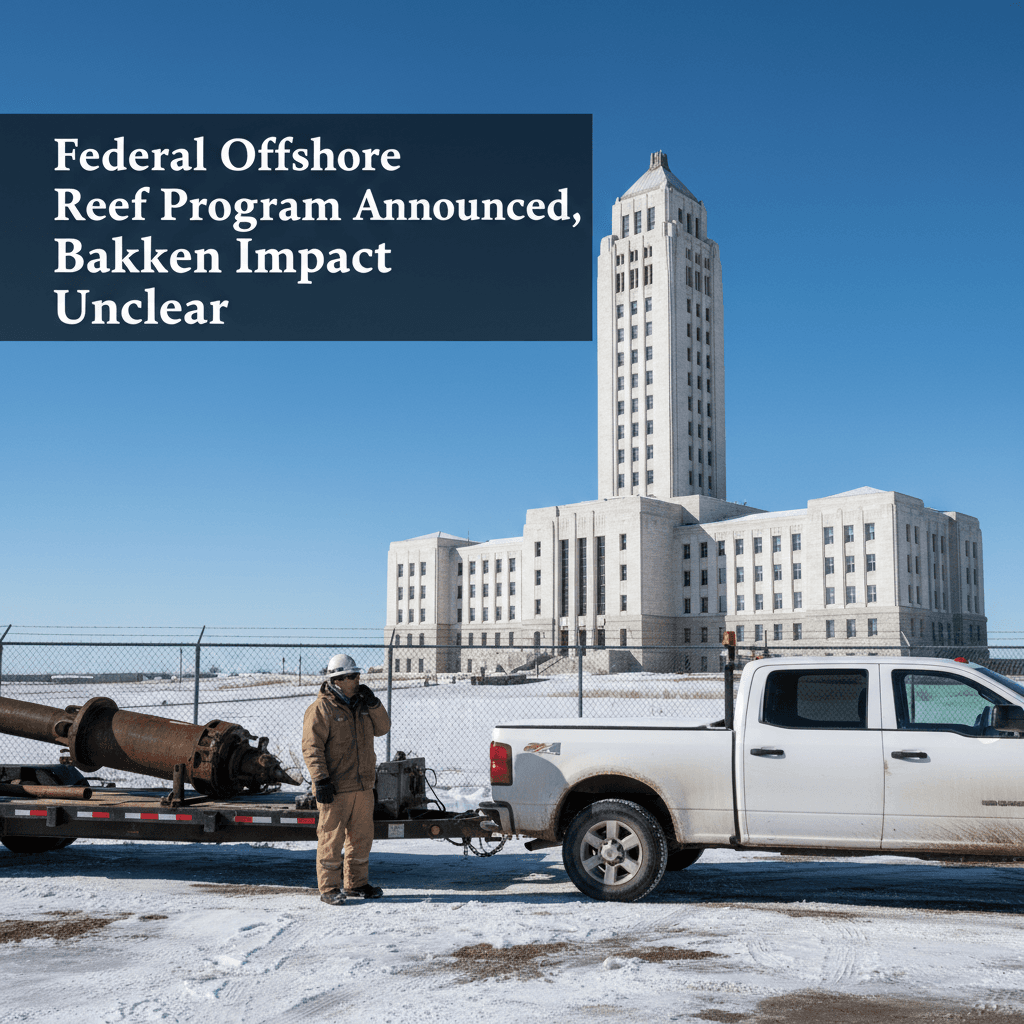
The federal Maritime and Minerals Administration (MMA) has announced a new "Reef in Place" program for the Outer Continental Shelf (OCS), according to a report from Rigzone. The program allows eligible decommissioned offshore structures to be converted into artificial reefs. Acting MMA Director Mike Olsen stated that the eligible structures "can continue to serve our coastal communities as artificial reefs," Rigzone reported. The announcement was made on November 18, 2026. The program applies specifically to federal offshore operations and has no direct regulatory or operational impact on onshore shale basins like North Dakota's Bakken formation. Bakken operators are subject to different state and federal land management and well-plugging regulations. For the Williston Basin industry, the news highlights the divergent regulatory paths for offshore versus onshore oil and gas development. While offshore operators may now have a new option for structure decommissioning, Bakken operators follow a stringent state-led process for well...

🔆Midday Wire·Nov 18
Regulatory

Venezuela Gear Repairs, Federal Land Sale Plan Draw Bakken Attention

Friday, Nov. 13, 2026 — Two policy developments reported by Rigzone on Nov. 12 are likely to draw attention from Bakken operators and royalty owners, even though neither report described North Dakota leases. Venezuela is sending state-owned oil equipment to the United States for repairs for the first time in more than a decade, according to Rigzone. The move points to a limited reopening of a trade channel that has been constrained for years. For Bakken operators, the broader significance lies in equipment logistics, service-market access and regulatory posture. The Bakken depends on a deep U.S. services base, so operators typically watch shifts in international equipment flows for signs of cost pressure, competition for shop capacity and changing trade-risk calculations. Rigzone also reported that the Trump administration unveiled plans to sell public land as part of a new strategy laying out Interior Department goals. For Bakken producers, federal-land policy matters...

☀️Morning Wire·Nov 13
Regulatory

Venezuelan Oil Gear Sent to U.S. for Repairs After Decade

Venezuela is sending state-owned oil equipment to the United States for repairs for the first time in more than a decade, according to Rigzone. The report was published Thursday, Nov. 12, 2026. The development carries regulatory significance because it involves cross-border movement of state-owned oil equipment, a type of transaction that can be shaped by policy decisions, licensing and sanctions-related restrictions. Rigzone did not provide additional details on the equipment, the regulatory approvals involved or the companies performing the repairs. For Bakken operators, the significance is indirect but real. North Dakota producers depend on a deep U.S. oilfield services base for drilling, completions, workovers and maintenance. When foreign state-owned oil equipment uses U.S. repair shops and service yards, it can reflect the availability of American industrial capacity. It can also affect demand for specialized parts, machining, inspection and repair crews that compete with domestic workloads. The move may also signal...

🌅Afternoon Wire·Nov 12