Russian Output Hits Annual Low, Tightening Global Oil Supply
Ukrainian strikes contribute to supply disruption, potentially supporting Bakken crude prices amid volatile global markets.
Russian oil production fell to its lowest level in a year during May, according to data reported by OPEC. The decline, attributed to Ukrainian strikes on energy infrastructure, averaged 9.009 million barrels per day last month, Rigzone reported.
This supply disruption from a major global exporter contributes to a tightening of worldwide crude availability. For Bakken operators in North Dakota, a reduction in Russian output can provide underlying support for oil prices by reducing global inventories.
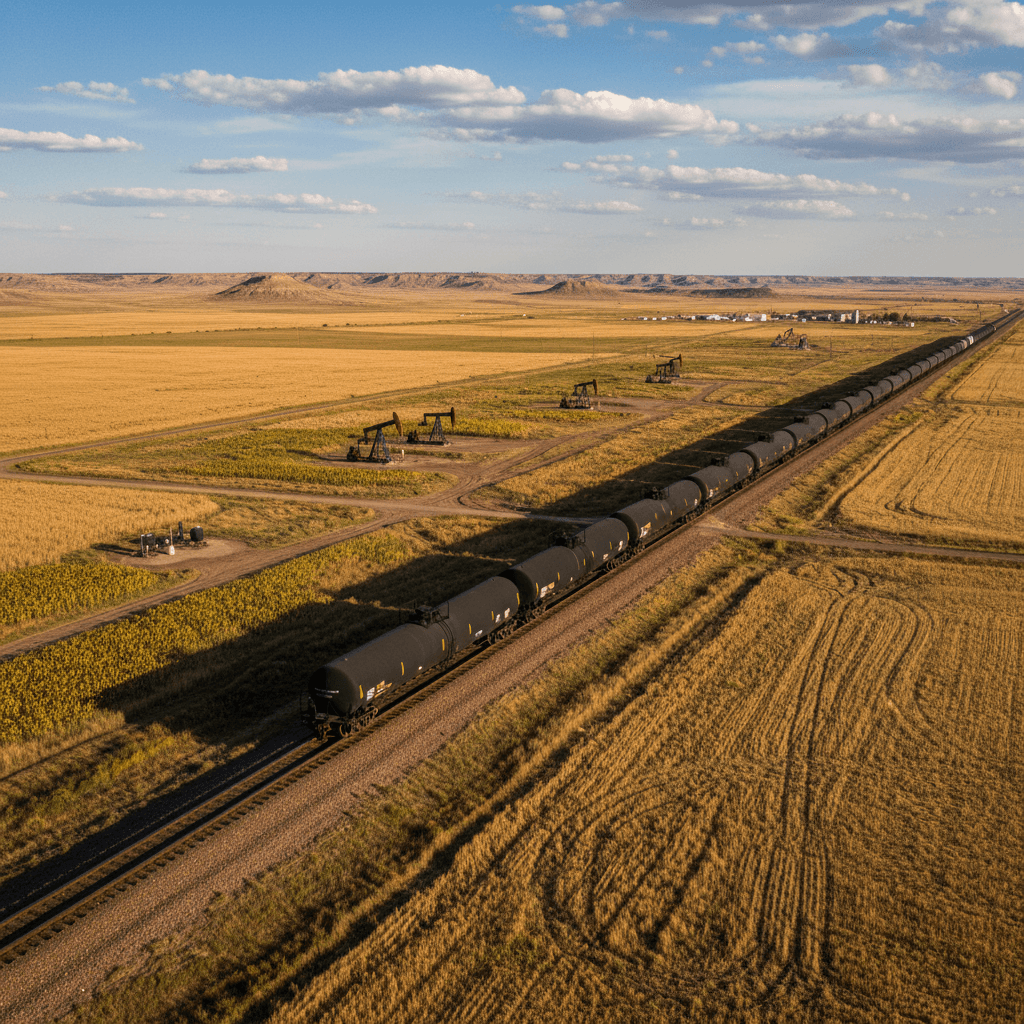
The Bakken formation is a key oil-producing region in the United States, and its crude prices are directly tied to international benchmarks like West Texas Intermediate (WTI). Any sustained geopolitical disruption that constrains global supply typically translates to stronger pricing for domestic producers.
Market analysts often watch OPEC+ production, which includes Russia, for signals on the global supply-demand balance. While the specific impact on daily prices can be muted by other factors like U.S. inventory data and economic sentiment, a persistent drop in Russian output removes barrels from the market that must be replaced by other sources.
For North Dakota royalty owners and producing companies, higher sustained prices directly improve cash flow and can influence drilling and completion decisions. However, operators also face local cost pressures and takeaway capacity constraints that affect netbacks.
The development underscores the interconnected nature of the global oil market, where geopolitical events thousands of miles away can influence the economics of drilling in the Williston Basin. Bakken producers will continue to monitor both the durability of these Russian supply losses and the broader OPEC+ policy stance for their effect on 2026 price trajectories.
Source
Rigzone

