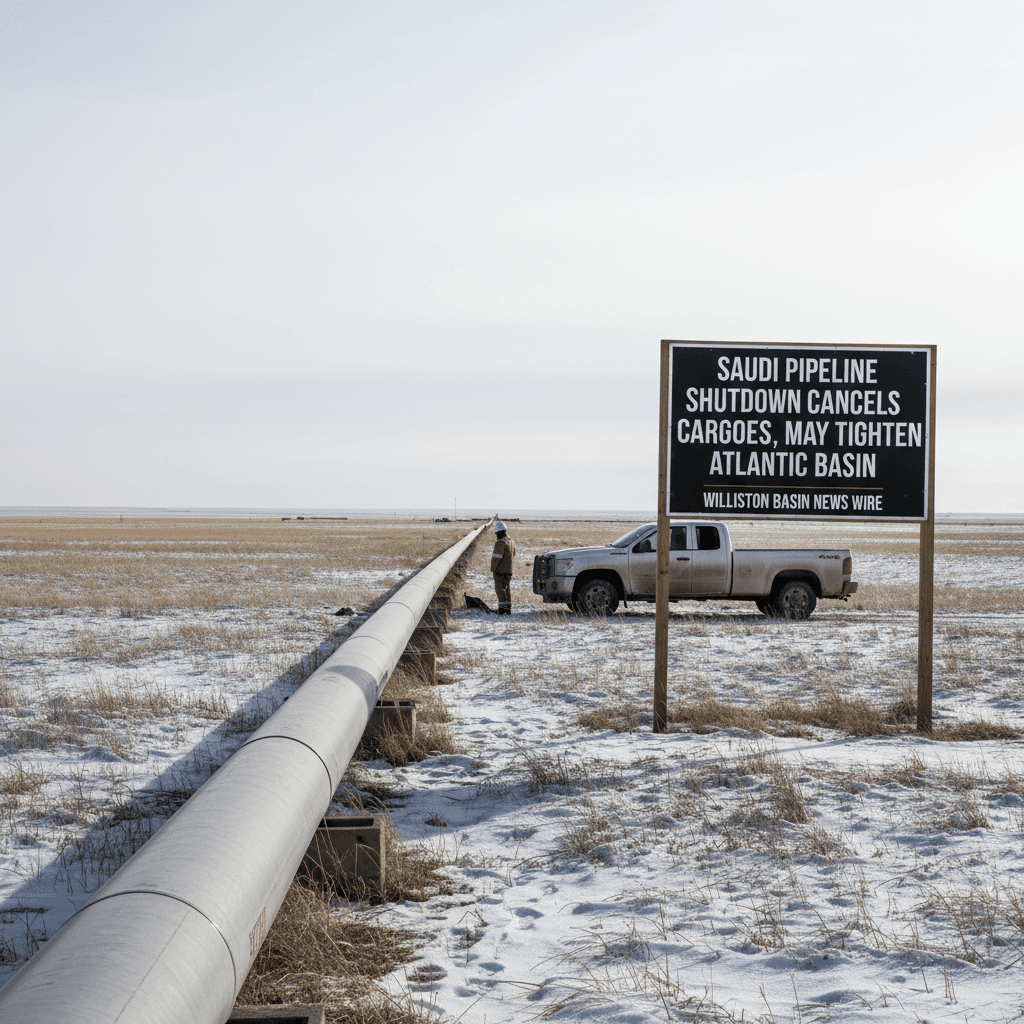
Saudi Pipeline Shutdown Cancels Europe Cargoes, May Tighten Atlantic Basin
Saudi Aramco's supply disruption to European refiners could increase demand for alternative crudes like Bakken, as Poland's Orlen seeks spot barrels.
Saudi Aramco has canceled or delayed multiple crude oil cargoes to European refiners following a prolonged shutdown of a key Saudi pipeline, a disruption that may tighten Atlantic Basin supplies and increase competition for Bakken crude. According to a report from OilPrice.com, the 7-million-barrel-per-day East-West pipeline has been offline since a September 10 attack, cutting off a major export route that bypasses the Strait of Hormuz.
The disruption is now directly impacting European term customers. Market sources cited by Argus indicate at least three European refiners have had late-September cargoes canceled or pushed back to November, with two more expecting similar notices. No Saudi crude has departed the Red Sea port of Yanbu since September 11.
One major customer scrambling for replacement barrels is Poland's Orlen, which operates refineries in Poland, Lithuania, and the Czech Republic. Aramco supplies roughly 40% of Orlen's crude. Traders told Reuters that Orlen has purchased North Sea grades and, significantly, has sought offers for U.S. WTI Midland crude through spot tenders. At least four scheduled September tanker shipments from the Mediterranean to Gdansk have failed.
For Bakken operators and marketers, this supply shock creates a potential opportunity. The search for alternative crudes by a major European refiner like Orlen underscores the global interconnectivity of oil markets. A sustained reduction in Saudi medium-sour crude arriving in Europe could strengthen demand for light, sweet crudes like those produced in the Bakken, which are already competitive in global markets.
The East-West pipeline is a critical alternative route for Saudi exports, carrying crude from eastern fields to Yanbu for shipment to Europe via the Red Sea and Egypt's SUMED pipeline. Its extended shutdown removes a significant volume from the Atlantic Basin. While Orlen stated its refineries continue to receive feedstock, the active spot market activity indicates a need for immediate replacement barrels.
The situation remains fluid. A market source told Argus that every Saudi cargo scheduled for the final ten days of September could be at risk, and estimated that Yanbu had roughly five days of crude inventories remaining. Aramco has declined to comment on the situation.
For North Dakota producers, any sustained pull on U.S. exports to Europe supports stronger crude price differentials at the wellhead. The incident highlights how geopolitical events far from the Williston Basin can rapidly alter global trade flows and benefit Bakken crude if it can be competitively delivered to coastal terminals for export.
Source
OilPrice.com report citing Argus, Reuters, and Vortexa data.