Saudi, UAE Tanker Moves Signal Prolonged Middle East Shipping Disruptions
Houthi threats and Hormuz crisis reroute global crude flows, while U.S. pushes Libyan political deal, potentially impacting global oil market stability.
Six empty Saudi Arabian oil tankers have diverted away from the Red Sea's Bab el-Mandeb Strait and are heading south around the Cape of Africa, according to vessel-tracking data monitored by Bloomberg and reported by OilPrice.com. This rerouting, a response to Houthi threats and attacks on Saudi tankers, will add at least two weeks to a supertanker's journey compared to using the Suez Canal route.
Concurrently, Saudi Arabia is shifting export tactics, moving more crude via tankers from Yanbu to Egypt's Ain Sukhna port, then through the SUMED pipeline to the Sidi Kerir port on the Mediterranean. At least eight empty Very Large Crude Carriers (VLCCs) are signaling Sidi Kerir as their destination, with arrivals expected within two to three weeks.
In a separate move highlighting tight vessel supply, Abu Dhabi's ADNOC has purchased five VLCCs for approximately $590 million, according to a Reuters report cited by OilPrice.com. The purchase comes as the United Arab Emirates, which exited OPEC earlier this year, reached a record crude production of 4.1 million barrels per day in June. The UAE has adapted to the Strait of Hormuz crisis by loading crude offshore Fujairah and at Sohar in Oman.
Meanwhile, the Trump administration is working to formalize a power-sharing structure in Libya between rival eastern and western factions, OilPrice.com reports. The proposed deal aims to preserve Prime Minister Abdul Hamid Dbeibah's government while granting control of a new presidential body to Saddam Haftar, son of General Khalifa Haftar. The U.S. is also encouraging American oil companies to expand their presence around Libya's oil reserves.
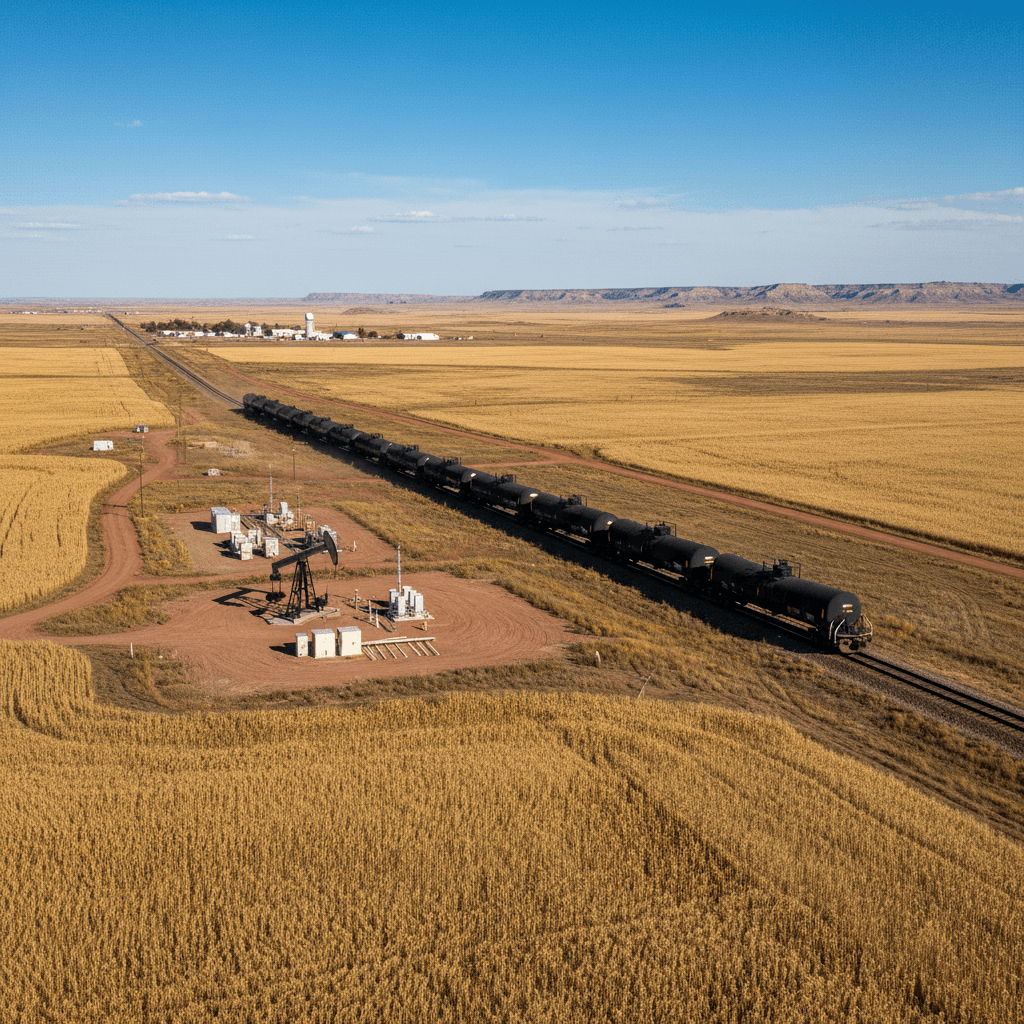
For Bakken operators and royalty owners, these developments underscore a global oil market facing sustained logistical friction. The extended shipping times for Middle Eastern crude, driven by security threats at key chokepoints, contribute to a tighter global tanker market and support a "freight on board" price premium for crude produced outside conflict zones, like North Dakota's. Continued instability in Libya, home to Africa's largest proven reserves, alongside robust production from non-OPEC members like the UAE, creates a complex backdrop for global supply forecasts that ultimately influence the price benchmarks for Bakken crude.
Source
OilPrice.com (July 31, 2026)