WTI Crude--
Brent Crude--
Natural Gas--
ND Rig Count--
WTI Crude--
Brent Crude--
Natural Gas--
ND Rig Count--
States Retreat From Climate Goals, Easing Pressure on Bakken Operators - Bakken Wire
Regulatory

States Retreat From Climate Goals, Easing Pressure on Bakken Operators

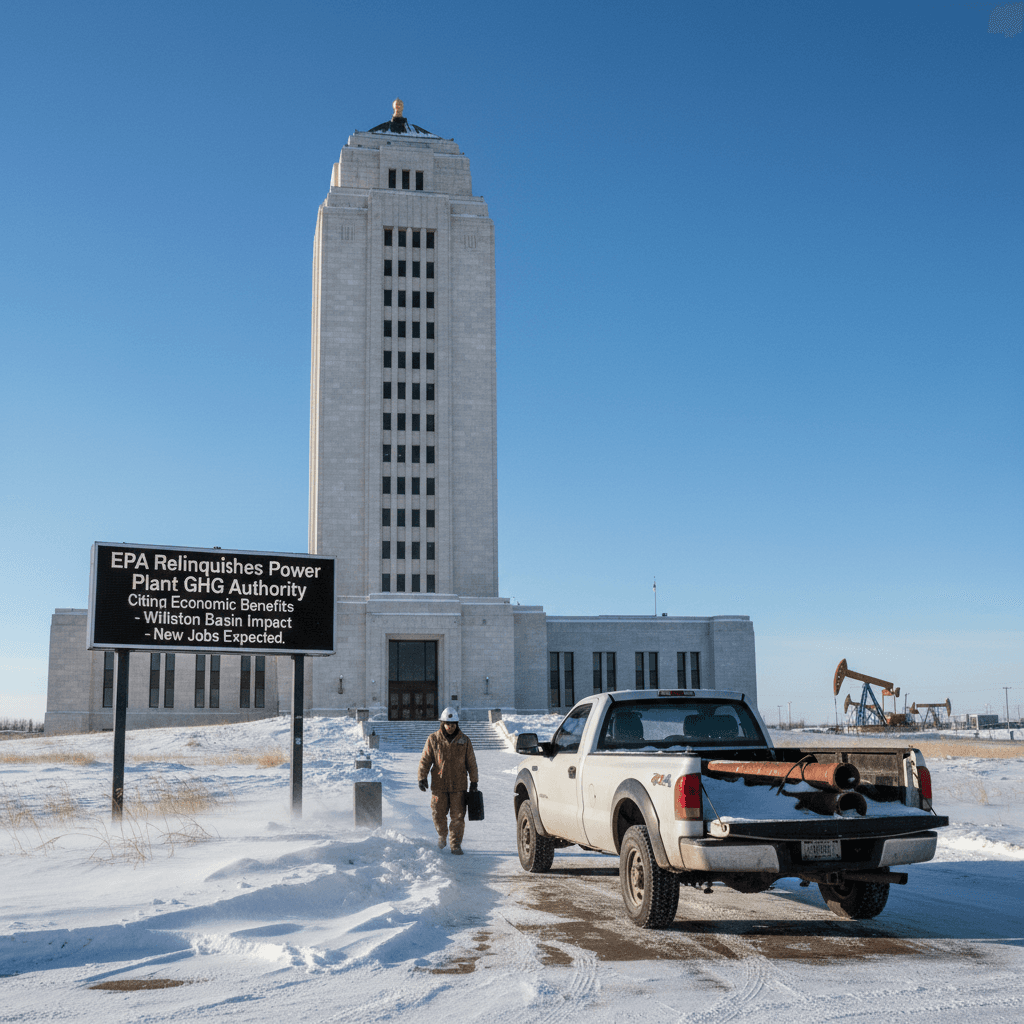
A nationwide regulatory shift, driven by cost concerns and federal policy changes, is reducing near-term pressure on fossil fuel producers, including those in North Dakota.

Bakken Wire Staff·☀️Morning Wire·

Several U.S. states are scaling back or delaying their climate goals as costs surge and federal support for renewable energy fades, according to a report from OilPrice.com. This marks a significant shift away from the ambitious green transition policies of the Biden era and could signal a more stable regulatory environment for fossil fuel producers, including those in the Bakken formation.

Between 2021 and 2025, the Biden administration's policies, including the 2022 Inflation Reduction Act, spurred states to launch aggressive climate initiatives. However, the current Trump administration is deterring investment in renewables and weakening climate rules, making state targets appear unattainable. Governors are now publicly admitting their 2030 goals cannot be met and are revising laws accordingly.

New York Governor Kathy Hochul recently admitted the state's goal for significantly reducing emissions by 2030 is now unattainable, forcing a legislative revision. In Massachusetts, concerns over rising consumer costs are leading to expected cuts in a program that funds heat pumps and efficiency upgrades through utility bill charges, with Governor Maura Healey introducing policy changes for affordability.

Other states are pushing back deadlines. Rhode Island Governor Dan McKee has proposed delaying a legal deadline for achieving 100% renewable electricity from 2033 to 2050 to avoid increasing short-term consumer energy costs. The report notes that while many Northeastern governors still support climate initiatives, they are adapting policies due to voter concern about affordability, partly driven by higher global fossil fuel costs linked to Middle East conflict.

This broad retreat from stringent state-level climate mandates reduces the immediate regulatory and market pressure on oil and gas producers. For Bakken operators and North Dakota, a state that has consistently prioritized energy production, the national trend validates a more balanced energy approach. The scaling back of programs that directly penalize fossil fuel consumption or mandate rapid renewable adoption lessens the risk of demand destruction for Bakken crude in key state markets.

The report indicates that the primary drivers for the policy reversals are economic: surging costs and fading federal support. This environment may allow for a longer operational horizon for conventional energy assets. The explicit delays and admissions of unattainable goals undermine the narrative of an imminent, nationwide forced energy transition, potentially providing more policy certainty for North Dakota's core industry.

Source

OilPrice.com
regulationclimate policystatesbiden administrationtrump administrationenergy costs

Share this article

Related Articles

Iran Tensions Drive Oil Prices Higher - Bakken Wire
Regulatory

Iran Tensions Drive Oil Prices Higher

Oil prices climbed to a one-month high near $94 per barrel this week, according to a report from Rigzone. The increase was driven by new U.S. threats against Iran, which raised market fears of a prolonged conflict and potential supply disruptions. For operators in North Dakota's Bakken formation, higher crude prices directly improve cash flow and drilling economics. Sustained prices above $90 per barrel typically support increased activity and capital investment in the basin, though individual company plans depend on their specific financial frameworks. The current price environment, bolstered by geopolitical tension, offers a stronger revenue foundation compared to periods of lower volatility. This is critical for the state's oil production, which remains a primary economic driver. Market analysts watch such geopolitical events closely, as they can lead to rapid price swings. The Bakken's output contributes to overall U.S. supply, which helps buffer global markets against shocks from specific regions....

☀️Morning Wire·Aug 22
Iran Tensions Push Global Oil Prices Near $94 - Bakken Wire
Regulatory

Iran Tensions Push Global Oil Prices Near $94

Oil prices climbed to a one-month high near $94 per barrel on Thursday, according to a report from Rigzone. The increase was driven by new U.S. threats against Iran, which raised fears of a prolonged conflict in the region. For operators in North Dakota's Bakken formation, higher global benchmark prices directly improve the economics of new drilling and well completion projects. Sustained prices at or above current levels support cash flow and can influence decisions to maintain or increase activity in the Williston Basin. The Bakken region remains one of the United States' top oil-producing areas, and its output is a key component of domestic supply. Price volatility stemming from geopolitical events underscores the interconnected nature of the global oil market and its impact on local production economics. While the immediate price boost is a positive signal, Bakken operators typically manage their programs based on longer-term price outlooks and operational...

🌅Afternoon Wire·Aug 21
Monumental Energy Eyes New Zealand Gas Prospects in Taranaki Basin - Bakken Wire
Regulatory

Monumental Energy Eyes New Zealand Gas Prospects in Taranaki Basin

Monumental Energy Corp. is advancing plans for a new exploration block in New Zealand, according to a regulatory filing reported by Rigzone. The company and its partners have identified gas prospects in the prospective area within New Zealand's Taranaki Basin. The news, published on August 20, indicates the Williston Basin operator is continuing to evaluate international opportunities alongside its core operations in North Dakota. For Bakken-focused companies, diversifying exploration portfolios into other proven basins is a common strategy to balance long-term portfolio risk. While the development is centered overseas, its progress is monitored by Bakken stakeholders as an indicator of Monumental's strategic direction and financial health. Capital allocated to international projects can sometimes compete with domestic drilling budgets, though companies often fund such ventures through separate joint ventures or designated capital. The Taranaki Basin is New Zealand's primary hydrocarbon-producing region. A move by a Bakken operator into this arena highlights...

🔆Midday Wire·Aug 21