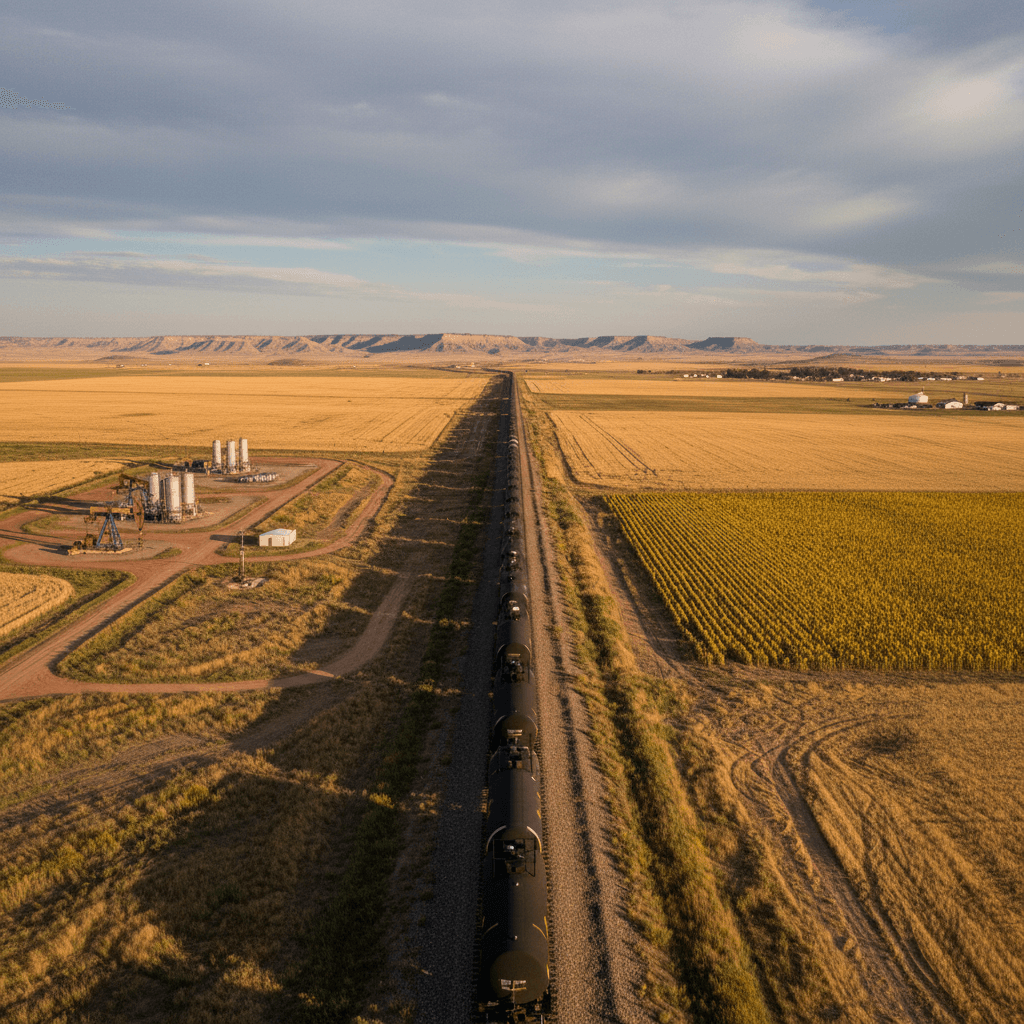
Strait Closure Spurs Global Supply Shock, Supports Bakken Prices
Analyst cites "physical scarcity" as key driver, while Southeast Asian shift and China's power demand growth signal long-term structural support.
The ongoing blockade of the Strait of Hormuz is creating a "broad and deep supply shock" that is underpinning oil prices with a "clear upward bias," according to market analysts. For Bakken producers, this translates to a market environment where "physical scarcity and limited barrel access" are the primary price drivers, not demand strength.
In an analysis sent to Rigzone on Tuesday, Naeem Aslam, CIO at Zaye Capital Markets, stated that Brent crude was holding strong as the market correctly prices in ongoing supply risks from the disrupted strait. He warned that vessel traffic remains heavily restricted and diplomatic progress is painfully slow. "Until tankers move freely again, the risk premium will dominate, keeping oil volatile with a clear upward bias," Aslam said, advising traders to ignore short-term demand noise and stay positioned for higher prices.
The supply shock is having immediate global consequences. According to OilPrice.com, Southeast Asian economies such as the Philippines, Indonesia, Malaysia, and Vietnam were the first to feel fuel shortages after the blocked strait cut off most of their regular crude supply from the Middle East. The Philippines, which sourced 98% of its oil from the Middle East, declared a national energy emergency in mid-March.
This disruption is forcing a rapid reorientation of global oil flows. Many Southeast Asian countries have turned to alternative suppliers, including Russian oil, a move the European Union has publicly discouraged. The EU's foreign policy chief, Kaja Kallas, said Tuesday that the EU prefers these countries to diversify supply by buying from producers other than Russia, as higher revenues for Russia fund its war in Ukraine. Specific actions include Petron in the Philippines securing 2.5 million barrels of Russian crude out of "extreme necessity," and Indonesia planning to import 150 million barrels from Russia this year.
Beyond immediate supply shocks, long-term demand fundamentals are also strengthening. New analysis from Rystad Energy shows China's data center boom could nearly double its power demand by 2030, according to OilPrice.com. Data center power consumption in China is expected to rise to 289 terawatt-hours by 2030, more than double last year's levels, with consumption rising at an annual rate of 19% between 2025 and 2030. This growth is driven by rapid expansion in artificial intelligence and high-performance computing.
For Bakken operators, these combined factors—a protracted physical supply disruption in a key chokepoint and robust, structural demand growth from a major economy—create a supportive price backdrop. The situation underscores the strategic value of secure, non-Middle East supply sources like the Bakken formation. UN Secretary-General Antonio Guterres emphasized the strait's critical role, noting it carries roughly one-fifth of global oil trade and that "safe, unimpeded passage is an economic and humanitarian imperative."
Source
Rigzone, OilPrice.com

