WTI Crude--
Brent Crude--
Natural Gas--
ND Rig Count--
WTI Crude--
Brent Crude--
Natural Gas--
ND Rig Count--
Regulatory

UK Offshore Industry Seeks Clarity on Tax Plan, Highlighting Regulatory Uncertainty

Offshore Energies UK calls for a firm date on North Sea fiscal policy, as Bakken operators face their own evolving state and federal landscape.

Bakken Wire Staff·☀️Morning Wire·

The UK offshore oil and gas industry is pressing its government for clarity on future fiscal policy, a move that underscores the global importance of regulatory stability for energy investment. Industry body Offshore Energies UK said the industry urgently needs a firm date for HM Treasury's North Sea tax plan, according to a report from Rigzone.

While directly concerning the North Sea, the call for a definitive timeline highlights a universal challenge for oil and gas producers: operating efficiently amidst shifting regulatory and tax frameworks. Uncertainty can delay final investment decisions on projects and impact long-term planning.

For operators in the Bakken formation, the development serves as a reminder of the ongoing evolution of their own regulatory environment. North Dakota's oil industry navigates a complex web of state regulations covering flaring, well spacing, and environmental standards, in addition to federal policies on federal lands and emissions.

The current federal administration has proposed changes to royalty rates and bonding requirements for drilling on public lands, though specific implementation timelines often remain unclear. This creates a planning environment similar to the one described by Offshore Energies UK, where the lack of a firm date for policy changes can hinder capital allocation.

Bakken producers, like their international counterparts, rely on predictable fiscal and regulatory regimes to justify the significant capital required for drilling and completion operations. Any prolonged uncertainty, whether in the North Sea or the Williston Basin, can potentially slow development activity as companies await clearer signals from governing bodies.

The push for a firm date in the UK comes as the global industry balances energy security demands with transition pressures. Bakken operators continue to monitor both state and federal regulatory developments that could impact operating costs and project economics in the nation's second-largest oil-producing region.

Source

Rigzone reported that Offshore Energies UK said the industry urgently needs a firm date for HM Treasury's North Sea tax plan.
regulationtaxationnorth seapolicyinvestmentbakken

Share this article

Related Articles

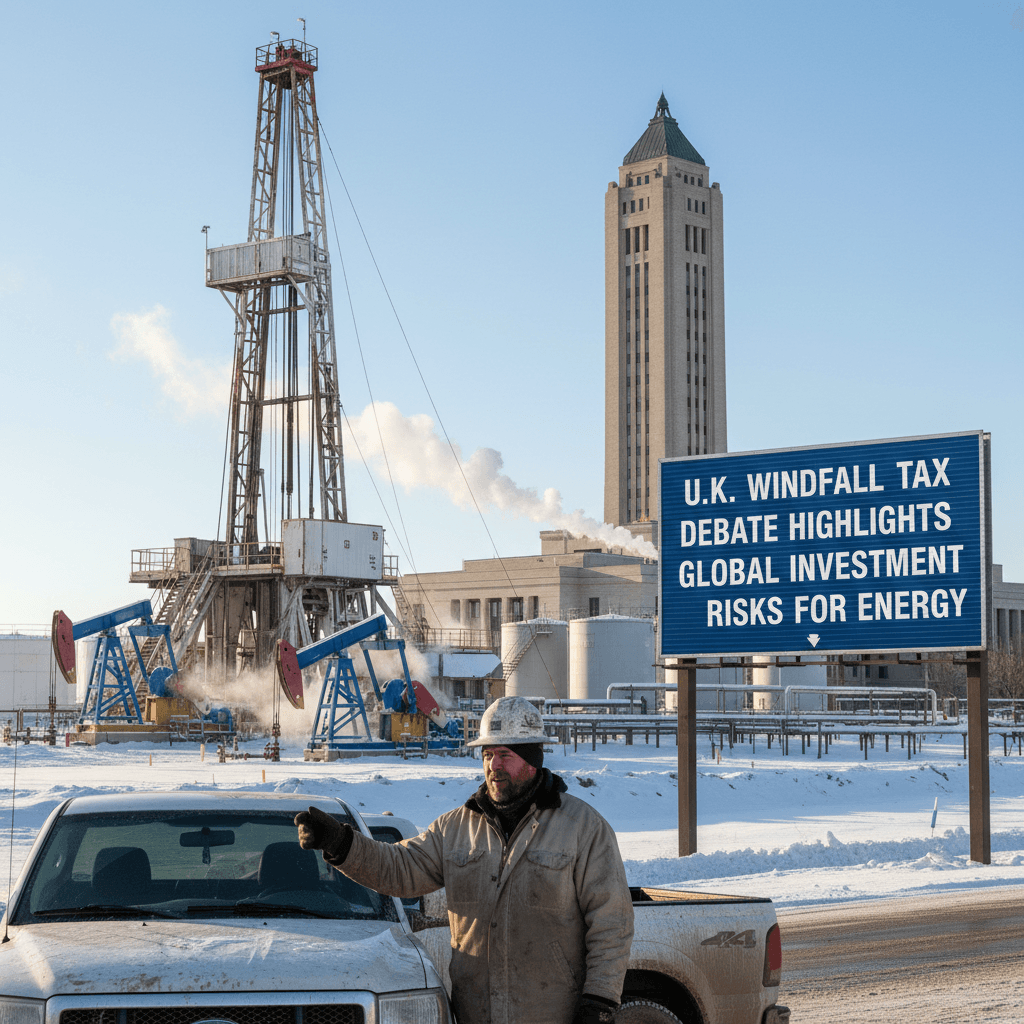
U.K. Windfall Tax Debate Highlights Global Investment Risks for Energy - Bakken Wire
Regulatory

U.K. Windfall Tax Debate Highlights Global Investment Risks for Energy

The U.K. oil and gas industry is pressuring Prime Minister Andy Burnham to scrap a windfall tax, a debate North Dakota producers are monitoring as a signal of how changing fiscal regimes can deter global energy investment. According to a report from Offshore Energies UK (OEUK), the industry body for the U.K., the existing Energy Profits Levy (EPL) should be abandoned in January 2027. The levy, set to last until 2030, has raised about £12 billion but has "stifled investment in recent years," OEUK stated. OEUK’s report calls for replacing the EPL with an Oil and Gas Revenue Levy (OGRL), which would only be triggered during oil price spikes. The group argues that amending the tax and approving two major contested projects, Rosebank and Jackdaw, could unlock 111 projects and attract £50 billion in investment. They claim increased domestic production could help the U.K. offset fossil fuel imports, with a...

🔆Midday Wire·Oct 11
Regulatory

Global Energy Security Concerns Highlight Need for Robust Bakken Production

The rapid digitalization of power grids is outstripping regulatory frameworks, creating energy security vulnerabilities, according to a recent report from European energy experts. This global dynamic underscores the continued strategic importance of reliable, domestic hydrocarbon production from regions like the Bakken. Elena Boskov-Kovacs, co-founder of Blueprint Energy Solutions, stated that regulatory processes lag behind technological deployment in the energy sector. "There’s a mismatch in speed rather than a gap in technology – in making digital solutions useful and deployable quick enough to keep pace with the physical transformation of the grid," she was quoted in a report for Enlit. She cited the rapid connection of solar, EVs, and heat pumps as creating "very practical concerns for system operators: unobservability at the edge of the grid, limited hosting capacity, congestion and ultimately the risk of blackouts." These challenges in grid management and energy security are particularly acute in Europe, which is...

🌅Afternoon Wire·Oct 6
EPA Relinquishes Power Plant GHG Authority, Citing Economic Benefits - Bakken Wire
Regulatory

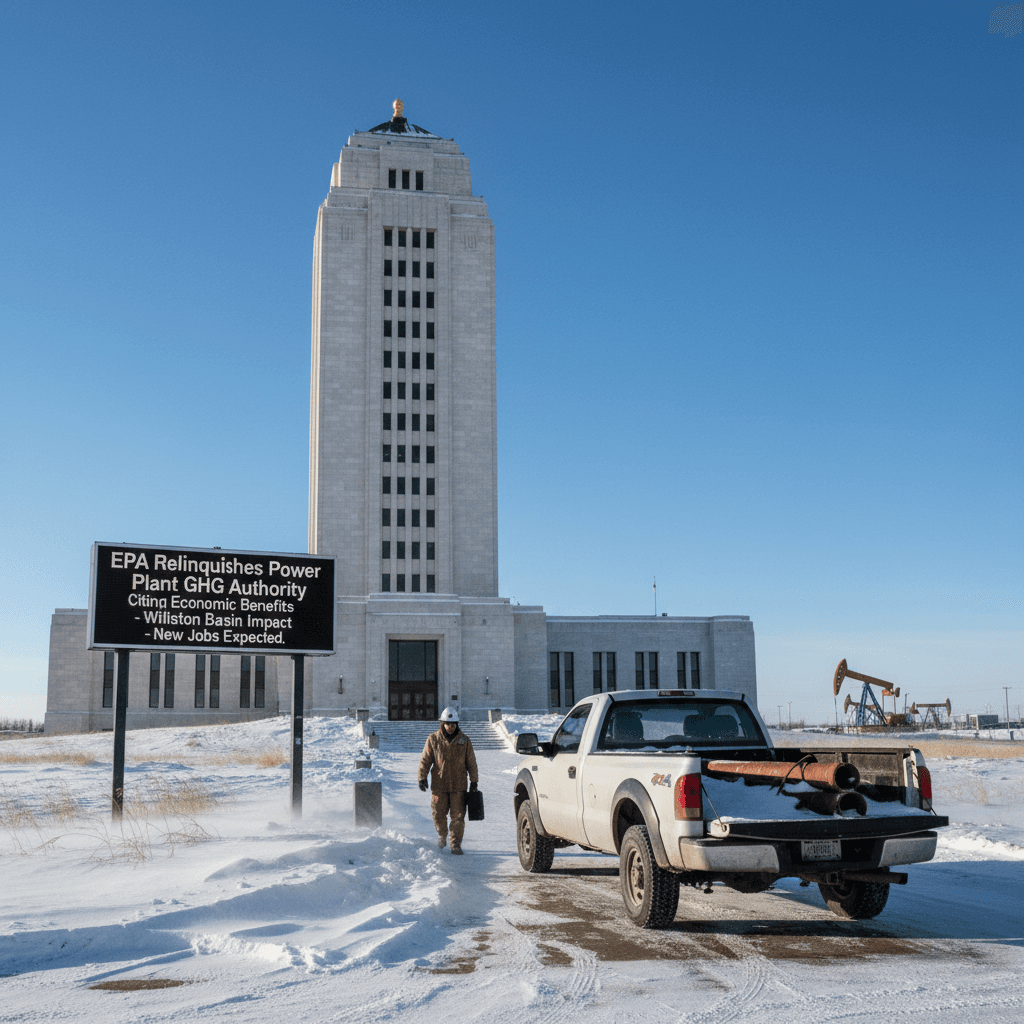
EPA Relinquishes Power Plant GHG Authority, Citing Economic Benefits

The U.S. Environmental Protection Agency (EPA) announced in September that it will relinquish its authority to regulate greenhouse gas emissions from power plants under the Clean Air Act, according to OilPrice.com. The move effectively removes federal limits on emissions from coal and natural gas plants. The EPA expects the decision to result in an additional 123 million metric tonnes of carbon dioxide released into the atmosphere over the next decade, OilPrice.com reported. The agency's analysis estimates the change will save power plant operators $370 million in direct compliance costs, but does not factor in the financial benefits of reduced air pollution. For North Dakota, a major coal-producing and natural gas-fired power state, the policy shift could impact the operating environment for associated energy infrastructure. The decision follows President Trump's earlier move to overturn the foundational 2009 EPA endangerment finding that greenhouse gases threaten public health and the environment, and a...

🔆Midday Wire·Sep 27