WTI Crude--
Brent Crude--
Natural Gas--
ND Rig Count--
WTI Crude--
Brent Crude--
Natural Gas--
ND Rig Count--
Uniper Reports Surging Profits as Germany Prepares Sale - Bakken Wire
Regulatory

Uniper Reports Surging Profits as Germany Prepares Sale

The state-owned energy giant's financial rebound is being closely watched as its privatization could influence global gas markets relevant to Bakken exports.

Bakken Wire Staff·☀️Morning Wire·

Uniper SE, the German energy giant nationalized during the 2022 crisis, reported a more than doubling of its first-half 2026 profits on Tuesday, according to OilPrice.com. The company's strengthened financial position comes as the German government has launched a process to sell its 99% stake, a move with potential implications for global natural gas competition and export markets connected to the Bakken.

The company booked an adjusted net income of $448 million (388 million euros) for the first half of 2026, more than double the $156 million reported for the same period in 2025. Uniper credited the performance to a gas business that performed well and did not weigh on earnings as it had in previous years. "Uniper is now more resilient and robust in the face of outside influences than it was in the past," the company stated.

In light of the strong results, Uniper reaffirmed its current-year core earnings forecast and raised the lower end of its adjusted net income forecast range for the full 2026 year. CEO Michael Lewis said the company has "further sharpened our portfolio and strategy and are well positioned to seize growth opportunities, enhance security of supply, and accelerate the transformation of Europe’s energy system."

Analysts and investors are closely monitoring Uniper's performance as Germany seeks to privatize the company it bailed out with a total bill of about $53 billion. The German government said in May it is considering a sale or an initial public offering for its stake. Potential suitors reportedly include Norway's Equinor, Brookfield Asset Management, Czech billionaire Daniel Kretinsky's EPH, and Abu Dhabi's Taqa.

For Bakken operators and North Dakota stakeholders, the financial health and eventual ownership of a major European energy utility like Uniper is a market signal. Uniper is a key player in European natural gas supply, a market that competes with U.S. LNG exports. A stable, profitable Uniper under new ownership could influence long-term European energy procurement strategies and the competitive landscape for American gas, including volumes originating from associated gas production in the Williston Basin.

The company was driven to the brink of collapse in 2022 during the energy crisis triggered by a lack of Russian natural gas supply. Its recovery and impending sale mark a significant shift in the European energy sector's post-crisis restructuring, which continues to affect global trade flows and pricing dynamics relevant to North Dakota's energy exports.

Source

OilPrice.com
unipergermanynatural gasexportsprivatizationeuropemarket dynamics

Share this article

Related Articles

Federal Offshore Reef Program Announced, Bakken Impact Unclear - Bakken Wire
Regulatory

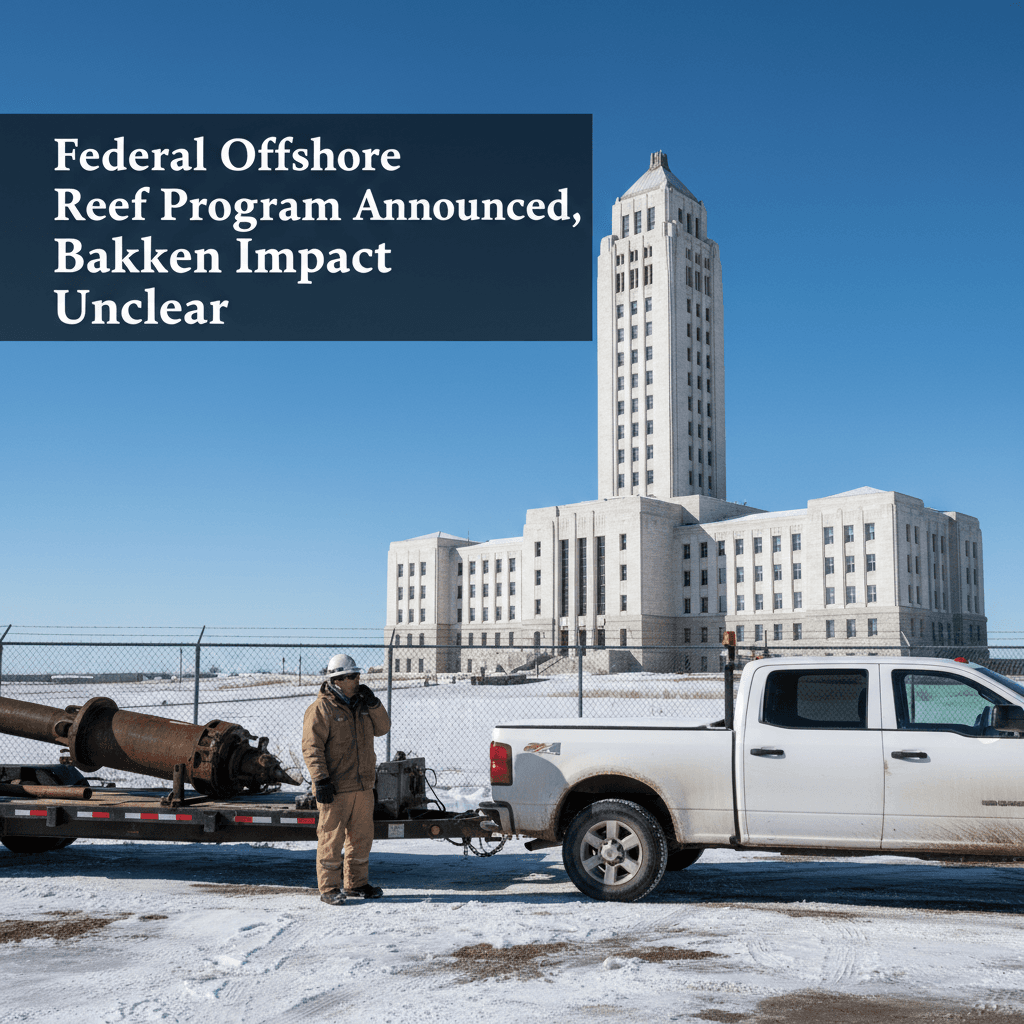
Federal Offshore Reef Program Announced, Bakken Impact Unclear

The federal Maritime and Minerals Administration (MMA) has announced a new "Reef in Place" program for the Outer Continental Shelf (OCS), according to a report from Rigzone. The program allows eligible decommissioned offshore structures to be converted into artificial reefs. Acting MMA Director Mike Olsen stated that the eligible structures "can continue to serve our coastal communities as artificial reefs," Rigzone reported. The announcement was made on November 18, 2026. The program applies specifically to federal offshore operations and has no direct regulatory or operational impact on onshore shale basins like North Dakota's Bakken formation. Bakken operators are subject to different state and federal land management and well-plugging regulations. For the Williston Basin industry, the news highlights the divergent regulatory paths for offshore versus onshore oil and gas development. While offshore operators may now have a new option for structure decommissioning, Bakken operators follow a stringent state-led process for well...

🔆Midday Wire·Nov 18
Regulatory

Venezuela Gear Repairs, Federal Land Sale Plan Draw Bakken Attention

Friday, Nov. 13, 2026 — Two policy developments reported by Rigzone on Nov. 12 are likely to draw attention from Bakken operators and royalty owners, even though neither report described North Dakota leases. Venezuela is sending state-owned oil equipment to the United States for repairs for the first time in more than a decade, according to Rigzone. The move points to a limited reopening of a trade channel that has been constrained for years. For Bakken operators, the broader significance lies in equipment logistics, service-market access and regulatory posture. The Bakken depends on a deep U.S. services base, so operators typically watch shifts in international equipment flows for signs of cost pressure, competition for shop capacity and changing trade-risk calculations. Rigzone also reported that the Trump administration unveiled plans to sell public land as part of a new strategy laying out Interior Department goals. For Bakken producers, federal-land policy matters...

☀️Morning Wire·Nov 13
Regulatory

Venezuelan Oil Gear Sent to U.S. for Repairs After Decade

Venezuela is sending state-owned oil equipment to the United States for repairs for the first time in more than a decade, according to Rigzone. The report was published Thursday, Nov. 12, 2026. The development carries regulatory significance because it involves cross-border movement of state-owned oil equipment, a type of transaction that can be shaped by policy decisions, licensing and sanctions-related restrictions. Rigzone did not provide additional details on the equipment, the regulatory approvals involved or the companies performing the repairs. For Bakken operators, the significance is indirect but real. North Dakota producers depend on a deep U.S. oilfield services base for drilling, completions, workovers and maintenance. When foreign state-owned oil equipment uses U.S. repair shops and service yards, it can reflect the availability of American industrial capacity. It can also affect demand for specialized parts, machining, inspection and repair crews that compete with domestic workloads. The move may also signal...

🌅Afternoon Wire·Nov 12