U.S. Dominates Global LNG Growth as North Dakota Oil Prices Spike
American LNG exports surged 27% in 2025, while a Bakken pricing anomaly boosted state tax revenue in May.
Global liquefied natural gas exports grew by about 1.2 trillion cubic feet in 2025, with the United States supplying approximately 1.10 trillion cubic feet of that increase, according to OilPrice.com. This means roughly 93% of the world’s additional LNG came from the United States last year.
Data from the Energy Institute’s 2026 Statistical Review of World Energy show that U.S. LNG exports increased 27% in 2025, reaching 5.2 trillion cubic feet, up from 4.1 trillion cubic feet in 2024. This made the United States the world’s largest LNG exporter by a substantial margin, capturing a 25.4% share of the global export market. Qatar ranked second with exports of 3.9 trillion cubic feet.
The expansion, which began with the shale revolution, was reinforced by existing Gulf Coast infrastructure. Key projects like Plaquemines LNG in Louisiana, which ramped up in 2025, drove much of the growth. The International Energy Agency estimates Plaquemines alone accounted for more than 60% of the increase in global LNG supply during the year, OilPrice.com reported.
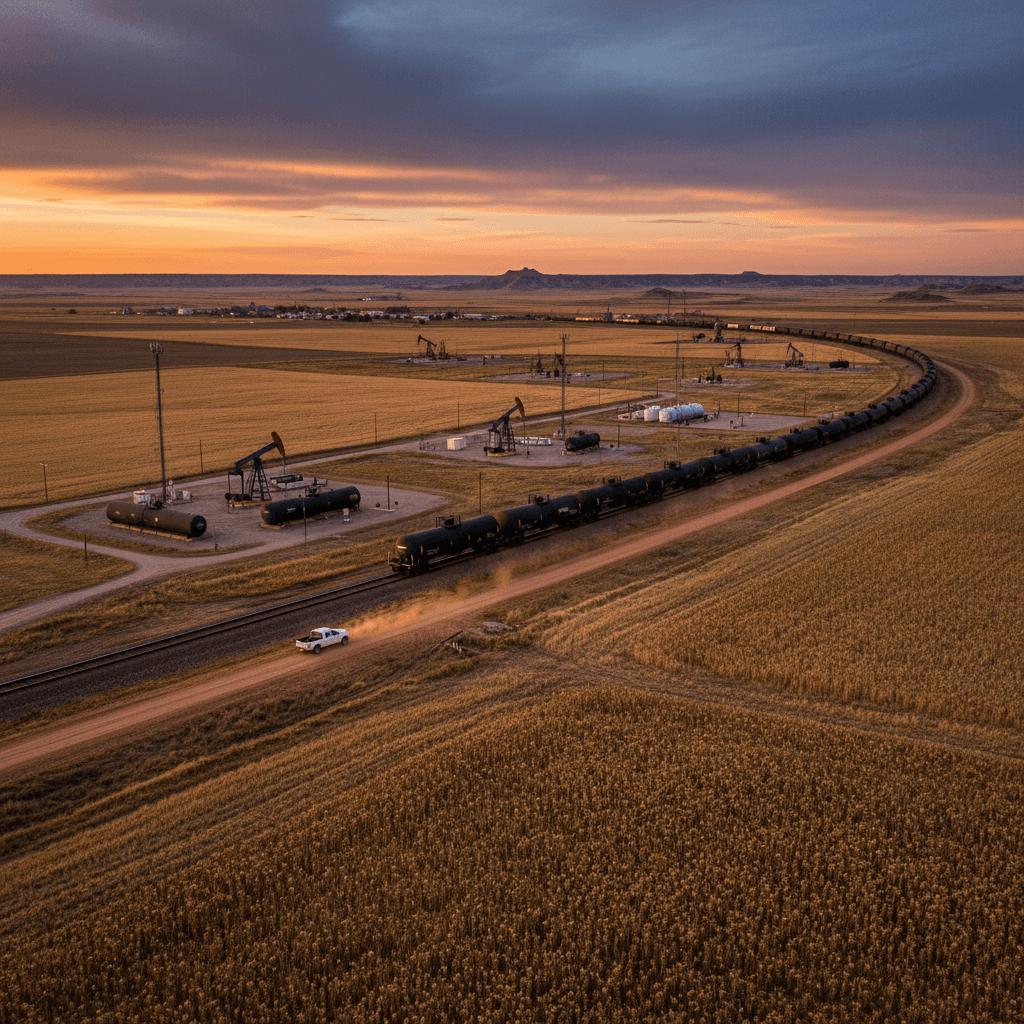
Separately, North Dakota oil producers benefited from a rare pricing event in May 2026. According to Bing News, North Dakota collected an estimated $29 million more in oil tax revenue in May as a result of a pricing anomaly that hadn’t happened in four decades. Details on the specific premium were not provided in the summary.
In other global energy news, Australian company Santos narrowed its 2026 production forecast. Rigzone reported the company revised its output guidance for the year from 101-111 million barrels of oil equivalent to 99-105 MMboe. This adjustment comes despite ramp-up activity at the Barossa and Pikka oil and gas projects.
The surge in U.S. LNG exports underscores the long-term impact of the American shale boom on global energy markets. For Bakken operators, the integration of U.S. gas into global trade networks provides a broader market context, even as local crude oil prices demonstrated significant volatility with the May pricing event.
Source
OilPrice.com, Bing News, Rigzone

