WTI Crude--
Brent Crude--
Natural Gas--
ND Rig Count--
WTI Crude--
Brent Crude--
Natural Gas--
ND Rig Count--
Regulatory

Venezuelan Oil Gear Sent to U.S. for Repairs After Decade

Rigzone reported that state-owned Venezuelan oil equipment is heading to the United States for repairs, the first such move in more than a decade.

Bakken Wire Staff·🌅Afternoon Wire·

Venezuela is sending state-owned oil equipment to the United States for repairs for the first time in more than a decade, according to Rigzone. The report was published Thursday, Nov. 12, 2026.

The development carries regulatory significance because it involves cross-border movement of state-owned oil equipment, a type of transaction that can be shaped by policy decisions, licensing and sanctions-related restrictions. Rigzone did not provide additional details on the equipment, the regulatory approvals involved or the companies performing the repairs.

For Bakken operators, the significance is indirect but real. North Dakota producers depend on a deep U.S. oilfield services base for drilling, completions, workovers and maintenance. When foreign state-owned oil equipment uses U.S. repair shops and service yards, it can reflect the availability of American industrial capacity. It can also affect demand for specialized parts, machining, inspection and repair crews that compete with domestic workloads.

The move may also signal a shift in how Venezuelan state-owned oil assets interact with U.S. service providers. If such repairs continue, operators in the Williston Basin may view the United States as a stable destination for oilfield equipment maintenance, even amid changing regulatory environments abroad. That does not necessarily mean more oil will flow from Venezuela, nor does it guarantee changes in U.S. oil markets.

Bakken companies and royalty owners are likely to focus on whether the equipment movement remains isolated or becomes part of a broader pattern. Rigzone’s report alone did not confirm a policy change, so operators should not infer a wider regulatory easing from this single development. Sustained repairs in the United States could suggest regulatory flexibility, commercial normalization or operational necessity.

For now, the main takeaway is simple: Venezuela is sending state-owned oil equipment to the United States for repairs after more than a decade, according to Rigzone. Bakken operators will watch whether that movement opens a wider channel for oilfield services trade.

Source

Rigzone, published Nov. 12, 2026
venezuelarigzoneoilfield servicesregulatorybakkenwilliston basin

Share this article

Related Articles

Trump Administration Unveils Federal Land Sale Plan - Bakken Wire
Regulatory

Trump Administration Unveils Federal Land Sale Plan

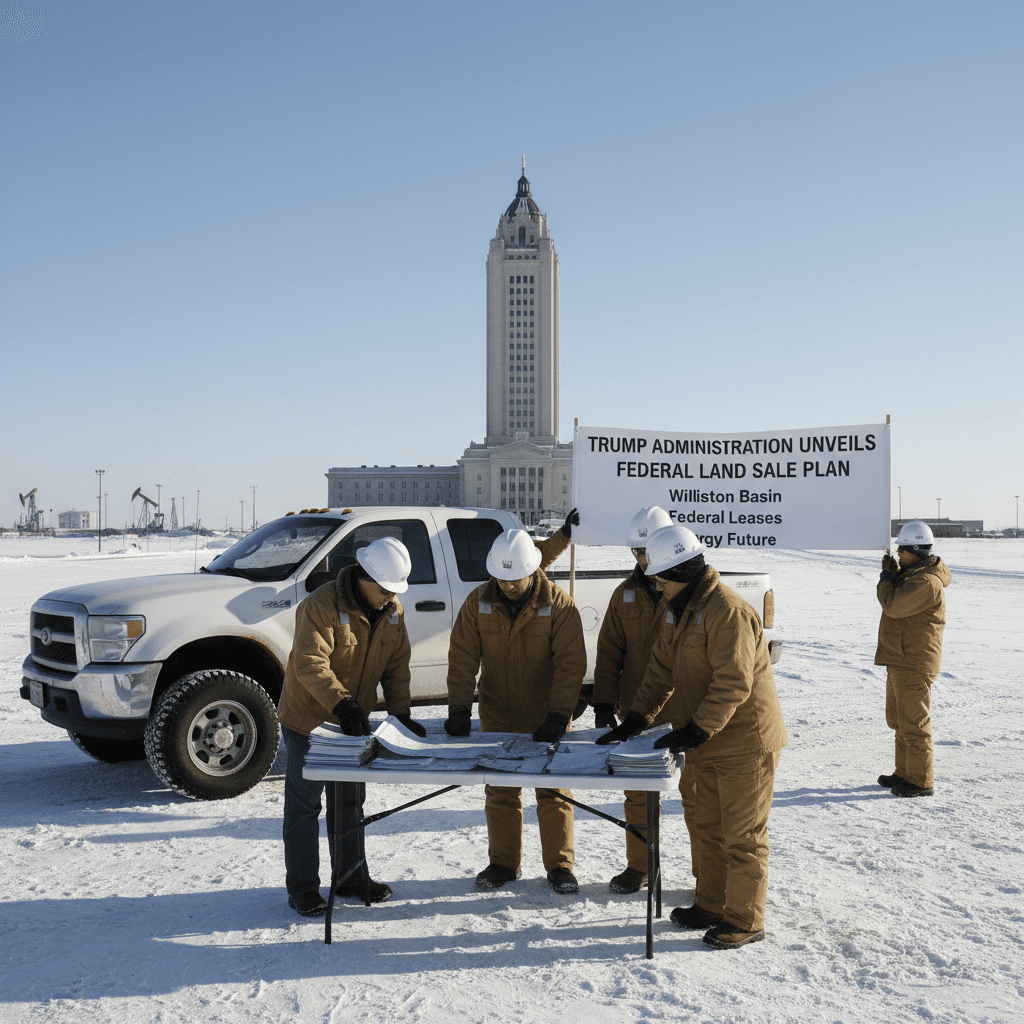
The Trump administration has unveiled plans to sell public land as part of a new strategy laying out Interior Department goals, according to Rigzone. The report, published Thursday, Nov. 12, 2026, describes the move as a policy shift affecting federal land management, but the source summary provided no acreage, sale locations, timelines or dollar figures. For Bakken operators, royalty owners and North Dakota energy stakeholders, the significance lies less in the headline than in what may follow: how the federal government treats lands, minerals, leases, rights of way and permitting in areas where oil and gas activity intersects public land. The Williston Basin includes a mix of private, tribal, state and federal interests, so changes to federal land disposition can affect access, development planning and long-term asset value. If public lands are sold, operators may need to watch whether existing leases continue, whether new leases are available, and whether surface...

🔆Midday Wire·Nov 12
Regulatory

Norway Regulator Widens AI Audit in Oil Industry

The Norwegian Ocean Industry Authority is expanding its audit of how oil and gas companies vet artificial intelligence systems and manage associated risks, according to a report from Rigzone. The regulator is reviewing the deployment of AI in industry workflows. While this audit is specific to Norway's offshore sector, it highlights a growing global regulatory focus on the integration of advanced technologies in oil and gas operations. As Bakken operators increasingly deploy AI and machine learning for tasks like predictive maintenance, production optimization, and seismic interpretation, similar scrutiny could emerge in North Dakota. The Norwegian review centers on how companies assess and mitigate the risks of using AI. This suggests that regulators are moving beyond simply encouraging innovation to ensuring it is implemented safely and reliably. For Bakken operators, proactive internal reviews of AI governance and risk management frameworks could be a prudent step. The use of AI can significantly...

☀️Morning Wire·Nov 12
Regulatory

Democratic Election Wins Set to Alter Federal Energy Landscape for Bakken

The Democratic Party's wins in the 2026 midterm elections, securing control of both the House and Senate, are poised to reshape U.S. energy policy, creating a new regulatory environment for Bakken operators, according to an OilPrice.com analysis. The incoming Democratic-majority Congress is expected to launch investigations into oil deals involving the Trump White House and attempt to revive clean energy tax credits, increasing policy uncertainty at the federal level. Key investigations will focus on "the biggest oil deal in world history" in Venezuela and a 'diesel deal' with Russia's Vladimir Putin on the eve of the elections, OilPrice.com reported. Democratic Senator Ed Markey of Massachusetts, a member of the environment and public works committee, signaled the aggressive posture on election night. "They are going to need to plant new forests for all of the subpoenas we’ll be printing," Markey said. While President Donald Trump has vowed to veto legislation he...

🌅Afternoon Wire·Nov 8