WTI Crude--
Brent Crude--
Natural Gas--
ND Rig Count--
WTI Crude--
Brent Crude--
Natural Gas--
ND Rig Count--
WTI Dips Slightly, Brent Steady Amid Mixed Market Signals - Bakken Wire
Oil Prices

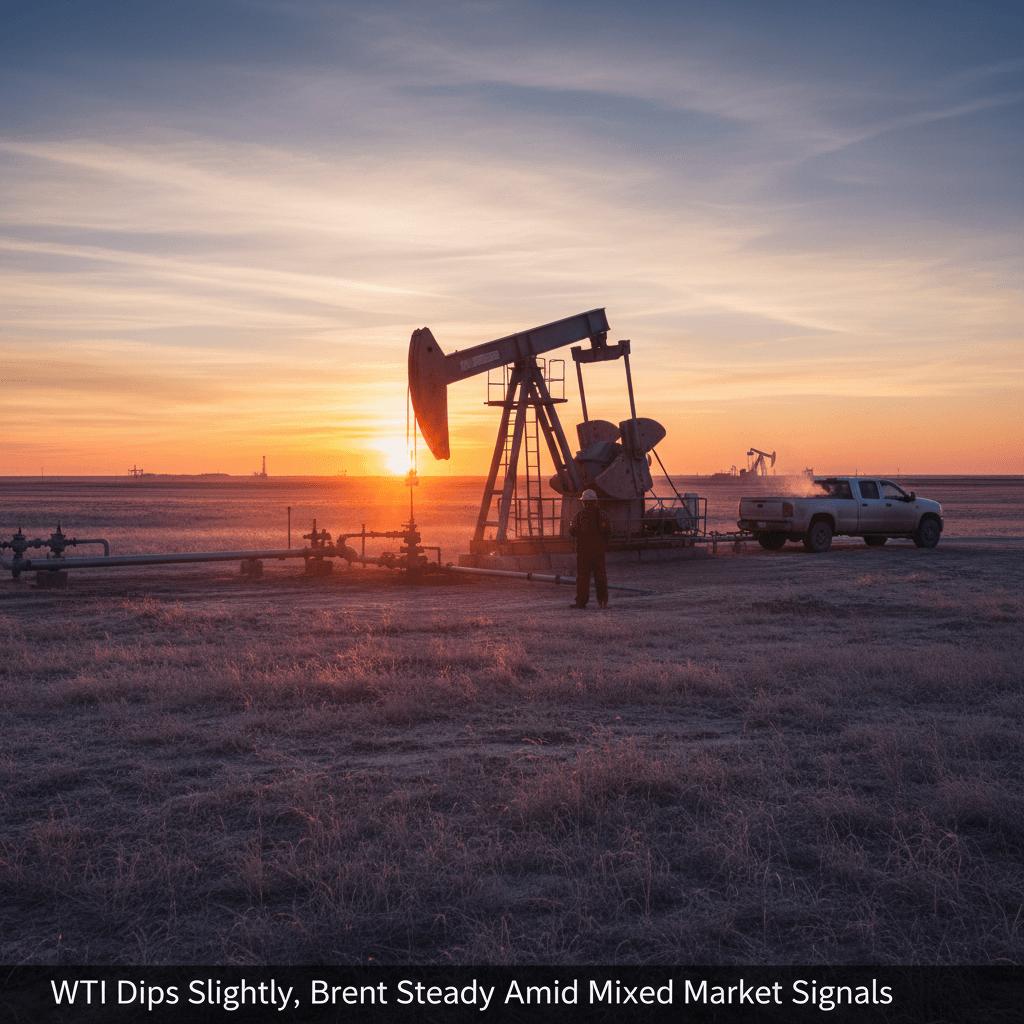
WTI Dips Slightly, Brent Steady Amid Mixed Market Signals

Crude prices hold near recent highs as geopolitical tensions offset rising U.S. inventories and new global supply.

Bakken Wire Staff·☀️Morning Wire·

West Texas Intermediate (WTI) crude traded at $88.56 per barrel early Sunday, down 0.2% from the previous close, according to live price data. The international benchmark Brent crude held steady at $95.84. Natural gas prices fell to $3.23.

The modest retreat for WTI comes as the market balances ongoing supply risks against bearish inventory data. According to Rigzone, Brent settled near $96 on November 13 as persistent tensions in the Middle East continued to underpin prices by threatening potential supply disruptions.

This geopolitical support is being challenged by signs of rising supply. A separate Rigzone report from November 13, citing the U.S. Energy Information Administration (EIA), stated that U.S. commercial crude oil stocks, excluding the Strategic Petroleum Reserve, rose by almost 5 million barrels week-on-week to 414.417 million barrels as of November 6. Rising inventories typically signal weaker demand or increased supply, placing downward pressure on prices.

Further adding to the global supply picture, the West African nation of Benin has rejoined the ranks of oil-exporting states. Rigzone reported on November 13 that Benin shipped its first crude cargo in decades from a revived oil field, introducing a new, albeit small, stream of crude to the market.

For Bakken operators, the current price environment remains favorable for continued production. WTI above $88 per barrel provides strong economics for most wells in the play, though the exact netback is unclear as the Bakken differential to WTI was undefined in the latest data. The stability of Brent at a significant premium to WTI also supports the global competitiveness of U.S. light sweet crude, which includes Bakken production.

The primary headwinds for prices are the substantial U.S. stock build and incremental supply from sources like Benin. However, the market's ability to absorb this news while keeping prices elevated demonstrates the ongoing influence of geopolitical risk premiums. Operators will be watching for any changes in the Bakken differential, which directly impacts local wellhead revenue, and for signs that the inventory build represents a sustained trend.

The coming week will likely see prices continue to react to the tug-of-war between these opposing forces: Middle East instability versus tangible increases in crude stocks and production.

Source

Live price data; Rigzone reports from November 13, 2026: "Crude Fluctuates as Iran Tensions Persist," "Benin Ships 1st Crude Cargo for Decades From Revived Oil Field," "USA Crude Oil Stocks Rise Almost 5MM Barrels Week on Week."

oil priceswtibrentbakkeninventoriesgeopolitics

Share this article

Related Articles

WTI Eases to $88.56 as Bakken Differential Holds at $3.42 Below - Bakken Wire
Oil Prices

WTI Eases to $88.56 as Bakken Differential Holds at $3.42 Below

According to live price data, WTI crude traded at $88.56 a barrel in the afternoon edition, down $0.18, or 0.2%. Brent crude was $95.84, up $0.02, or 0.02%. Natural gas fell $0.11 to $3.23 per million British thermal units. The Bakken differential was $3.42 below WTI. The small moves leave the Brent-WTI spread at $7.28 a barrel. For Bakken producers, the differential implies a realized crude price of about $85.14 a barrel, based on the data. That is still a high absolute price for North Dakota oil, but the discount matters when operators calculate netbacks, royalty checks and wellhead economics. The Bakken formation remains North Dakota’s primary oil-producing region, so benchmark prices and regional discounts are closely watched by lease operators and mineral owners. Oil markets appeared to be trading within a narrow range rather than chasing a single catalyst. In general, WTI and Brent are shaped by OPEC+ supply...

🌅Afternoon Wire·Nov 14
Oil Prices Hold Steady Amid Mixed Signals, Bakken Differential Widens - Bakken Wire
Oil Prices

Oil Prices Hold Steady Amid Mixed Signals, Bakken Differential Widens

Global oil prices showed little movement in midday trading Saturday, November 14, with West Texas Intermediate crude experiencing a minor pullback while the international Brent benchmark held firm. The stability comes amid a complex backdrop of market factors influencing producer revenues in the Bakken formation. According to live price data, WTI crude was trading at $88.56 per barrel, down 18 cents or 0.2% for the session. In contrast, Brent crude was at $95.84, up a marginal 2 cents. The price spread between the two global benchmarks remained wide at over $7 per barrel. Natural gas prices saw a more notable decline, falling 11 cents to $3.23 per MMBtu. For Bakken producers, the local price benchmark showed a weakening relative to WTI. The Bakken differential was reported at -$3.42 versus the WTI price. This discount means Bakken crude is effectively priced around $85.14 per barrel at the wellhead, directly impacting cash...

🔆Midday Wire·Nov 14
Oil Holds Near $96 as Inventories, Iran Risks Offset - Bakken Wire
Oil Prices

Oil Holds Near $96 as Inventories, Iran Risks Offset

Oil prices were roughly steady in the latest data, with Brent Crude at $95.84, up 2 cents, and WTI Crude at $88.56, down 18 cents, or 0.2%. Natural Gas fell 11 cents to $3.23. The Bakken differential stood at minus $3.42 against WTI, indicating regional crude was trading below the U.S. benchmark. The market balanced competing signals, according to Rigzone. Brent settled near $96 as Middle East supply risks, including Iran tensions, offset signs of an oil surplus, Rigzone reported. That dynamic has kept the global benchmark elevated relative to WTI. The Brent-WTI spread in the latest data was about $7.28, a gap that can affect how Bakken barrels are valued when they are sold into markets influenced by international pricing. On the supply side, U.S. commercial crude inventories, excluding the Strategic Petroleum Reserve, rose nearly 5 million barrels week on week, Rigzone reported. The Energy Information Administration's latest weekly...

☀️Morning Wire·Nov 14