WTI Holds at $91.48, Bakken Discount Widens to $3.42
Global supply tensions from Iran conflict continue to support high benchmark prices, while a surge in electric two-wheelers highlights demand-side pressures.
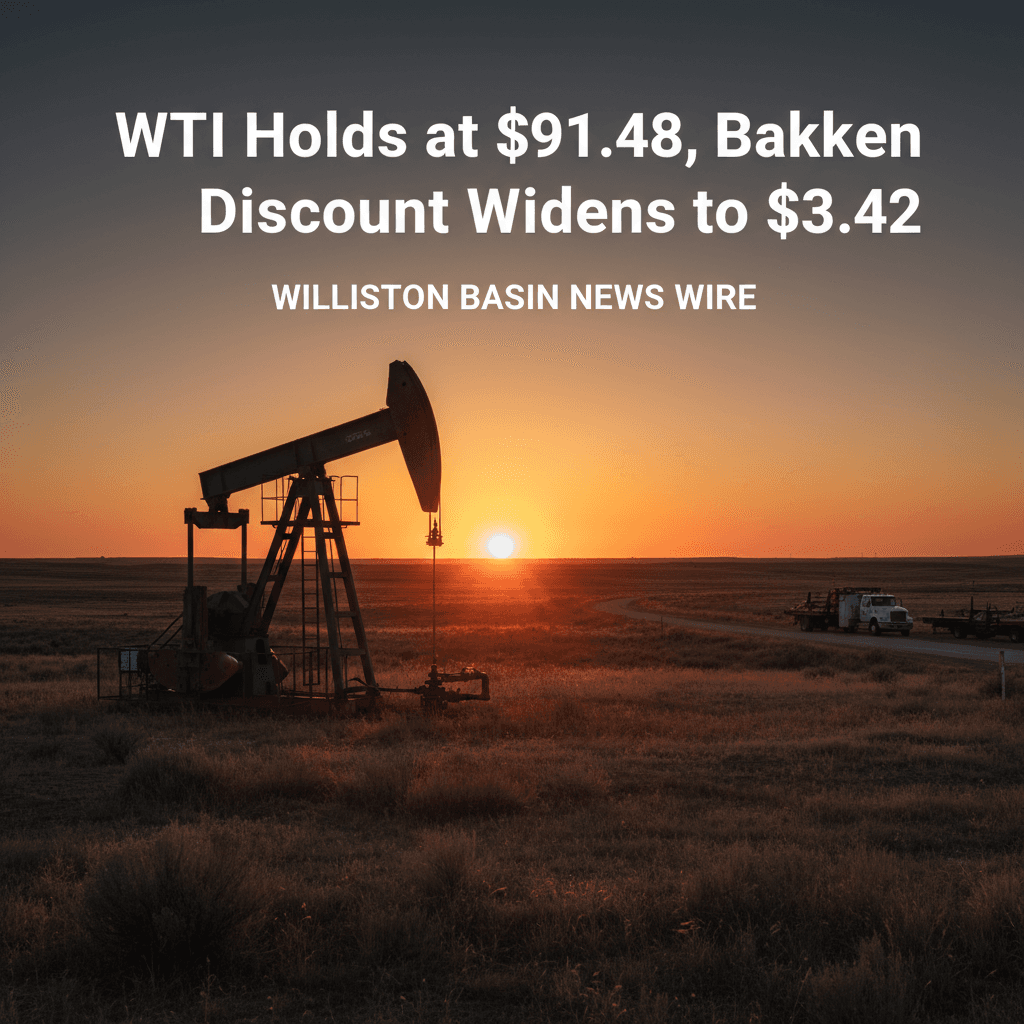
Front-month WTI crude futures held steady at $91.48 per barrel on Sunday, with the global Brent benchmark at $96.28. The Bakken differential, representing the discount for North Dakota sweet crude at the Clearbrook, Minnesota hub, widened to $3.42 below WTI.
The sustained high price environment is largely attributed to ongoing global supply tensions stemming from the Iran War, which began after U.S.-Israeli attacks in February and led to the closure of the Strait of Hormuz. According to a report from OilPrice.com, these events have driven oil and gas prices up sharply in recent months, creating energy shortages and forcing consumers worldwide to pay a premium for fuel.
This price pressure is having a tangible impact on transportation demand in certain markets. The same report highlights that high fuel costs are powering an electric motorcycle boom, particularly in low-income countries and crowded cities where two-wheel vehicles are prevalent. In Pakistan, where motorbikes constitute about 80% of vehicles, sales of electric two-wheelers rose 173% in the first half of 2026. In Vietnam, VinFast reported delivering 143,136 electric motorbikes and e-bikes in Q1 2026, a 219% increase year-over-year, with policies like low-emission zones in Hanoi accelerating adoption.
For Bakken operators, the current price matrix presents a stable but complex outlook. A WTI price above $90 provides strong revenue potential and supports continued drilling and completion activity in the play. However, the widening Bakken differential to -$3.42 indicates increased regional pricing pressure or transportation costs, which marginally erodes the wellhead value compared to the benchmark. Operators must manage this differential to maintain profitability.
The related surge in electric two-wheeler adoption, while currently a distant demand-side factor for North Dakota producers, underscores how sustained high oil prices can accelerate fuel substitution in specific transportation segments globally. This long-term demand erosion in certain markets contrasts with the immediate supply-driven price support.
Natural gas prices, often a co-product for Bakken wells, were listed at $2.98, providing a modest revenue stream alongside crude. The overall high commodity price environment continues to support the economic fundamentals for the Williston Basin, though operators remain exposed to global geopolitical risks and evolving demand patterns.
Source
Live Price Data, OilPrice.com