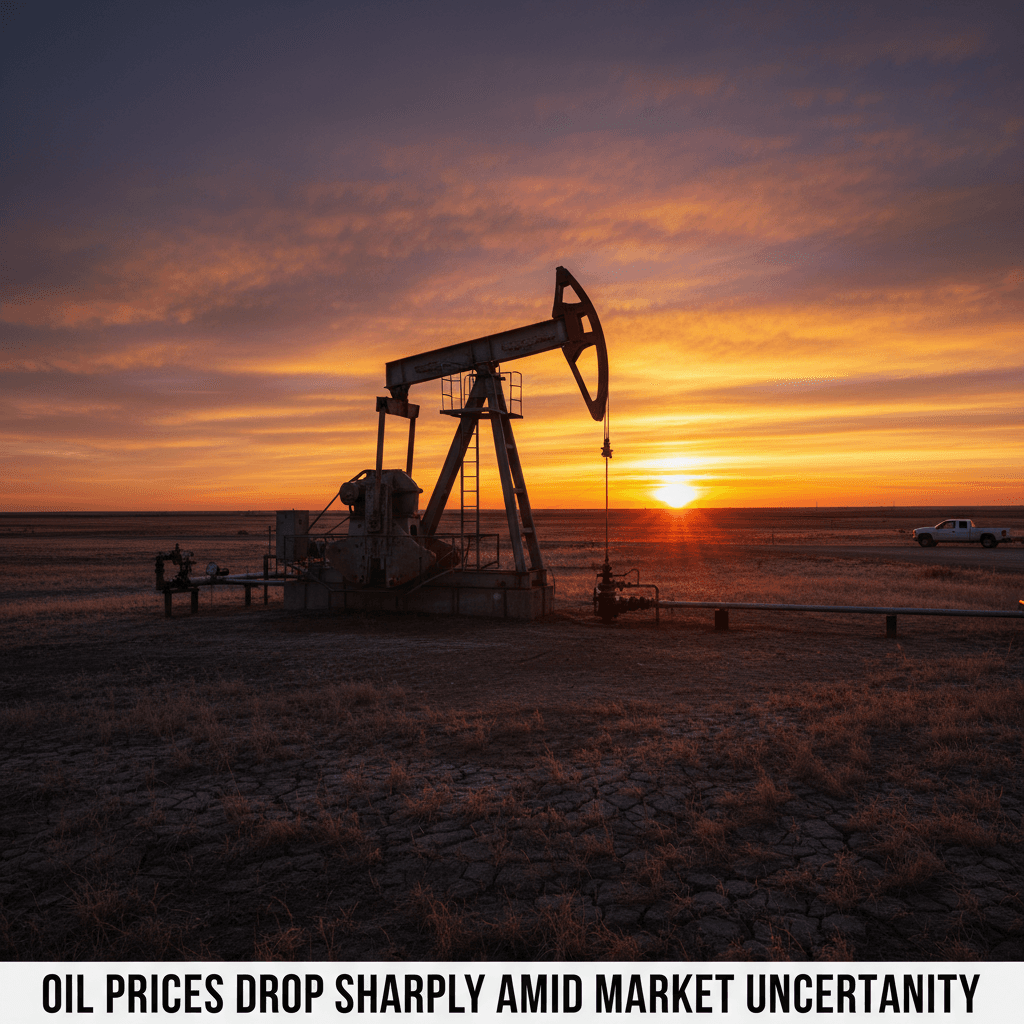
WTI Slips Below $75, Bakken Differential Narrows to -$3.42
Crude prices fall on expectations of rising U.S. inventories, pressuring Bakken wellhead economics.
West Texas Intermediate (WTI) crude oil fell sharply Wednesday, trading down 0.92% to $75.07 per barrel. The decline significantly outpaced a minor 0.06% dip in the global Brent benchmark, which settled at $79.31, according to live price data. The key Bakken differential—the discount at which North Dakota crude trades versus WTI—stood at -$3.42.
The primary pressure on U.S. prices came from expectations of rising domestic stockpiles. Strategists at Macquarie forecast that U.S. crude inventories increased for the week ending July 31, Rigzone reported. An anticipated build in supplies typically weighs on near-term pricing for the U.S. benchmark.
Natural gas prices also saw slight downward movement, dipping $0.01 to $2.67 per MMBtu. The modest decline in gas, coupled with the steeper drop in oil, highlights a market focused on crude inventory dynamics.
For Bakken operators, the day's price action presents a mixed but challenging picture. The nearly $1 drop in WTI directly lowers the revenue potential for every barrel produced. However, the Bakken differential's current level of -$3.42 represents a relatively narrow discount compared to historical spreads, which have occasionally exceeded $10 per barrel. This narrower differential helps mitigate some of the headline WTI loss for producers selling at the wellhead.
The growing expectation of a crude inventory build, as indicated by the Macquarie forecast, suggests the market is anticipating either weaker demand or stronger supply than previously estimated. This sentiment is a key driver behind WTI's underperformance relative to the Brent benchmark on Wednesday.
Sustained price levels above $75 are generally considered supportive for continued drilling and completion activity in the Bakken formation, North Dakota's primary oil-producing region. However, rapid declines or increased volatility can prompt operators to reassess capital spending plans, particularly for marginal wells.
Market participants will await official inventory data from the U.S. Energy Information Administration to confirm the forecasted build. The direction of the Bakken differential will also be closely watched, as pipeline capacity and regional refining demand directly impact the realized price for local producers.
Source
Live price data, Rigzone report on Macquarie strategists' inventory forecast.