WTI Crude--
Brent Crude--
Natural Gas--
ND Rig Count--
WTI Crude--
Brent Crude--
Natural Gas--
ND Rig Count--
Bakken Output Holds Steady as Global Tensions, Investor Shifts Loom - Bakken Wire
Pipeline & Infrastructure

Bakken Output Holds Steady as Global Tensions, Investor Shifts Loom

North Dakota oil production ticks up to 1.129 million bpd in February, while events abroad highlight market volatility and shifting capital pressures.

Bakken Wire Staff·☀️Morning Wire·

North Dakota's oil production held firm in February, posting a slight increase to 1.129 million barrels per day, according to the state's Department of Mineral Resources. Natural gas output also rose to 3.392 billion cubic feet per day.

The data, which lags by about two months, shows 96.2% of the state's production continues to come from the Bakken and Three Forks formations. The rig count in North Dakota stood at 26 as of April 21, up by one from March. McKenzie County remains the top producer, accounting for 32% of the state's total.

Statewide gas capture improved, increasing to 95.8% in February, while the volume of flared gas decreased by 21.1 million cubic feet per day to 136.5 MMcf/d. The number of producing wells reached 19,625 in October 2025, an all-time high.

The stability in Bakken output contrasts with heightened geopolitical risks affecting global oil transport. According to a separate report from OilPrice.com, an explosion rocked the South Korean cargo ship HMM Namu in the Strait of Hormuz on Monday. The cause of the fire in the ship's engine room is under investigation, with South Korean authorities not yet confirming if it was an external attack or internal malfunction.

The incident has increased tensions in the critical chokepoint, with U.S. President Donald Trump suggesting in a social media post that Iran was responsible. South Korea-operated ships near the United Arab Emirates have begun moving toward Qatar to avoid the strait.

Simultaneously, a major source of global investment capital is facing scrutiny over its climate stance. Norway's $2.2 trillion Government Pension Fund Global, a shareholder in many large oil companies including Bakken operator Chevron, has been accused of reducing active engagement on climate issues. A report from climate group Framtiden i våre hender, cited by OilPrice.com, analyzed the fund's 2025 voting at 12 major oil firms and found it sided with management on nearly all key votes, supporting just one of 23 priority resolutions potentially linked to climate concerns.

For Bakken operators, the local production fundamentals remain solid. The top producers in North Dakota for 2026 are led by Chord Energy at 18.5%, Continental Resources at 15.2%, and ConocoPhillips at 13.3%. However, the global landscape underscores persistent risks: volatility in key shipping lanes can impact crude prices, while the investment strategies of massive funds like Norway's could influence long-term capital flows and shareholder expectations for the industry.

Source

North Dakota Department of Mineral Resources via Minot Daily News, OilPrice.com
bakkenoil productionpipelinegeopoliticsinvestmentnatural gasrig count

Share this article

Related Articles

Pipeline & Infrastructure

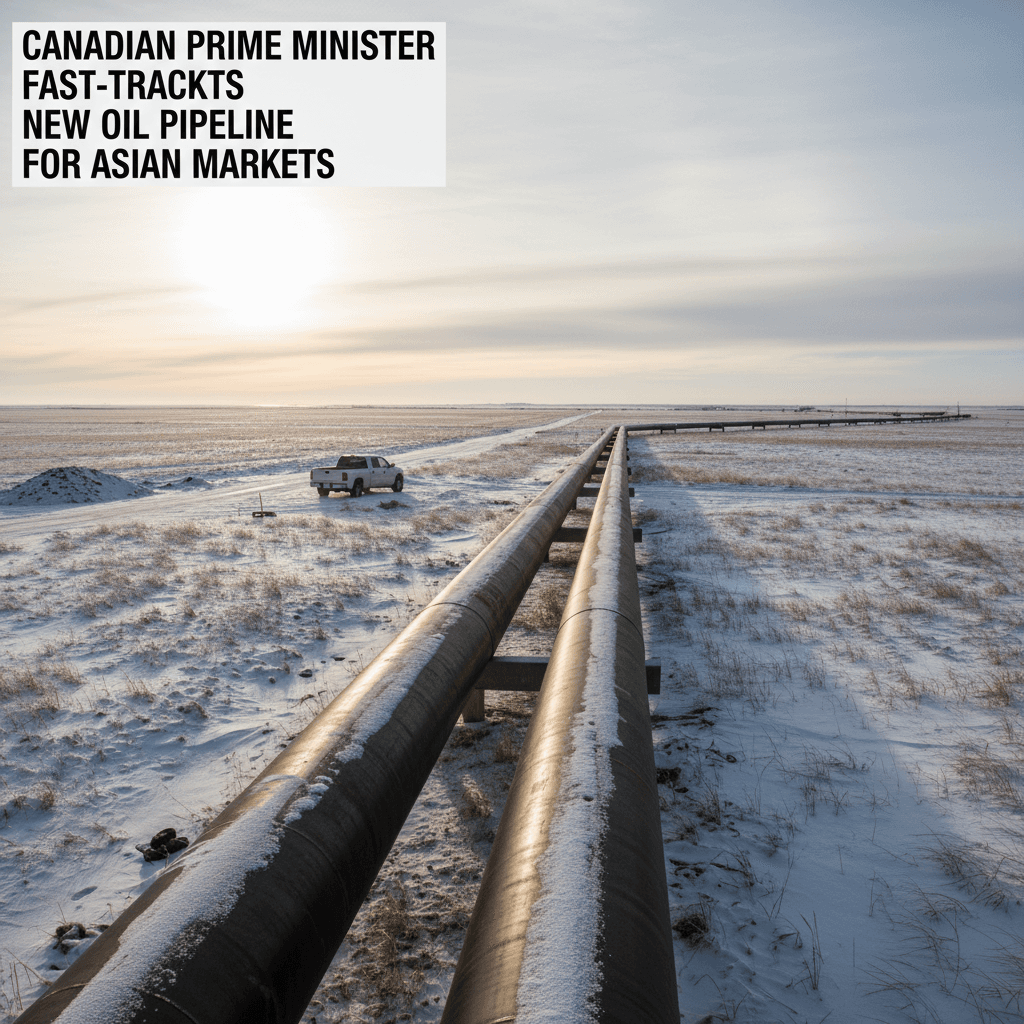
Canada Moves to Fast-Track Oil Pipeline for Asian Markets

Canadian Prime Minister Mark Carney is invoking new powers to fast-track regulatory approval for a major new oil pipeline, according to a report from Rigzone. The move aims to expand Canada's access to Asian crude markets. While the specific pipeline project was not named in the report, the push for increased export capacity from Canada represents a significant shift in North American energy infrastructure policy. For Bakken operators, the development carries both competitive and logistical considerations. Increased pipeline capacity from Western Canada could influence crude pricing benchmarks across the continent, including the Bakken's own local price at Clearbrook, Minnesota. Greater volumes of Canadian crude reaching global markets can affect the supply-demand balance for similar light sweet crudes produced in the Williston Basin. Historically, pipeline constraints have limited Canadian crude to primarily U.S. Midwest markets, keeping a lid on prices. A new high-capacity outlet to Asia could alter that dynamic, potentially...

☀️Morning Wire·Oct 4
Canadian Prime Minister Fast-Tracks New Oil Pipeline for Asian Markets - Bakken Wire
Pipeline & Infrastructure

Canadian Prime Minister Fast-Tracks New Oil Pipeline for Asian Markets

Prime Minister Mark Carney has invoked new powers to expedite regulatory approval for a new, high-capacity oil pipeline, according to a report from Rigzone. The move aims to expand Canada's access to Asian markets. The development, reported on October 2, signals a renewed push by Canada to move its crude oil to West Coast export terminals. For Bakken operators in North Dakota, new Canadian pipeline capacity can influence regional market dynamics. Increased pipeline takeaway capacity from Western Canada can affect the flow of competing crudes, including Bakken barrels, through existing midcontinent pipeline systems. Changes in these flows can impact local basis differentials—the difference between the price of Bakken crude at the wellhead and the U.S. benchmark price. While the Rigzone report did not specify a pipeline route or capacity, any major new Canadian export conduit could alter crude oil logistics in North America. Bakken crude often moves to market via...

🔆Midday Wire·Oct 3
Pipeline & Infrastructure

Canada Moves to Fast-Track Oil Pipeline for Asian Market Access

Canadian Prime Minister Mark Carney is expediting regulatory approval for a new, high-capacity oil pipeline intended to expand Canada's access to Asian markets, according to a report from Rigzone. The report, published October 2, stated Carney has invoked new powers to fast-track the project. The development highlights ongoing efforts by North American producers to reach lucrative overseas markets beyond domestic and traditional refining hubs. Increased Canadian export capacity to Asia could influence global crude pricing benchmarks and shipping routes. For operators in North Dakota's Bakken formation, new Canadian pipeline capacity represents a shifting competitive landscape. Bakken crude, which primarily moves to market via pipelines, rail, and truck, often competes with Canadian heavy and light crude grades in the U.S. Midwest and Gulf Coast refining markets. Enhanced Canadian access to Asian buyers could, over time, alter flow patterns and competition for pipeline space within the continent. However, the specific impact on...

🌅Afternoon Wire·Oct 2