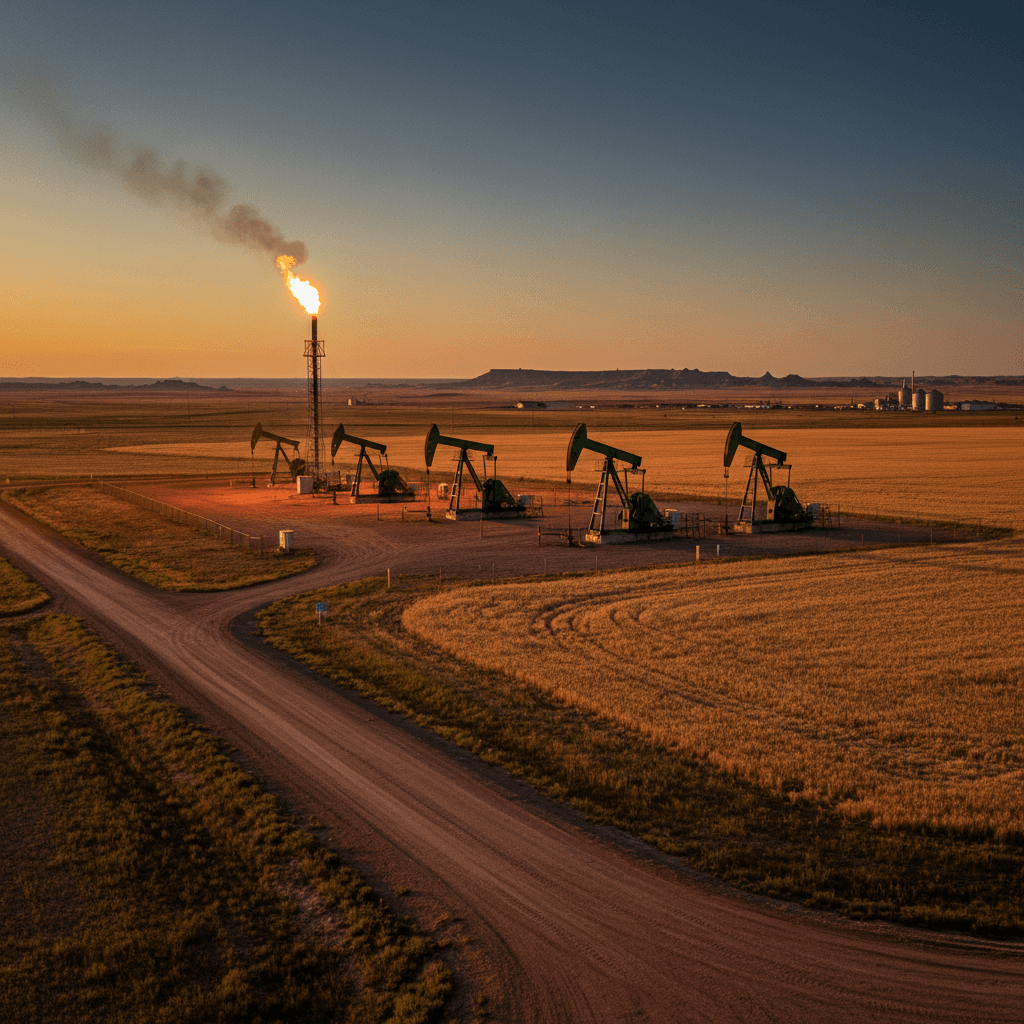
Bakken Production Outlook Faces Pressure Amid Falling Prices, Low Rig Count
North Dakota's active rig count holds at 23 as crude prices retreat, signaling potential constraints on future output growth.
North Dakota's oil production outlook is facing headwinds as key indicators—rig activity and crude prices—point toward potential constraints on future output growth. As of Sunday, May 3, 2026, the state's active rig count stands at 23, according to live Bakken data.
Historically, the rig count serves as a leading indicator for production trends in the Bakken formation. A sustained low number of drilling rigs typically translates into fewer new wells being completed, which can eventually lead to a plateau or decline in overall oil production as the output from existing wells naturally declines over time. The current count of 23 rigs is a critical data point for assessing the trajectory of North Dakota's output in the coming months.
Simultaneously, crude oil prices have retreated, providing another signal about near-term operator activity. Live data shows WTI crude trading at $101.94, down $3.13 or 2.98% on the day. Brent crude is at $108.17, down $2.23. The Bakken crude differential—the price discount for Bakken crude compared to WTI—is -$3.42. While prices remain above $100 per barrel, the recent drop may influence capital expenditure decisions among operators in the Williston Basin.
The combination of a low rig count and softening prices suggests a cautious environment for production growth. Operators may be moderating drilling programs in response to market signals or focusing capital on optimizing existing production rather than aggressive new development. Natural gas prices, at $2.78, remain low, which also affects the economics of associated gas production from Bakken wells.
For royalty owners and service companies in North Dakota, these metrics are vital for understanding the local industry's pace. Production levels can remain robust for a period even with a low rig count due to the high initial production rates of modern Bakken wells and the large inventory of drilled but uncompleted wells (DUCs). However, the rig count ultimately drives the replenishment of that inventory and long-term supply.
The immediate outlook hinges on whether the current rig count stabilizes or declines further, and on whether crude prices find support above the $100 threshold. Any sustained drop below that level could further dampen the incentive to deploy additional rigs in the Bakken, directly impacting future production volumes in North Dakota's primary oil-producing region.
Source
Bakken Wire Live Data as of May 3, 2026