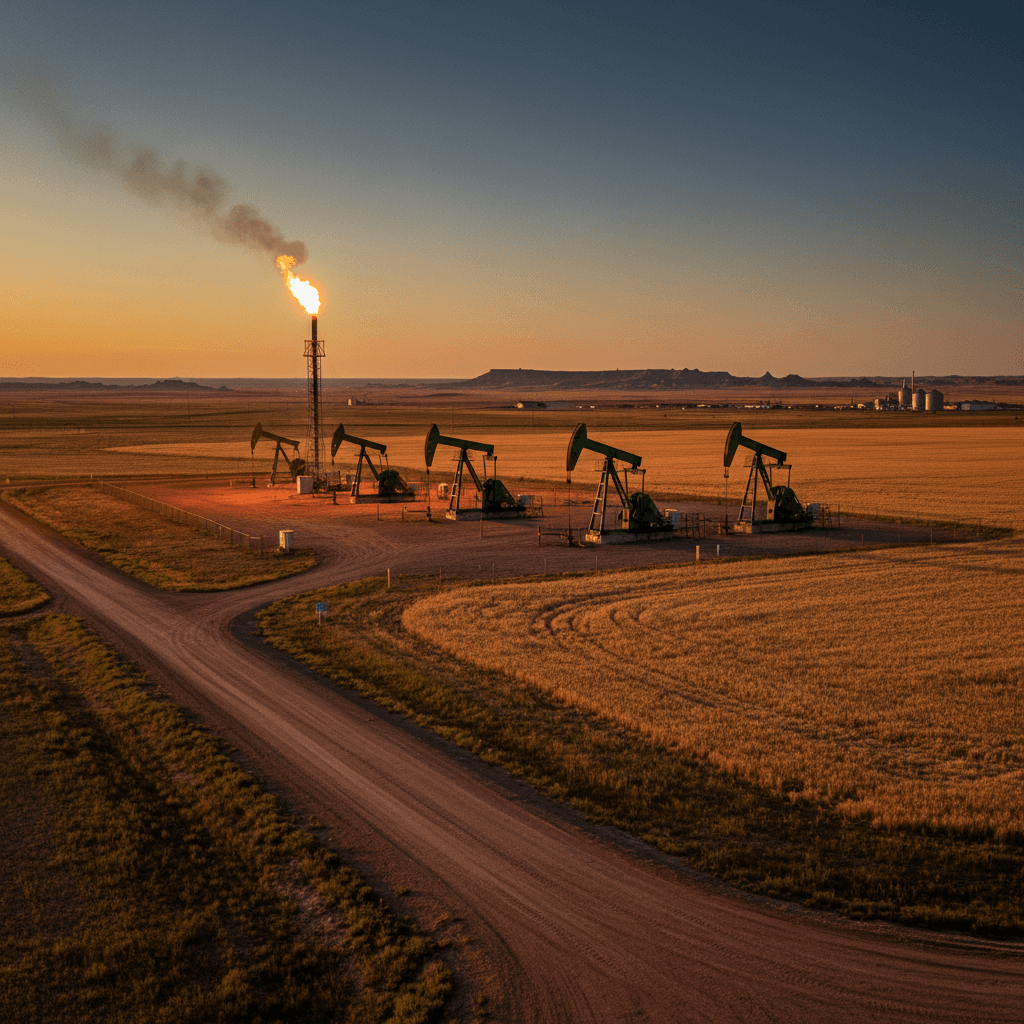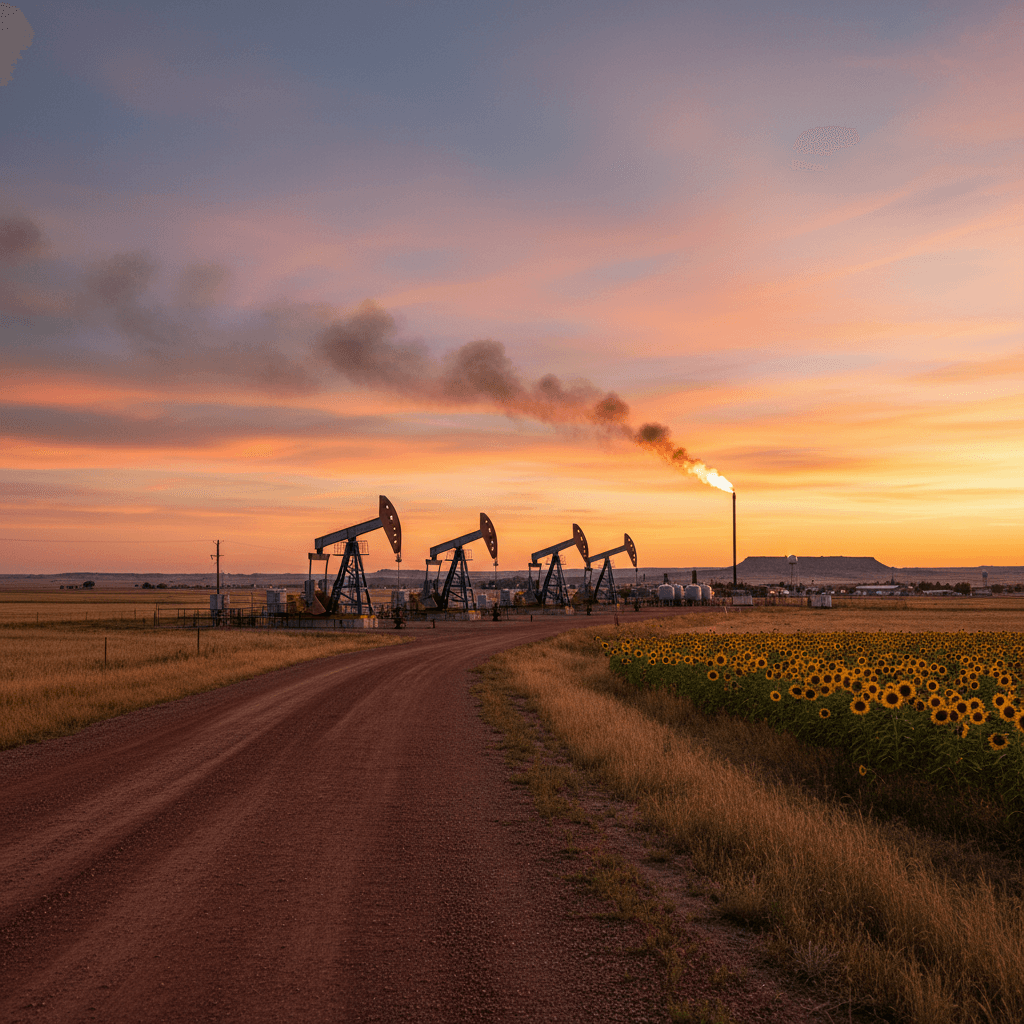
Bakken Rig Count Holds at 22 Amid High Oil Prices, Production Outlook Steady
North Dakota's active drilling fleet remains limited despite strong crude prices, suggesting a focus on efficiency over volume growth.
North Dakota's oil and gas industry maintained 22 active drilling rigs on Tuesday, a level signaling continued capital discipline by operators despite crude oil prices holding above $100 per barrel. According to live Bakken data, West Texas Intermediate (WTI) crude was trading at $103.89, with the Bakken crude differential at a discount of $3.42 per barrel.
The current rig count, while stable, remains far below the historical peaks seen during previous boom cycles. Historically, the rig count is a leading indicator for future production, as new wells must be drilled to offset the steep decline rates typical of Bakken shale wells. The sustained low number of active rigs suggests that near-term production growth in the state is likely to be modest, with operators prioritizing free cash flow and shareholder returns over aggressive expansion.
The price environment remains supportive for drilling activity. Brent crude, the international benchmark, was at $110.94. However, the stagnant rig count indicates that high prices alone are not driving a surge in new drilling projects. Companies are focusing on drilling their highest-quality inventory and improving operational efficiency to maximize returns from each well.
Natural gas prices, a secondary revenue stream for Bakken producers, were recorded at $3.08 per MMBtu. The Bakken formation is primarily an oil play, and its economics are largely driven by crude prices. The current price deck provides healthy margins for many operators, allowing them to maintain production with a leaner drilling program.
The outlook for North Dakota oil production in the coming months points to stability rather than rapid growth. With a rig count in the low 20s, the industry is drilling enough wells to largely offset natural declines from existing wells. Significant upward movement in production would require a sustained and substantial increase in the drilling rig count, which has not materialized despite favorable prices. The current strategy across the shale patch emphasizes generating returns over pursuing growth at any cost.
Source
LIVE BAKKEN DATA as of Tuesday, May 19, 2026