Bakken Rig Count Holds at 25 Amid Stable Oil Prices
Workforce and housing dynamics in western North Dakota reflect a steady, moderate level of oilfield activity.
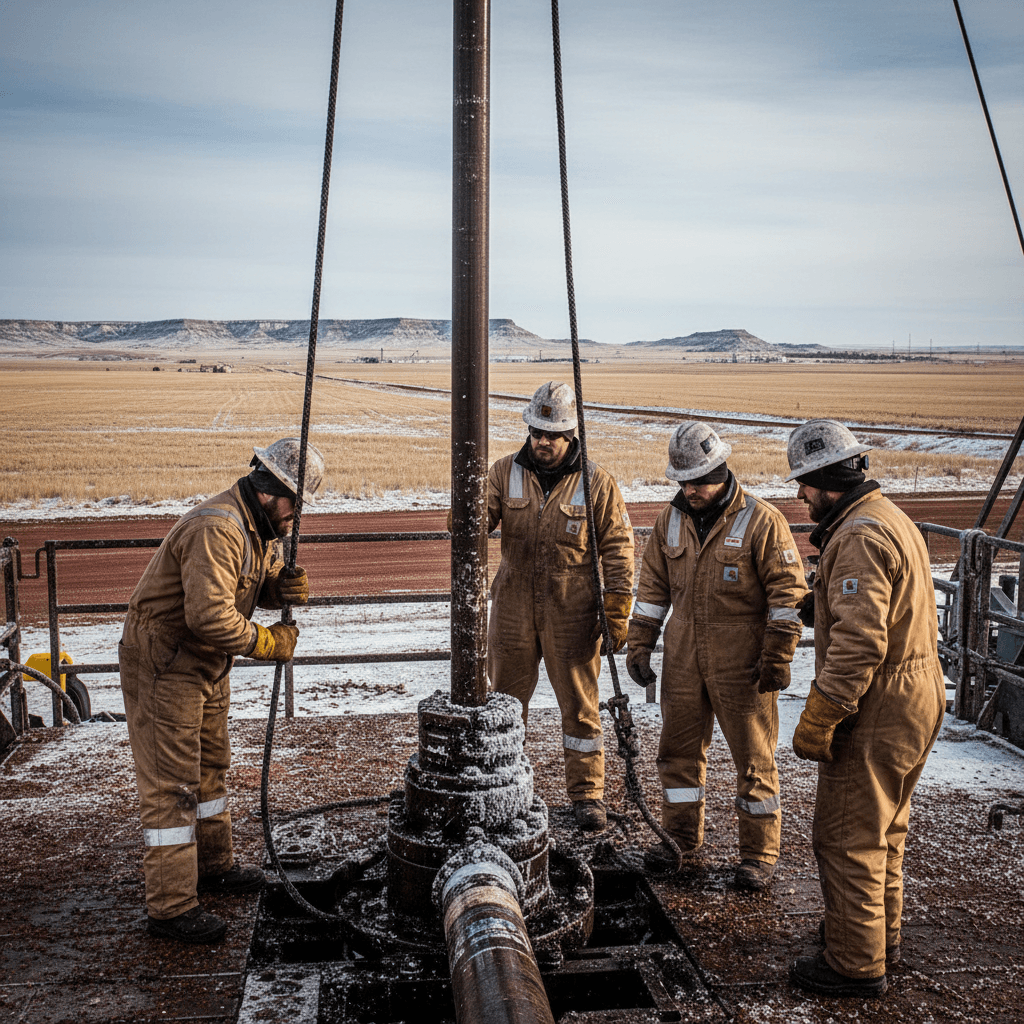
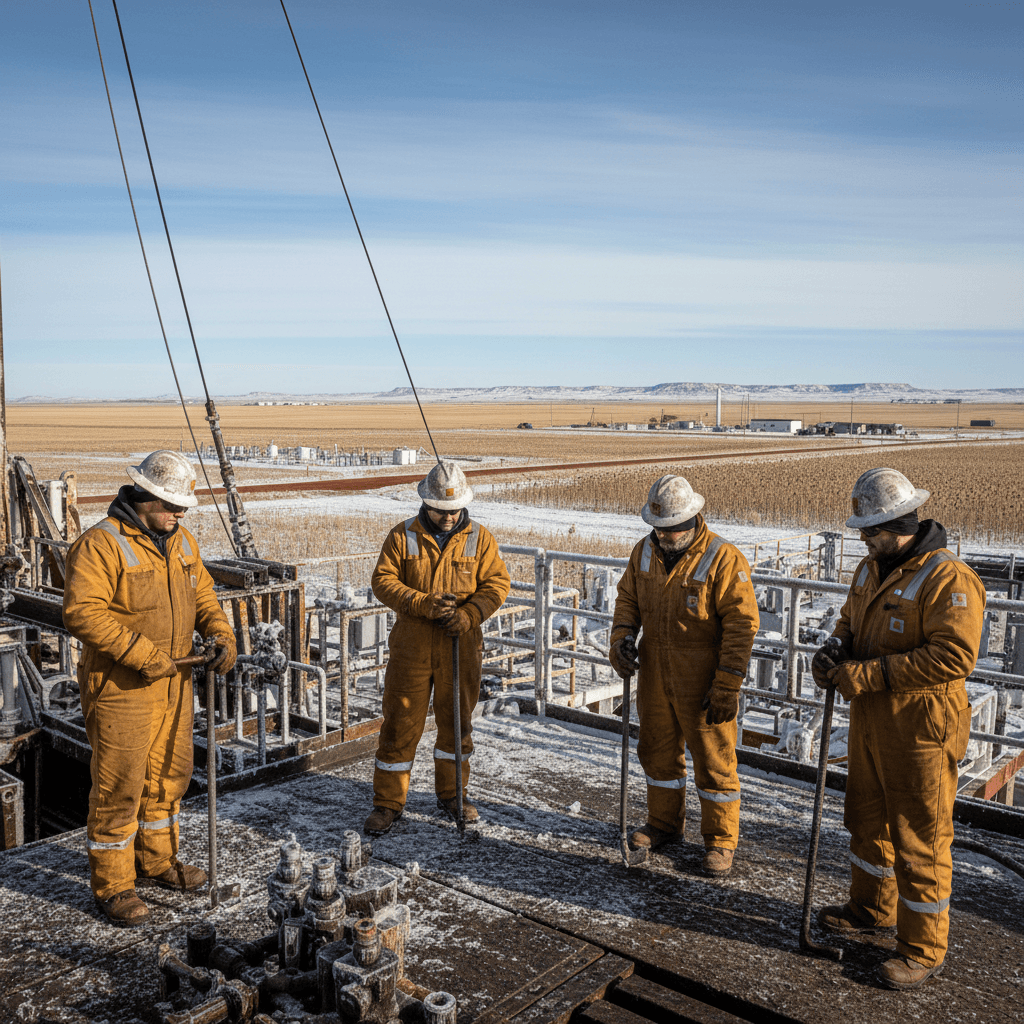
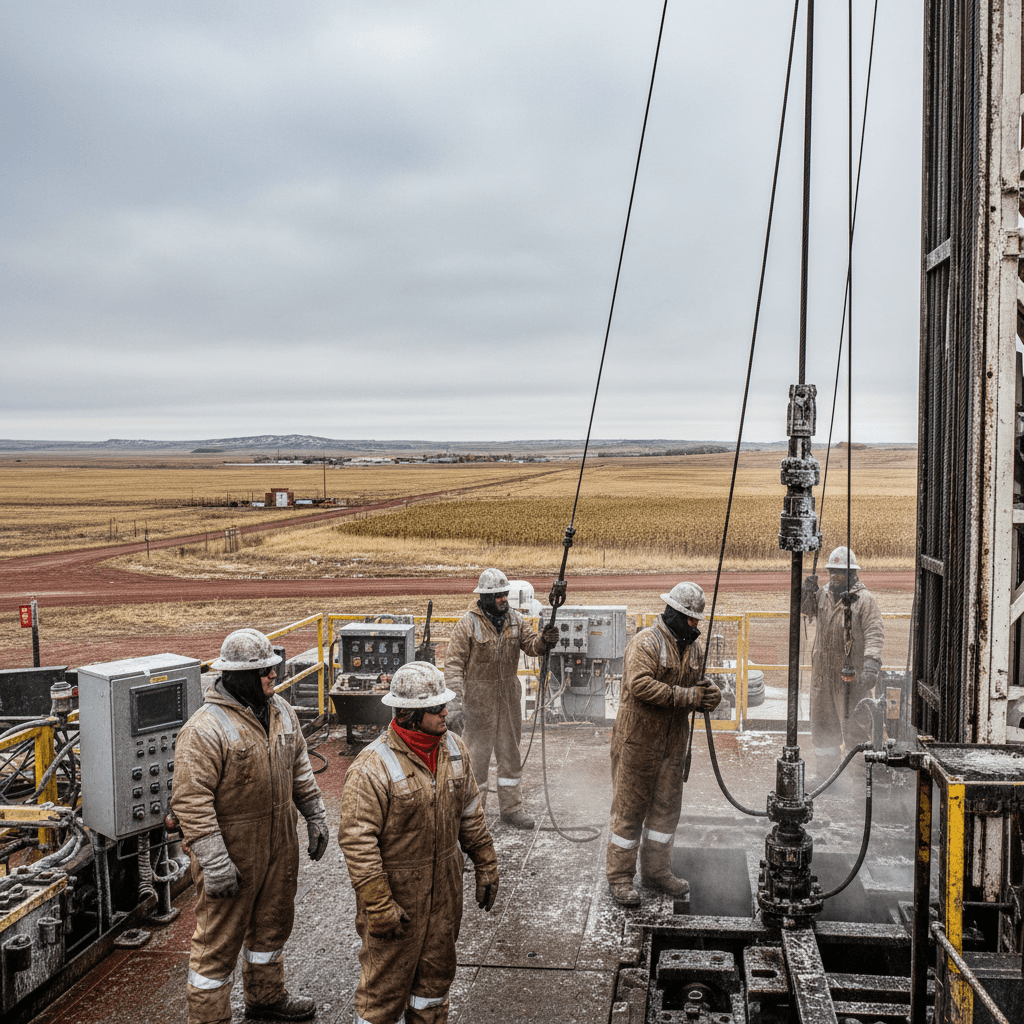
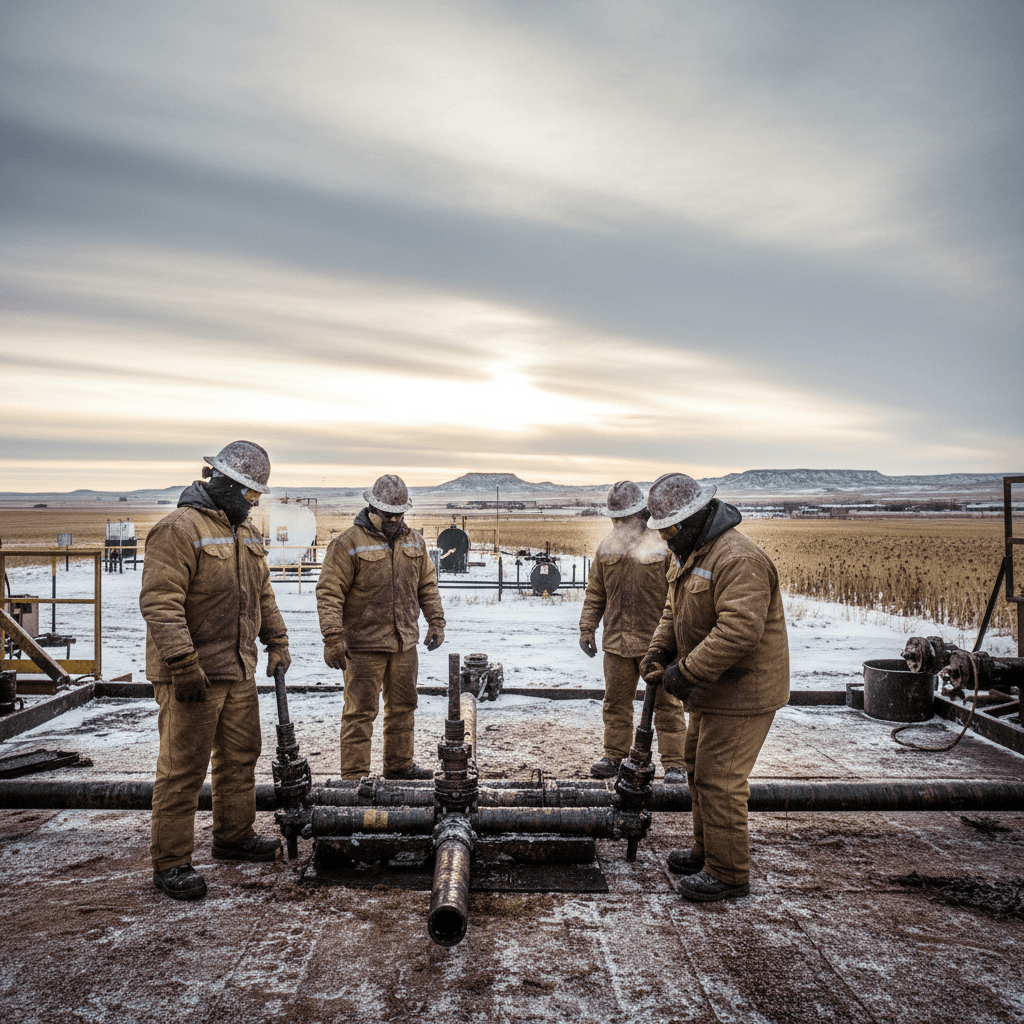
The number of active drilling rigs in the Bakken formation held at 25 on Saturday, May 23, 2026, signaling a continued, moderate pace of oilfield employment demand in western North Dakota. The current rig count, a key indicator of direct industry employment, supports a workforce level significantly below the historic peaks of the last boom but stable compared to recent months.
This activity level is underpinned by firm crude oil prices. West Texas Intermediate (WTI) crude traded at $96.60 per barrel, up 25 cents on the day, while the global benchmark Brent crude was at $100.21, according to live Bakken Wire data. These prices provide operators with sufficient economic incentive to maintain drilling programs but not necessarily to aggressively expand them.
For oil towns like Williston, Watford City, and Dickinson, a rig count in the mid-20s translates to a sustained need for field personnel, including drillers, roustabouts, and completions crews, though hiring is selective and tied to specific projects. The demand for ancillary services—from trucking to well servicing—also tracks closely with this level of operational activity.
Housing availability, a perennial challenge during boom cycles, has largely stabilized in this environment. The current activity level does not generate the massive, sudden influx of workers that overwhelmed local housing markets in the past. Many apartment complexes and "man camps" built during previous expansions now operate at steady occupancy rates, with less pressure for new construction. However, housing costs in the region remain elevated compared to state and national averages due to the legacy of past infrastructure investments.
Community impacts are mixed. Local sales tax revenues in oil-producing counties benefit from consistent industrial activity and the spending of a resident workforce. Schools and public services are not facing the explosive growth challenges of a decade ago but must manage populations that are stable yet still shaped by the oil industry's cycles. The current steady state allows for more predictable long-term community planning compared to the volatility of boom-and-bust periods.
The Bakken formation remains North Dakota's primary oil-producing region, and the rig count is a vital pulse check on its economic engine. The current figure of 25 active rigs suggests the region is in a phase of managed, efficient production rather than rapid expansion, defining the workforce and living landscape for western North Dakota communities.
Source
Bakken Wire Live Data, May 23, 2026