WTI Crude$--/bbl +0.00 (+0.00%)
Brent Crude$--/bbl +0.00 (+0.00%)
Natural Gas$--/MMBtu +0.00 (+0.00%)
ND Rig Count-- +0 WoW
WTI Crude$--/bbl +0.00 (+0.00%)
Brent Crude$--/bbl +0.00 (+0.00%)
Natural Gas$--/MMBtu +0.00 (+0.00%)
ND Rig Count-- +0 WoW
Bakken Rig Count Holds at 30 as Oil Prices Retreat - Bakken Wire
Workforce & Community

Bakken Rig Count Holds at 30 as Oil Prices Retreat

Workforce stability in western North Dakota is underpinned by steady drilling activity despite a Friday dip in crude benchmarks.

Bakken Wire Staff·🌅Afternoon Wire·

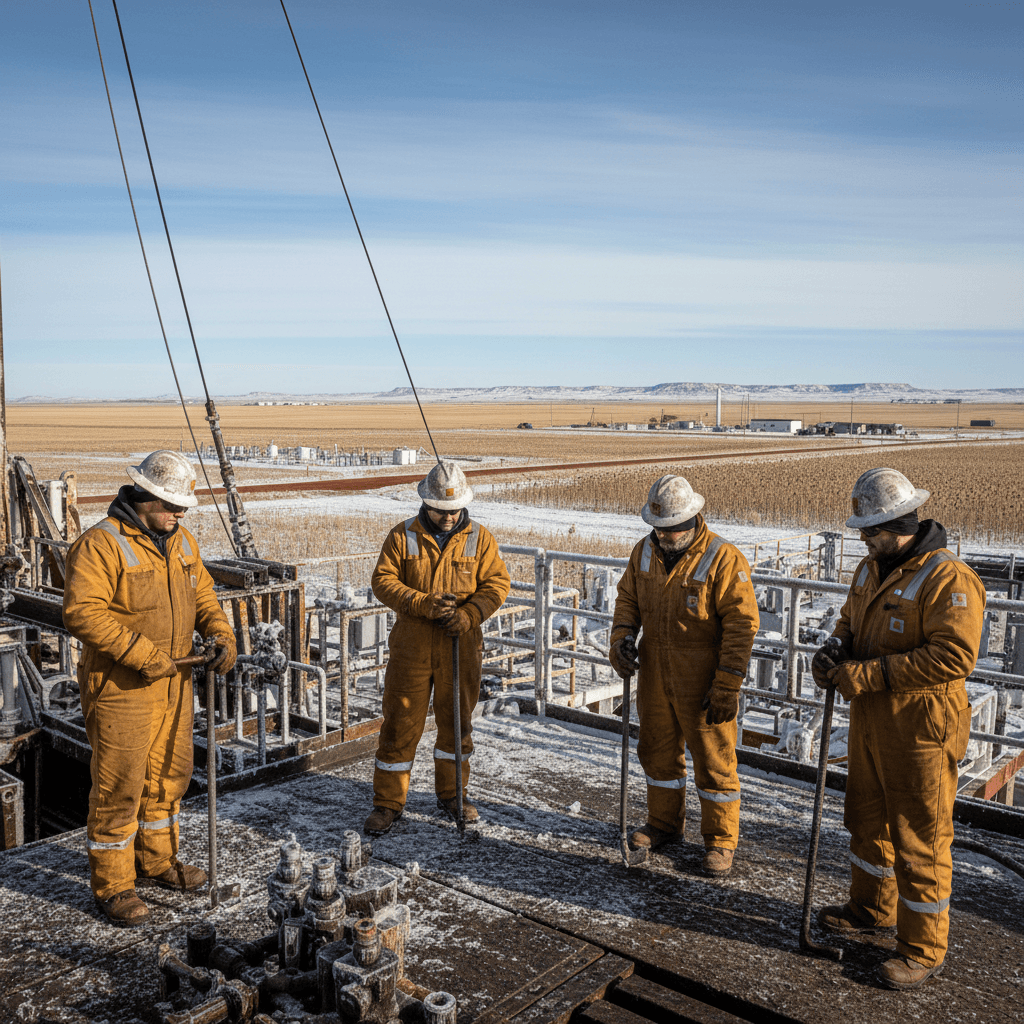
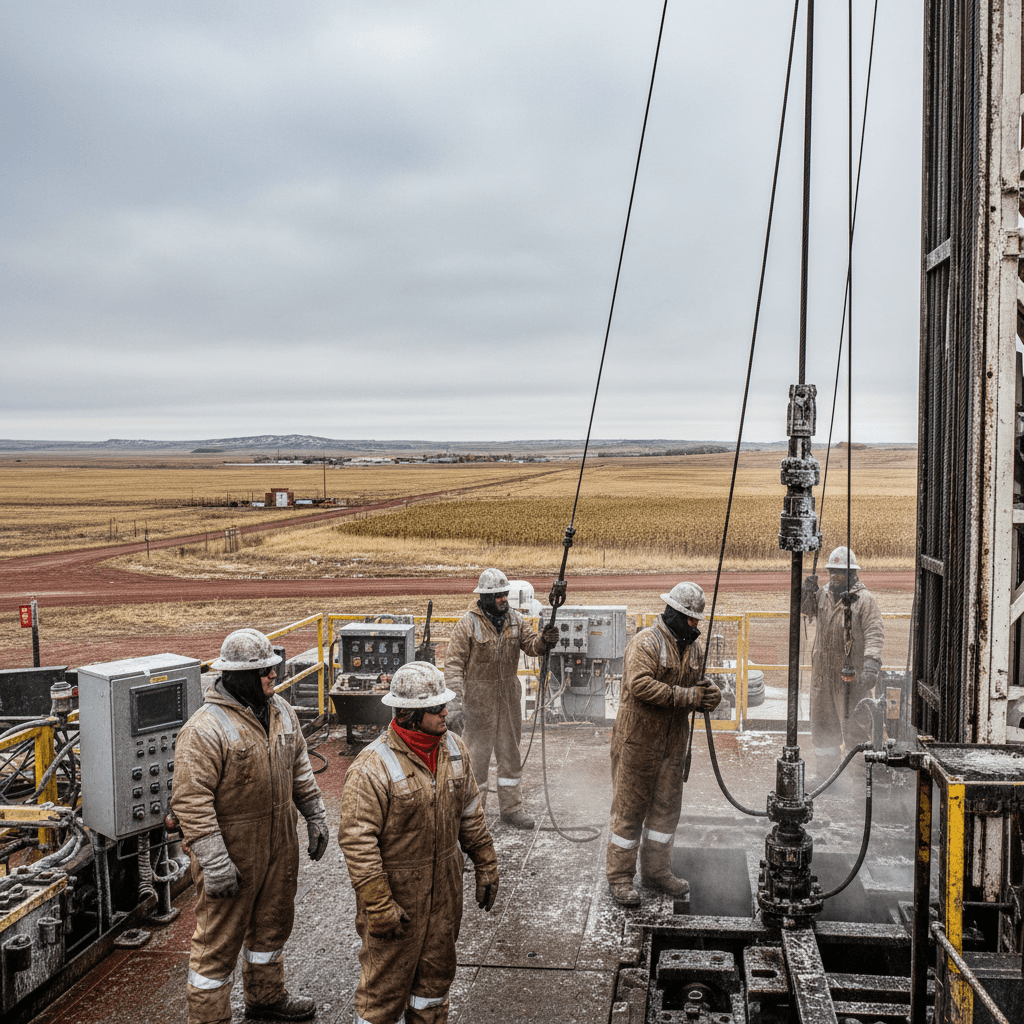
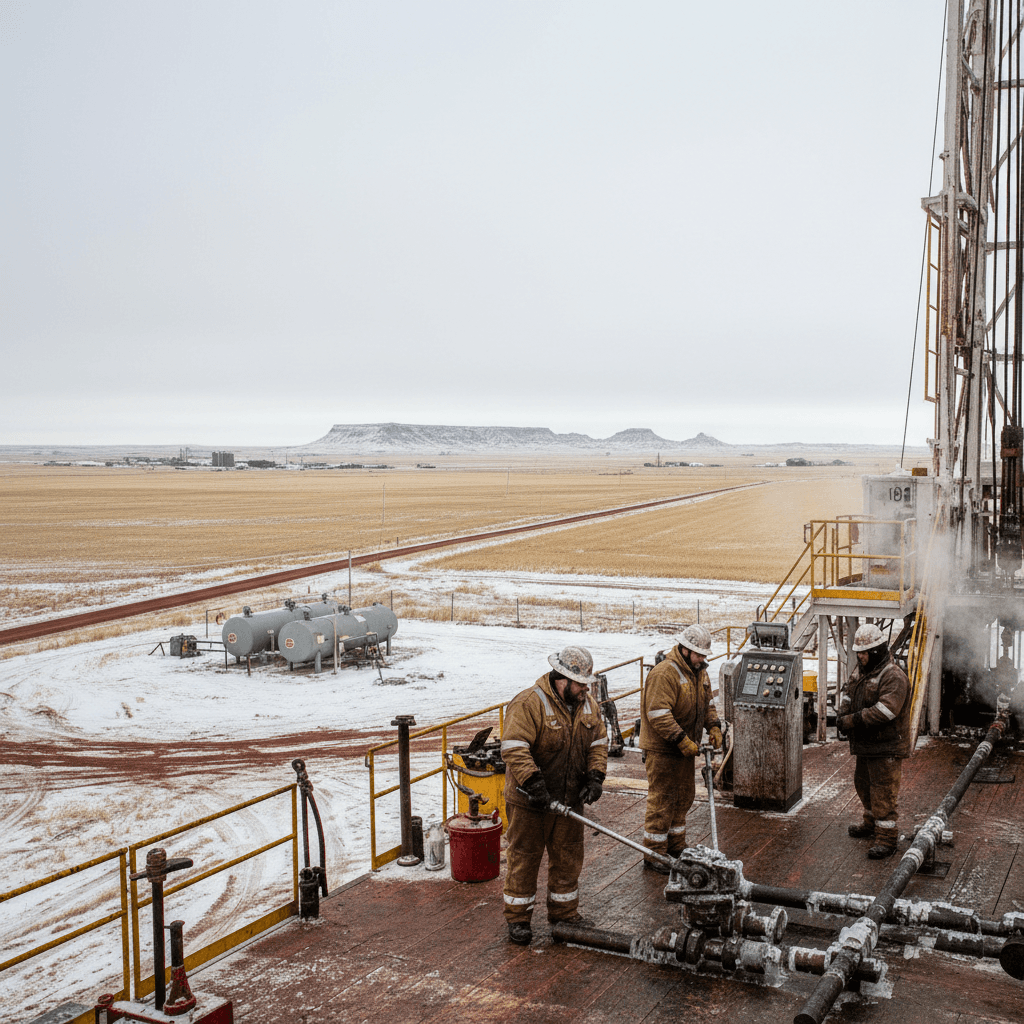
The number of active drilling rigs in North Dakota remained unchanged at 30 on Friday, May 29, providing a key indicator of sustained, moderate activity levels in the Bakken formation. This steadiness comes as crude oil prices saw a midday retreat, with West Texas Intermediate (WTI) trading at $87.79, down $1.11 for the day.

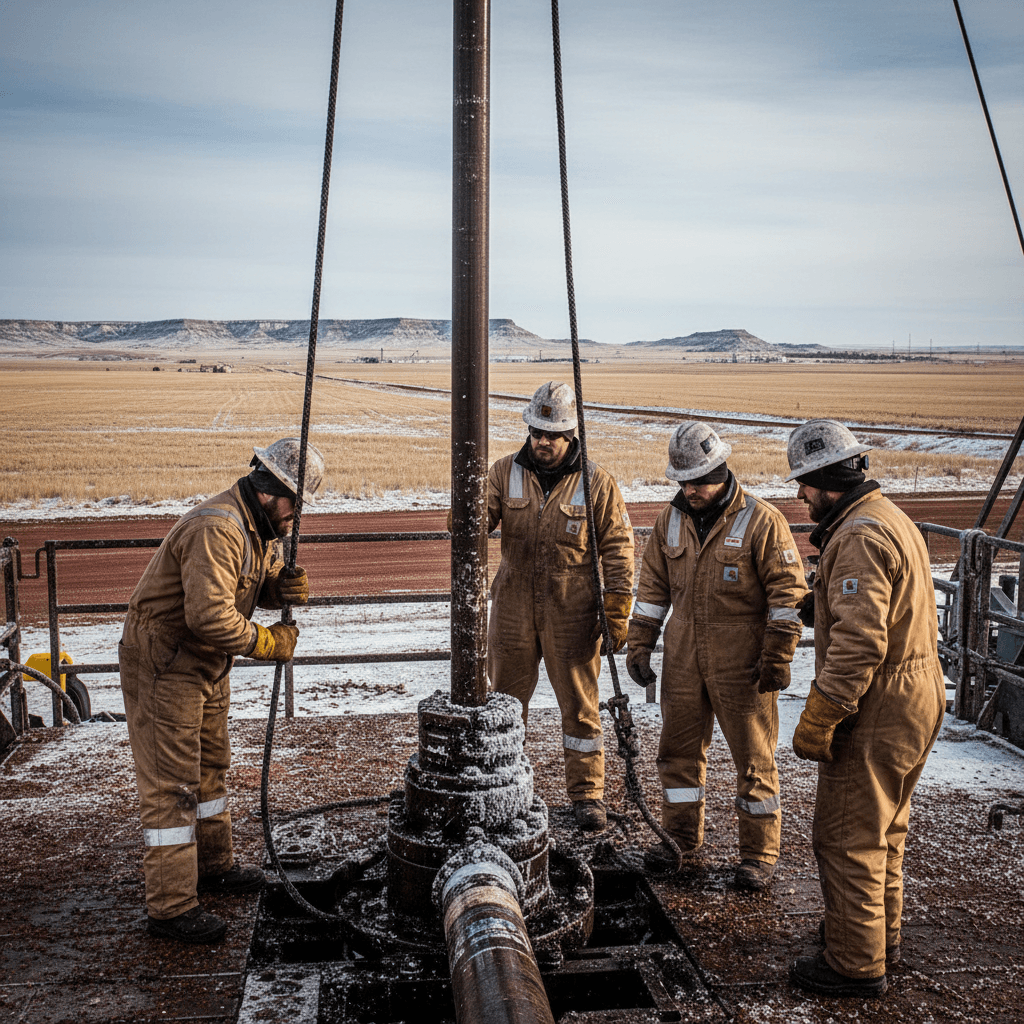
The current rig count, a primary driver of direct oilfield employment, suggests a stable demand for drilling crews, completion teams, and associated field services. Historically, rig counts above 30 in North Dakota correlate with robust job markets in the state's western oil-producing counties, supporting roles from engineers and geologists to truck drivers and maintenance technicians.

The Bakken region's differential to the WTI benchmark was reported at -$3.42 on Friday. This discount, while a factor in operator revenue, is not historically wide, suggesting Bakken crude remains competitively priced for transport to major markets. The price environment, with WTI still near $88 per barrel, continues to support economic margins for most operators.

General industry context shows a direct relationship between drilling activity and community impacts in the Williston Basin. A steady rig count typically translates into consistent housing demand, supporting both rental and real estate markets in communities like Williston, Dickinson, and Watford City. It also sustains tax revenues for local governments and school districts, which are heavily influenced by oil production and related commercial activity.

The current activity level, significantly lower than the boom-era peaks of over 200 rigs but stable, points to a mature phase of development focused on efficiency and core acreage. This environment favors a more settled workforce compared to the high-turnover boom years, potentially easing pressures on local infrastructure and housing.

Natural gas prices were reported at $3.28 per MMBtu. While not a primary driver for the predominantly oil-focused Bakken, associated gas capture and processing remain important for regulatory compliance and provide additional midstream sector jobs.

The midday price pullback in crude serves as a reminder of the commodity price volatility that can influence future capital spending plans. For now, the unchanged rig count indicates operators are maintaining their current pace of development, providing a foundation for regional economic stability.

Source

Bakken Wire Live Data as of Friday, May 29,五个.
rig countemploymentbakken differentialwtibrentlocal economyworkforcehousing

Share this article

Related Articles

Bakken Rig Count Holds at 28 Amid Price Dip, Workforce Stability Seen - Bakken Wire
Workforce & Community

Bakken Rig Count Holds at 28 Amid Price Dip, Workforce Stability Seen

The active rig count in North Dakota's Bakken formation held steady at 28 on Friday, May 29, 2026, according to Bakken Wire's live data. This level of drilling activity, combined with a midday dip in oil prices, points to a period of relative stability for the region's workforce and local economies. West Texas Intermediate (WTI) crude was trading at $87.58, down $1.32 (-1.48%), while Brent crude was at $91.17, down $1.53 (-1.65%). The Bakken differential, the discount for Bakken crude compared to WTI, was $-3.42. Natural gas was priced at $3.34. In the Bakken, the rig count is a direct indicator of upstream oilfield employment, as each operating rig supports a crew of drilling and service personnel. A count of 28 rigs represents a baseline of steady, but not booming, activity. This suggests that hiring in the drilling sector is likely stable, with less volatility compared to periods of rapid...

🔆Midday Wire·May 29
Low Rig Count, Falling Prices Challenge Bakken Workforce Stability - Bakken Wire
Workforce & Community

Low Rig Count, Falling Prices Challenge Bakken Workforce Stability

The active drilling rig count in North Dakota held at 27 on Wednesday, a level indicative of restrained industry activity that continues to pressure employment and local economies in the Bakken formation. The figure, a key barometer for oilfield job demand, remains near historic lows for the modern shale era, according to Bakken Wire data. Concurrently, oil prices sold off sharply. West Texas Intermediate (WTI) crude was trading at $90.23 per barrel, down $3.66 or 3.9% for the day. The international Brent crude benchmark fell to $93.66. The price for Bakken crude at the wellhead is typically discounted against WTI; the differential was reported at -$3.42 per barrel. The combination of a low rig count and volatile prices directly impacts the oil-dependent workforce. Fewer rigs mean reduced demand for drilling crews, field service technicians, and logistical support personnel. This stagnation in activity levels limits job growth and can lead to...

🔆Midday Wire·May 27
Bakken Rig Count Holds at 25 Amid Stable Oil Prices - Bakken Wire
Workforce & Community

Bakken Rig Count Holds at 25 Amid Stable Oil Prices

The number of active drilling rigs in the Bakken formation held at 25 on Saturday, May 23, 2026, signaling a continued, moderate pace of oilfield employment demand in western North Dakota. The current rig count, a key indicator of direct industry employment, supports a workforce level significantly below the historic peaks of the last boom but stable compared to recent months. This activity level is underpinned by firm crude oil prices. West Texas Intermediate (WTI) crude traded at $96.60 per barrel, up 25 cents on the day, while the global benchmark Brent crude was at $100.21, according to live Bakken Wire data. These prices provide operators with sufficient economic incentive to maintain drilling programs but not necessarily to aggressively expand them. For oil towns like Williston, Watford City, and Dickinson, a rig count in the mid-20s translates to a sustained need for field personnel, including drillers, roustabouts, and completions crews,...

🌅Afternoon Wire·May 23