Canada Advances Two Major Oil Pipeline Projects
New West Coast and potential East Coast lines could impact Bakken crude competition and market access.
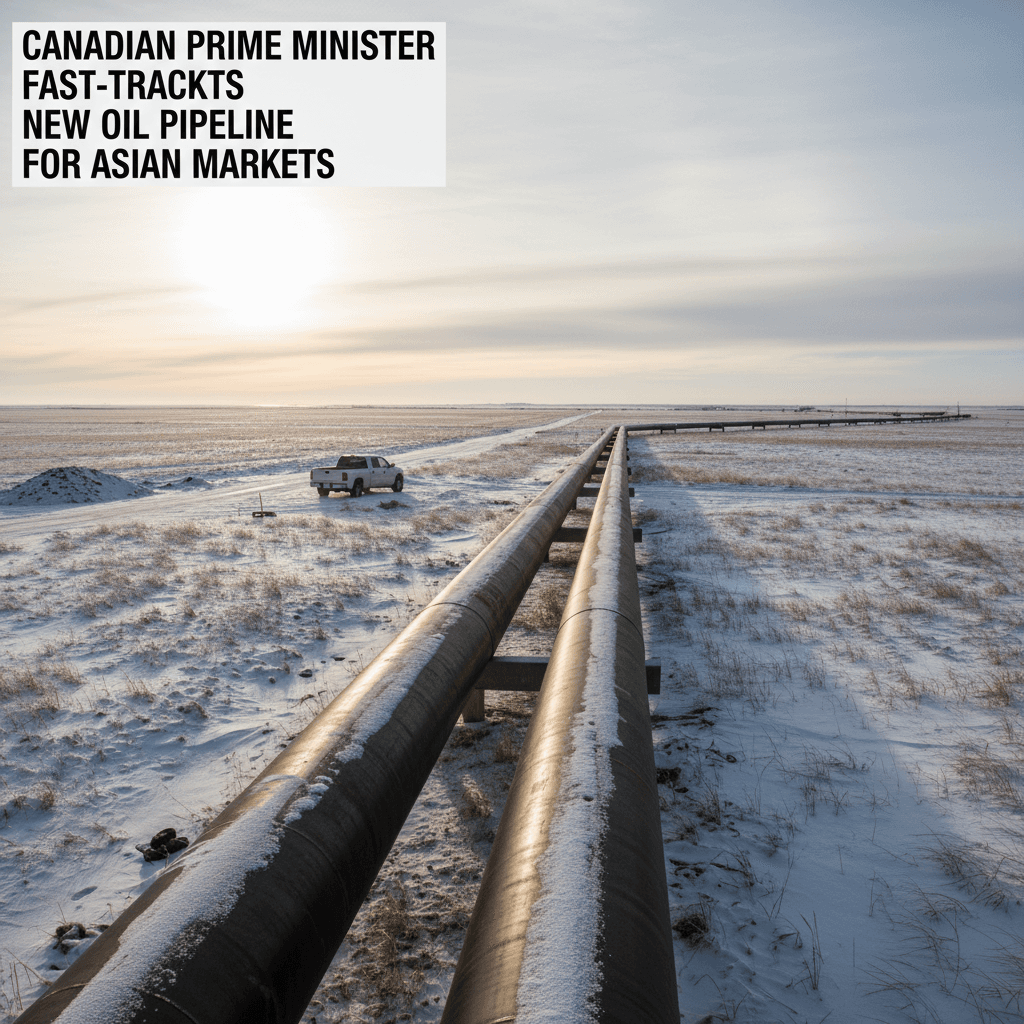
The governments of Canada and Alberta have formalized plans to build a major new crude oil pipeline to the West Coast, a project that could have long-term implications for market competition facing North Dakota's Bakken shale. According to a report from OilPrice.com, Prime Minister Mark Carney and Alberta Premier Danielle Smith announced on July 2 that the pipeline from Alberta to British Columbia will be built as a private-public partnership.
The proposed pipeline is slated to follow the "southern route" along the existing Trans Mountain pipeline corridor from Edmonton to the coast. The terminus is planned for Roberts Bank near Tsawwassen, British Columbia, where a new delivery terminal with two berths for large crude tankers would be built. The project aims for a capacity of one million barrels per day.
This route avoids the politically and legally fraught northern path through First Nations territories and areas covered by a federal tanker ban. The project's planning and construction will be led by Trans Mountain Corporation in partnership with Pembina Pipeline Corporation. An Implementation Agreement signed on May 15, 2026, outlines timelines targeting construction approval as early as September 2027, with completion estimated between 2032 and 2034.
However, the project faces significant scrutiny over its cost, which the province of British Columbia estimates could range from $35 billion to $43 billion. Critics point to the cost overruns of the existing Trans Mountain pipeline, which ballooned from $4.5 billion to over $35 billion. In an interview with CBC News, Energy Minister Tim Hodgson defended public investment, stating, "The Trans Mountain pipeline is a money maker. It's one of the best assets that this the country has... It is generating oodles of cash."
For Bakken operators, a new major conduit for Canadian crude to Asian markets could influence global pricing benchmarks and potentially increase competition for pipeline space and market share on the U.S. West Coast, a destination for some Bakken crude.
Separately, the same OilPrice.com source indicates that Premier Danielle Smith was also recently in the news alongside Ontario Premier Doug Ford pushing the idea of a new 3,300-km pipeline. While details are scant, such an East Coast pipeline project could similarly affect the flow of crude in North America, potentially altering the logistics and competitive landscape for Bakken crude moving to refining centers in the U.S. Midwest and Gulf Coast.
The advancement of these large-scale Canadian infrastructure projects underscores a continued push for market diversification by a key competing producer. The focus on securing tidewater access for landlocked Canadian crude mirrors historical challenges faced in the Bakken, highlighting the critical importance of pipeline capacity for basin economics.
Source
OilPrice.com