WTI Crude--
Brent Crude--
Natural Gas--
ND Rig Count--
WTI Crude--
Brent Crude--
Natural Gas--
ND Rig Count--
Canada May Keep Trans Mountain, Trump Eyes DAPL Expansion - Bakken Wire
Pipeline & Infrastructure

Canada May Keep Trans Mountain, Trump Eyes DAPL Expansion

State-owned pipeline's success reshapes crude flows as new U.S. plans target Bakken export routes north.

Bakken Wire Staff·🌅Afternoon Wire·

The Canadian government is reconsidering plans to privatize the Trans Mountain oil pipeline, a shift that could solidify a major new export route for North American crude with implications for Bakken producers. According to OilPrice.com, the head of the government entity that owns the pipeline, Elizabeth Wademan, said this week that the prior narrative of returning the asset to private hands was from "a different market and a different time."

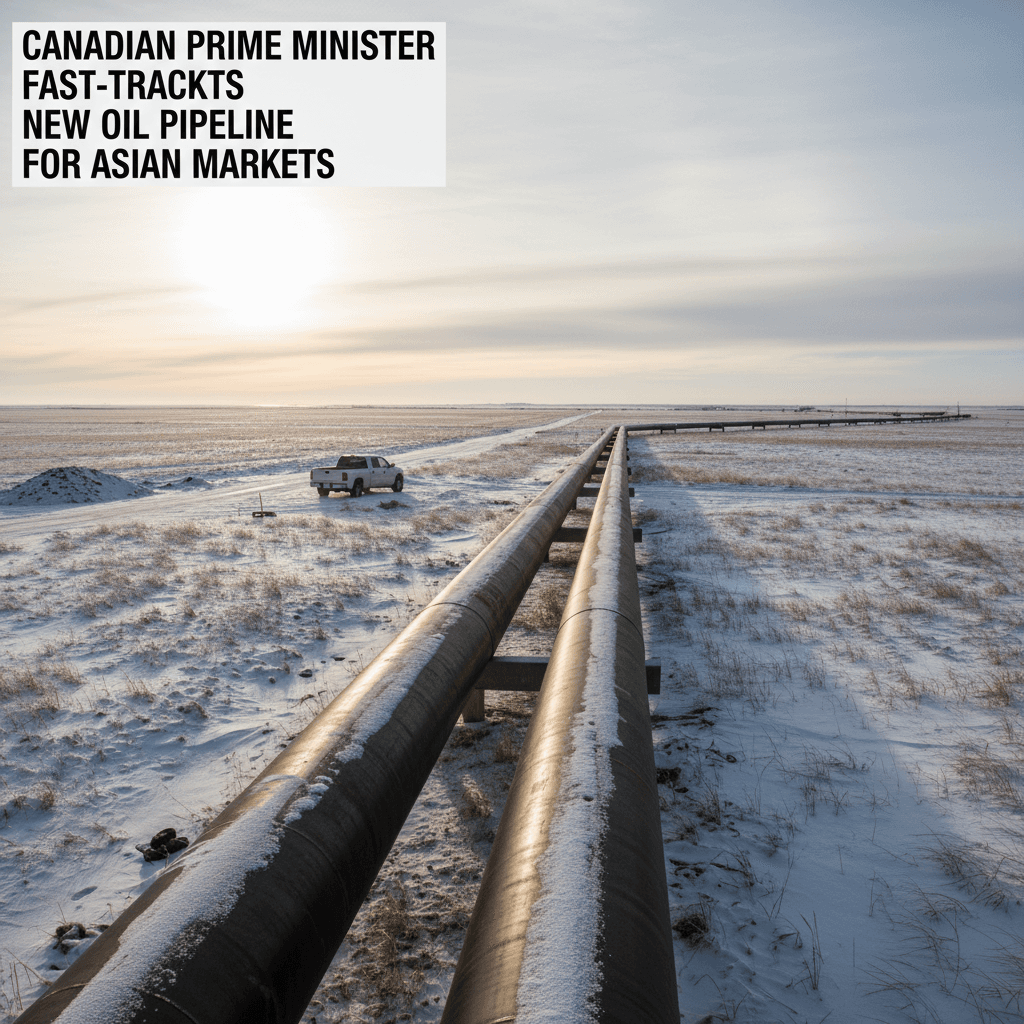
The expanded Trans Mountain Pipeline (TMX) launched in May 2024 at triple its original capacity, moving 890,000 barrels daily. Its primary destination is the vast Asian market, marking a strategic pivot for Canadian crude away from near-total reliance on the United States. OilPrice.com reported that by October 2025, as much as 70% of Canadian crude exported from the British Columbia coast was going to China, with average flows to China reaching 207,000 barrels daily between the pipeline's launch and spring 2025.

Wademan called the pipeline a "strategically important asset" and suggested it could be expanded further with more "energy corridors," according to the Financial Post report cited by OilPrice.com. She noted the asset is "incredibly profitable" as Canadian crude prices approach $90 per barrel, adding merit to the government holding onto it.

This Canadian development coincides with renewed U.S. pipeline activity that could directly impact the Bakken. A separate report from Bing News outlines a bid under the Trump administration to create a "patchwork of smaller, connected projects using existing pipe" to resurrect the Keystone XL pipeline and extend the Dakota Access Pipeline (DAPL) north to Canada.

For North Dakota, the potential northern extension of DAPL represents a significant infrastructure development. DAPL is the primary conduit for moving Bakken crude to market, and an extension could open new routing options and connections to the Canadian system. The reported plan to resurrect Keystone XL through connected projects also indicates a renewed focus on cross-border pipeline capacity.

The success and possible further expansion of the state-owned Trans Mountain pipeline creates a competitive landscape for reaching Pacific markets. While TMX primarily carries Canadian crude, its operation and profitability demonstrate the high global demand for North American oil, which supports the broader market for Bakken production. The concurrent U.S. efforts to expand northward infrastructure suggest a response to this reshaped export geography, aiming to better integrate Bakken supply into continental and global networks.

Source

OilPrice.com, Bing News
trans mountain pipelinedakota access pipelinekeystone xlexport marketsinfrastructurecanadabakken

Share this article

Related Articles

Global Midstream Moves Highlight Strategic Shifts as Bakken Exports Compete - Bakken Wire
Pipeline & Infrastructure

Global Midstream Moves Highlight Strategic Shifts as Bakken Exports Compete

International midstream and refining developments reported this week highlight the complex global market in which Bakken crude competes for buyers and favorable transport routes. In Australia, Buru Energy said it plans to build a mini-refinery to supply the Kimberley region, according to Rigzone. The project is part of a new sales model for volumes from the Ungani field in the Canning Basin. While not directly related to North Dakota, such small-scale, localized refining projects represent a global trend toward securing regional fuel supply chains, a contrast to the Bakken's primary role as an exporter of light sweet crude to larger, distant refineries. Separately, the Dangote Group has offered East African countries a 30 percent equity stake in a giant refinery planned for the region, Rigzone reported, citing a Kenyan presidential adviser. The development of major new refining capacity in Africa could alter long-term crude flow patterns and competition for market...

☀️Morning Wire·Aug 22
Global Midstream News Highlights Refinery Plans, Shipping Risks - Bakken Wire
Pipeline & Infrastructure

Global Midstream News Highlights Refinery Plans, Shipping Risks

International midstream and refining developments reported Friday highlight the global context for North Dakota's oil exports, with new projects emerging and persistent shipping risks affecting crude flows. In Australia, Buru Energy said it plans to build a mini-refinery to supply the Kimberley region, according to Rigzone. The project is part of a new sales model for volumes from the Ungani field in the Canning Basin. While a small-scale project, it reflects a broader industry trend toward localized refining to capture value from stranded or marginal resources. Separately, the Dangote Group has offered East African countries a 30 percent equity stake in a giant refinery planned for the region, Rigzone reported, citing a Kenyan presidential adviser. This major infrastructure development aims to serve the East African market, potentially altering long-term refined product trade flows. Meanwhile, shipping disruptions continue to pose risks to global crude movements. Various tankers, including from the Sinokor...

🌅Afternoon Wire·Aug 21
Global Tensions Lift Oil Near $94; Mid-East Export Routes Shift - Bakken Wire
Pipeline & Infrastructure

Global Tensions Lift Oil Near $94; Mid-East Export Routes Shift

Global oil prices climbed to a one-month high near $94 per barrel this week as new U.S. threats against Iran raised fears of a prolonged conflict, according to Rigzone. The increase in geopolitical risk provides underlying support for Bakken crude prices, which are benchmarked against global markers. In response to security threats, Saudi Arabia is altering its crude export logistics. Shipowners, including Sinokor Group, are helping shuttle Saudi oil north to evade Houthi militants targeting exports via the Bab el Mandeb chokepoint in the southern Red Sea, Rigzone reported. This rerouting underscores ongoing volatility in key global shipping lanes that can affect crude flow and pricing. Meanwhile, Norway's natural gas production rose for a second consecutive month in July, with preliminary figures showing output of about 12.38 billion cubic feet per day, Rigzone reported. As a major supplier to Europe, sustained production from Norway helps balance global gas markets, indirectly...

🔆Midday Wire·Aug 21