Canada Proposes Major Domestic Pipeline, Potentially Shifting Bakken Export Dynamics
A new 3,300-km pipeline from Alberta to Ontario aims to reduce Canadian reliance on U.S. routes, with long-term implications for North Dakota's oil market.
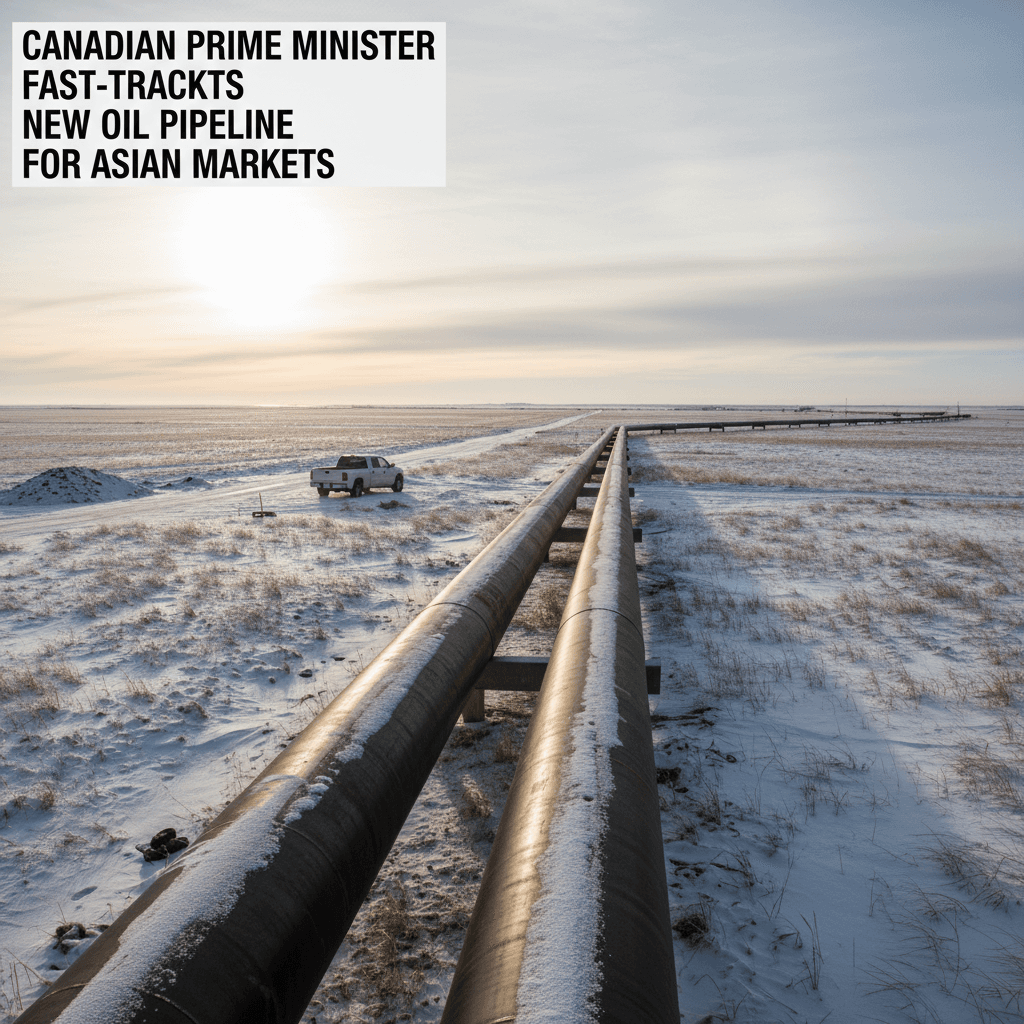
Canada's federal and Alberta governments have jointly proposed a major new domestic oil pipeline, a move that could alter long-term crude transportation patterns and market access for Bakken producers. According to a report from OilPrice.com, the 3,300-kilometer pipeline would run from Hardisty, Alberta, through Saskatchewan and Manitoba to Sarnia, Ontario, with an initial capacity of 500,000 barrels per day.
The project, unveiled on July 18, 2026, is explicitly designed to reduce Canada's energy dependence on the United States. Currently, 63.4% of U.S. crude imports are from Canada, and oil is transported from Alberta to Ontario via U.S. pipelines. Ontario Energy Minister Stephen Lecce stated that "50 per cent of oil imports into Ontario run through a pipeline that cuts through the U.S.," highlighting the perceived vulnerability.
For North Dakota's Bakken formation, the immediate impact may be limited, but the strategic shift bears watching. The pipeline aims to create a "sovereign" Canadian route, potentially reducing future Canadian crude volumes committed to or competing on U.S. pipeline systems that also carry Bakken oil. Furthermore, the proposal includes a future potential extension to Canada's Atlantic coast to open export routes to Europe, which could eventually position Canadian crude as a more direct global competitor.
Alberta Premier Danielle Smith, a long-time oil industry expansion advocate, said the pipeline could eventually move up to 800,000 bpd. Canadian Prime Minister Mark Carney announced that Canada and Alberta would be "equal partners" in the project, with "a meaningful ownership stake for Indigenous communities." Consultations are expected to begin immediately.
The proposal revives a long-discussed idea previously abandoned nearly a decade ago. The push comes as the state of Michigan has previously threatened to shut down a key cross-border pipeline route, underscoring the security concerns driving the project. While the pipeline is at odds with Canada's federal climate targets, the government has linked it to "substantial" methane reduction expectations.
The development signals a potential gradual reconfiguration of North American midstream infrastructure, with Canada seeking greater internal integration and export optionality. This could influence long-term pipeline capacity valuations and market dynamics for Bakken crude, which often moves on systems connected to the same U.S. refining hubs, like the Midwest, that Canadian oil currently supplies.
Source
OilPrice.com