Canada's West Coast Pipeline Deal Could Create New Outlet for Bakken
A carbon pricing agreement between Ottawa and Alberta sets a 2027 construction start for a major new export pipeline, potentially offering North Dakota producers future market access.
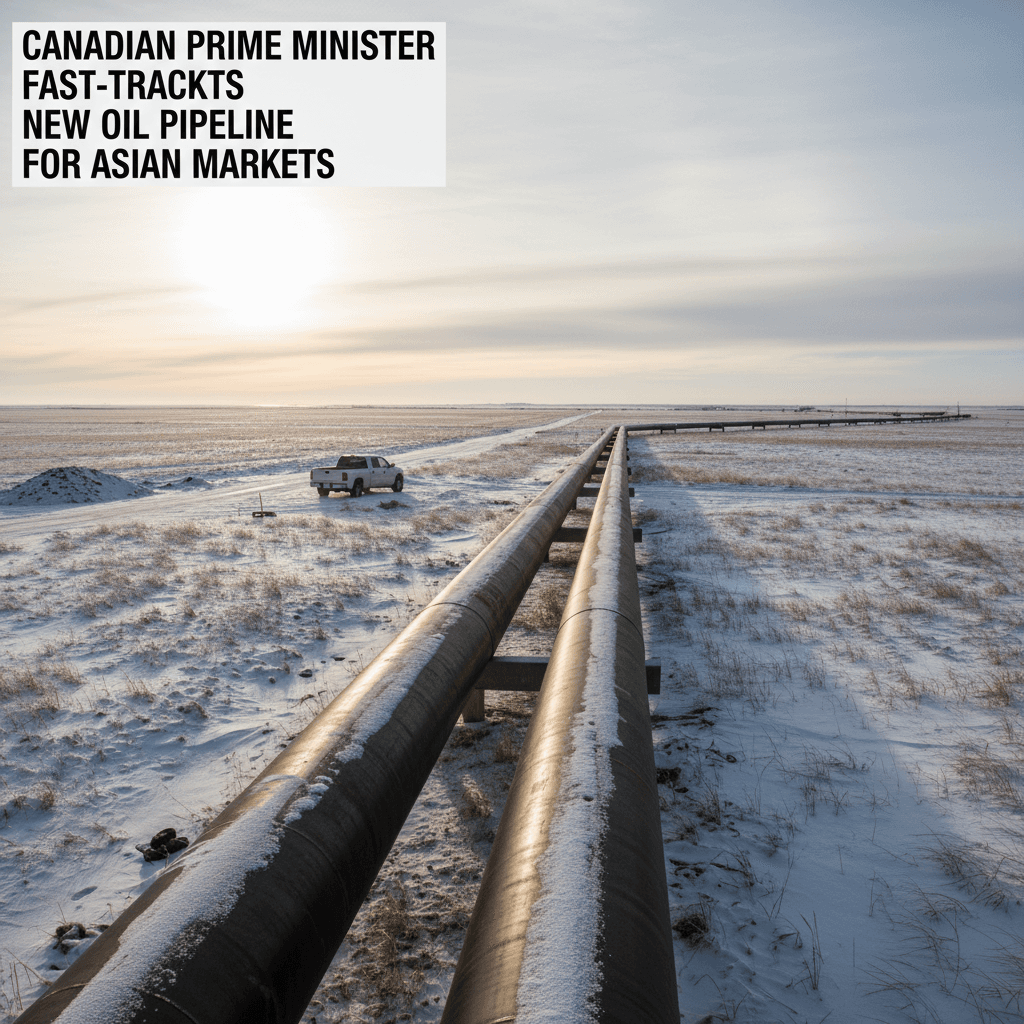
The Canadian federal government and the province of Alberta have reached a carbon pricing agreement that clears a major hurdle for building a new West Coast oil pipeline, with construction potentially starting as early as September 2027, according to a report from OilPrice.com. For Bakken operators in North Dakota, the development of a new pipeline corridor to the Pacific coast could eventually provide a crucial additional outlet for crude, diversifying export markets beyond current U.S. Gulf Coast and Midwest routes.
Prime Minister Mark Carney and Alberta Premier Danielle Smith announced the agreement on Friday, May 15, 2026, building on a memorandum from November. The proposed pipeline would be capable of moving roughly 1 million barrels per day to the Pacific coast, targeting Asian markets. The deal attempts to resolve Canada's long-standing policy conflict between expanding oil infrastructure and meeting climate goals, OilPrice.com reported.
Under the agreement, Alberta's industrial carbon pricing framework will gradually increase, reaching C$130 per metric ton by 2040. This slower pace than many environmental groups wanted has nonetheless left some in the oil industry concerned about competitiveness with the United States, which lacks a national carbon price. Concurrently, the federal government appears to have softened its stance on a key emissions reduction condition. The large-scale Pathways carbon capture project, backed by oil sands producers, has been significantly scaled back. Its initial target of reducing emissions by 22 million metric tons annually by 2030 has been revised to 6 million tons by 2035 and 16 million by 2045, according to the source.
The agreement establishes a concrete timeline. Alberta plans to submit a formal pipeline proposal by July 1, 2026, after which Ottawa aims to designate it a project of national interest and fast-track regulatory reviews. However, a critical detail remains unresolved: no private-sector pipeline company has formally stepped forward to propose or build the project, OilPrice.com noted.
For the Bakken, the significance lies in the potential for future interconnectivity and expanded takeaway capacity to the west. While the primary volumes are intended for Canadian oil sands crude, new major pipeline infrastructure on the continent can alter basin-level economics and provide optionality. A successful West Coast pipeline would also test the global market demand for North American light sweet crude, like that produced in the Bakken, in Asian markets. After years of legal and policy delays stalling Canadian pipeline projects, this agreement represents a tangible step toward new infrastructure that could benefit the entire region's oil transport network.
Source
OilPrice.com