WTI Crude--
Brent Crude--
Natural Gas--
ND Rig Count--
WTI Crude--
Brent Crude--
Natural Gas--
ND Rig Count--
Energy Transfer Pipeline Delay Threatens Major Oracle Data Center Project - Bakken Wire
Pipeline & Infrastructure

Energy Transfer Pipeline Delay Threatens Major Oracle Data Center Project

A six-month setback for the Green Chile natural gas project in New Mexico highlights infrastructure constraints for power-hungry data centers, a key growth market for Bakken gas.

Bakken Wire Staff·🔆Midday Wire·

A major natural gas pipeline delay is threatening the schedule for Oracle's proposed $165 billion data center project in New Mexico, illustrating infrastructure challenges for a key new source of gas demand. According to a report from OilPrice.com, the delay involves a project by Energy Transfer subsidiary Transwestern Pipeline.

The Green Chile Project, designed to deliver up to 400 million cubic feet per day of natural gas to Oracle's "Project Jupiter" site in Doña Ana County, has seen its in-service date pushed from August 15 to February 1, 2027. The delay was reported in a regulatory filing on Friday, August 14, 2026.

Oracle's massive data center development plans to use as much as 2.5 gigawatts of gas-powered fuel cells, with the Green Chile pipeline supplying the necessary fuel. The 400 MMcf/d volume is equivalent to roughly 0.4% of total Lower 48 U.S. gas production, highlighting the project's scale. Oracle warned federal regulators in May that "time is of the essence" and that delays to the pipeline could jeopardize the broader project.

The specific cause of the delay, according to the source, is that New Mexico's State Land Office has repeatedly declined to approve Energy Transfer's proposed pipeline route, which crosses a small section of state-owned land.

For Bakken operators and midstream companies like Energy Transfer, which has a significant presence in the Williston Basin, the situation underscores both the opportunity and the hurdle presented by the booming data center and AI sector. Developers are increasingly seeking dedicated, behind-the-meter power generation to avoid long grid connection waits, creating new, large-scale demand for natural gas and the pipelines to deliver it.

Energy Transfer is already capitalizing on this trend elsewhere. The company began supplying gas this year to an Oracle data center campus near Abilene, Texas, and has signed agreements representing more than 6 billion cubic feet per day of new demand across data centers, utilities, and power plants.

The delay in New Mexico shows that securing permits and right-of-way remains a critical bottleneck, even for projects destined to serve a premium, high-growth market. For North Dakota, a state with abundant gas resources seeking value-added markets, the growth of data center demand is a positive long-term signal. However, this incident serves as a reminder that infrastructure development must navigate regulatory landscapes to connect supply with new demand centers.

On the financial markets Friday, Oracle shares were down 4% following the news, while Energy Transfer's stock gained 1.4%.

Source

OilPrice.com
energy transferpipelinenatural gasdata centersdemandinfrastructurepermittingnew mexico

Share this article

Related Articles

Pipeline & Infrastructure

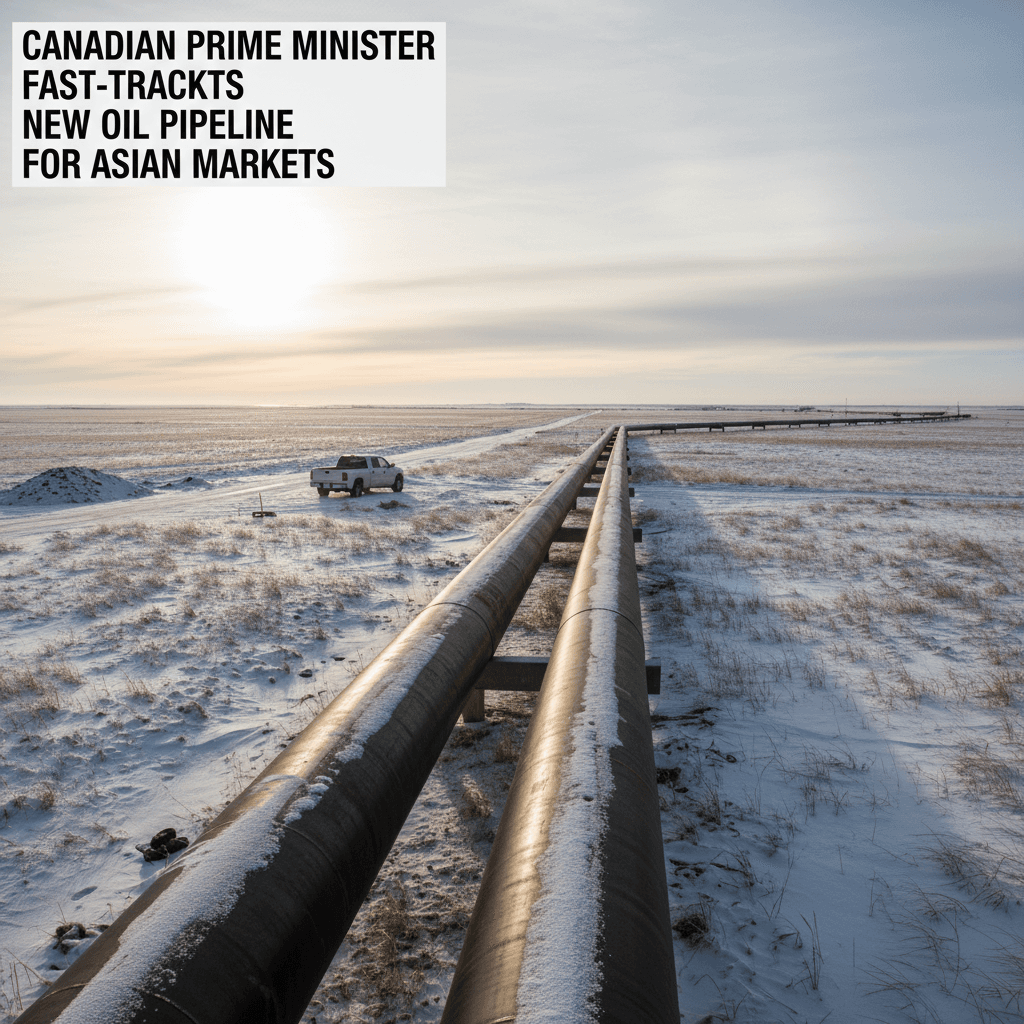
Canada Moves to Fast-Track Oil Pipeline for Asian Markets

Canadian Prime Minister Mark Carney is invoking new powers to fast-track regulatory approval for a major new oil pipeline, according to a report from Rigzone. The move aims to expand Canada's access to Asian crude markets. While the specific pipeline project was not named in the report, the push for increased export capacity from Canada represents a significant shift in North American energy infrastructure policy. For Bakken operators, the development carries both competitive and logistical considerations. Increased pipeline capacity from Western Canada could influence crude pricing benchmarks across the continent, including the Bakken's own local price at Clearbrook, Minnesota. Greater volumes of Canadian crude reaching global markets can affect the supply-demand balance for similar light sweet crudes produced in the Williston Basin. Historically, pipeline constraints have limited Canadian crude to primarily U.S. Midwest markets, keeping a lid on prices. A new high-capacity outlet to Asia could alter that dynamic, potentially...

☀️Morning Wire·Oct 4
Canadian Prime Minister Fast-Tracks New Oil Pipeline for Asian Markets - Bakken Wire
Pipeline & Infrastructure

Canadian Prime Minister Fast-Tracks New Oil Pipeline for Asian Markets

Prime Minister Mark Carney has invoked new powers to expedite regulatory approval for a new, high-capacity oil pipeline, according to a report from Rigzone. The move aims to expand Canada's access to Asian markets. The development, reported on October 2, signals a renewed push by Canada to move its crude oil to West Coast export terminals. For Bakken operators in North Dakota, new Canadian pipeline capacity can influence regional market dynamics. Increased pipeline takeaway capacity from Western Canada can affect the flow of competing crudes, including Bakken barrels, through existing midcontinent pipeline systems. Changes in these flows can impact local basis differentials—the difference between the price of Bakken crude at the wellhead and the U.S. benchmark price. While the Rigzone report did not specify a pipeline route or capacity, any major new Canadian export conduit could alter crude oil logistics in North America. Bakken crude often moves to market via...

🔆Midday Wire·Oct 3
Pipeline & Infrastructure

Canada Moves to Fast-Track Oil Pipeline for Asian Market Access

Canadian Prime Minister Mark Carney is expediting regulatory approval for a new, high-capacity oil pipeline intended to expand Canada's access to Asian markets, according to a report from Rigzone. The report, published October 2, stated Carney has invoked new powers to fast-track the project. The development highlights ongoing efforts by North American producers to reach lucrative overseas markets beyond domestic and traditional refining hubs. Increased Canadian export capacity to Asia could influence global crude pricing benchmarks and shipping routes. For operators in North Dakota's Bakken formation, new Canadian pipeline capacity represents a shifting competitive landscape. Bakken crude, which primarily moves to market via pipelines, rail, and truck, often competes with Canadian heavy and light crude grades in the U.S. Midwest and Gulf Coast refining markets. Enhanced Canadian access to Asian buyers could, over time, alter flow patterns and competition for pipeline space within the continent. However, the specific impact on...

🌅Afternoon Wire·Oct 2