WTI Crude--
Brent Crude--
Natural Gas--
ND Rig Count--
WTI Crude--
Brent Crude--
Natural Gas--
ND Rig Count--
Federal Government to Pay North Dakota $28M for DAPL Protest Costs - Bakken Wire
Pipeline & Infrastructure

Federal Government to Pay North Dakota $28M for DAPL Protest Costs

Settlement closes lawsuit over 2016-17 policing expenses, with state to repay loans from Bank of North Dakota.

Bakken Wire Staff·🔆Midday Wire·

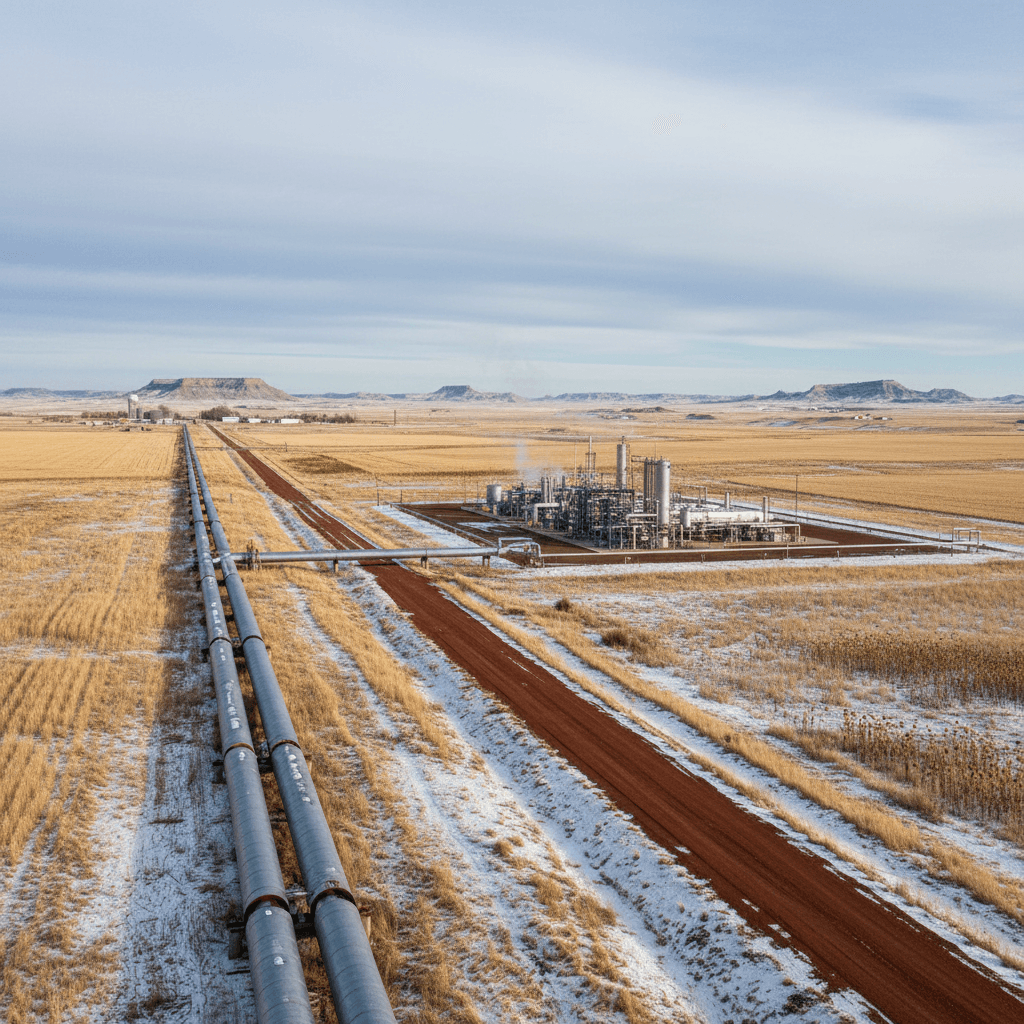
The federal government will pay North Dakota nearly $28 million to settle a lawsuit over the costs of policing massive protests against the Dakota Access oil pipeline nearly a decade ago, the state’s attorney general announced Thursday. According to the Associated Press, the final settlement agreement’s sum matches the amount a federal judge determined last year after trial.

Republican Attorney General Drew Wrigley said the state is now “made financially whole,” with the settlement money finalizing the debts of loans taken from the state-owned Bank of North Dakota. The lawsuit, filed in 2019, concerned demonstrations against the construction of the crude oil pipeline, also known as DAPL, that took place in rural south-central North Dakota in 2016 and 2017.

North Dakota alleged that the federal government caused the protests to grow in size and intensity by unlawfully allowing demonstrators to camp on federal land. For months, thousands of people camped and protested on and around federally managed land near the pipeline’s Missouri River crossing upstream of the Standing Rock Sioux Tribe’s reservation.

As part of the agreement, the U.S. Department of Justice issued a statement acknowledging that, under the Obama Administration, the federal government "could have done more to reduce the impacts to the people of North Dakota" from the protests, which included "unlawfulness and confrontational violence" at times. The department said it chose not to forcibly remove protesters from federal property to avoid further escalation, but recognizes "that this difficult choice had painful consequences for North Dakota and many of its residents."

Wrigley said the settlement prevents both parties from spending more public money litigating the nearly seven-year-old lawsuit. The U.S. had initially appealed the 2025 judgment by U.S. District Judge Daniel Traynor to the 8th Circuit but agreed to dismiss that appeal as part of the settlement. Judge Traynor had found the federal government liable on all claims, including negligence, gross negligence, civil trespass and public nuisance.

Republican Gov. Kelly Armstrong welcomed the settlement as “long overdue,” thanking Wrigley’s office for reaching a settlement “that removes the financial burden from North Dakota taxpayers and places it on the shoulders of the federal government where it belongs.” The Dakota Access Pipeline is a critical piece of infrastructure for moving Bakken formation crude oil to market, and the years-long legal disputes surrounding its construction and operation have been a significant backdrop for North Dakota's oil industry.

The settlement provides financial closure for the state regarding a contentious period that saw intense opposition to fossil fuel infrastructure. Wrigley stated, "An important chapter in our state’s history has been rendered indisputable and closed."

Source

Associated Press, North Dakota Monitor, MSN
dakota access pipelinedapllitigationsettlementinfrastructureprotestsnorth dakota

Share this article

Related Articles

Global Midstream Moves Highlight Strategic Shifts as Bakken Exports Compete - Bakken Wire
Pipeline & Infrastructure

Global Midstream Moves Highlight Strategic Shifts as Bakken Exports Compete

International midstream and refining developments reported this week highlight the complex global market in which Bakken crude competes for buyers and favorable transport routes. In Australia, Buru Energy said it plans to build a mini-refinery to supply the Kimberley region, according to Rigzone. The project is part of a new sales model for volumes from the Ungani field in the Canning Basin. While not directly related to North Dakota, such small-scale, localized refining projects represent a global trend toward securing regional fuel supply chains, a contrast to the Bakken's primary role as an exporter of light sweet crude to larger, distant refineries. Separately, the Dangote Group has offered East African countries a 30 percent equity stake in a giant refinery planned for the region, Rigzone reported, citing a Kenyan presidential adviser. The development of major new refining capacity in Africa could alter long-term crude flow patterns and competition for market...

☀️Morning Wire·Aug 22
Global Midstream News Highlights Refinery Plans, Shipping Risks - Bakken Wire
Pipeline & Infrastructure

Global Midstream News Highlights Refinery Plans, Shipping Risks

International midstream and refining developments reported Friday highlight the global context for North Dakota's oil exports, with new projects emerging and persistent shipping risks affecting crude flows. In Australia, Buru Energy said it plans to build a mini-refinery to supply the Kimberley region, according to Rigzone. The project is part of a new sales model for volumes from the Ungani field in the Canning Basin. While a small-scale project, it reflects a broader industry trend toward localized refining to capture value from stranded or marginal resources. Separately, the Dangote Group has offered East African countries a 30 percent equity stake in a giant refinery planned for the region, Rigzone reported, citing a Kenyan presidential adviser. This major infrastructure development aims to serve the East African market, potentially altering long-term refined product trade flows. Meanwhile, shipping disruptions continue to pose risks to global crude movements. Various tankers, including from the Sinokor...

🌅Afternoon Wire·Aug 21
Global Tensions Lift Oil Near $94; Mid-East Export Routes Shift - Bakken Wire
Pipeline & Infrastructure

Global Tensions Lift Oil Near $94; Mid-East Export Routes Shift

Global oil prices climbed to a one-month high near $94 per barrel this week as new U.S. threats against Iran raised fears of a prolonged conflict, according to Rigzone. The increase in geopolitical risk provides underlying support for Bakken crude prices, which are benchmarked against global markers. In response to security threats, Saudi Arabia is altering its crude export logistics. Shipowners, including Sinokor Group, are helping shuttle Saudi oil north to evade Houthi militants targeting exports via the Bab el Mandeb chokepoint in the southern Red Sea, Rigzone reported. This rerouting underscores ongoing volatility in key global shipping lanes that can affect crude flow and pricing. Meanwhile, Norway's natural gas production rose for a second consecutive month in July, with preliminary figures showing output of about 12.38 billion cubic feet per day, Rigzone reported. As a major supplier to Europe, sustained production from Norway helps balance global gas markets, indirectly...

🔆Midday Wire·Aug 21