WTI Crude--
Brent Crude--
Natural Gas--
ND Rig Count--
WTI Crude--
Brent Crude--
Natural Gas--
ND Rig Count--
Federal Judge to Vacate $28M DAPL Protest Ruling as North Dakota Settles with U.S. - Bakken Wire
Pipeline & Infrastructure

Federal Judge to Vacate $28M DAPL Protest Ruling as North Dakota Settles with U.S.

A nearly seven-year-old lawsuit over state costs from pipeline protests is set to end, with North Dakota securing a confidential payment.

Bakken Wire Staff·🌅Afternoon Wire·

A federal judge has agreed to nullify a nearly $28 million judgment against the U.S. government, clearing the way for a settlement over costs North Dakota incurred during the Dakota Access Pipeline protests. According to a report from the North Dakota Monitor, U.S. District Judge Daniel Traynor indicated he would vacate his own 2025 ruling so the state and federal government can resolve the lawsuit.

The settlement, discussed in a hearing on Friday, May 8, 2026, would avoid further litigation in appeals court. Attorneys for both parties confirmed North Dakota will receive a "substantial monetary payment," though the amount was not disclosed. State Attorney General Drew Wrigley described the pending payment as satisfactory.

The lawsuit, originally filed in 2019, centered on demonstrations against the construction of the Dakota Access Pipeline (DAPL) in rural south-central North Dakota in 2016 and 2017. The state argued the federal government unlawfully allowed protesters to camp on federal land, causing the protests to grow in size and intensity and forcing North Dakota to spend millions on policing and cleanup. The United States has denied these allegations.

Judge Traynor had sided with the state in April 2025, ordering the federal government to pay $28 million. The U.S. Department of Justice appealed that decision to the 8th Circuit Court of Appeals, setting the stage for the current settlement talks. As a condition of the agreement, the DOJ requested that Traynor's judgment and three other orders ruling against the United States be voided.

Department of Justice attorney Jonathan Guynn stated that vacating the rulings was necessary to prevent their legal conclusions from influencing future lawsuits. "The downstream consequences of keeping these on the books is troublesome for the United States," Guynn said during the hearing. He added that if the judge did not agree to axe the rulings, the U.S. would likely withdraw from the settlement and proceed with its appeal.

Attorneys for North Dakota acknowledged that Traynor's orders, which made findings about federal liability under the Federal Tort Claims Act, "could have utility holding the federal government to account" in future cases. However, they argued the benefit of a settlement—saving time and public money by ending the appeals process—outweighed that trade-off.

The resolution of this long-running case brings legal and financial closure to a contentious chapter tied to Bakken oil infrastructure. The Dakota Access Pipeline remains a critical conduit for moving crude from the Bakken formation to market, and this settlement removes a significant legal overhang related to its construction period.

Source

North Dakota Monitor via Bing News
dakota access pipelinedapllitigationfederal governmentprotestssettlementnorth dakota

Share this article

Related Articles

Pipeline & Infrastructure

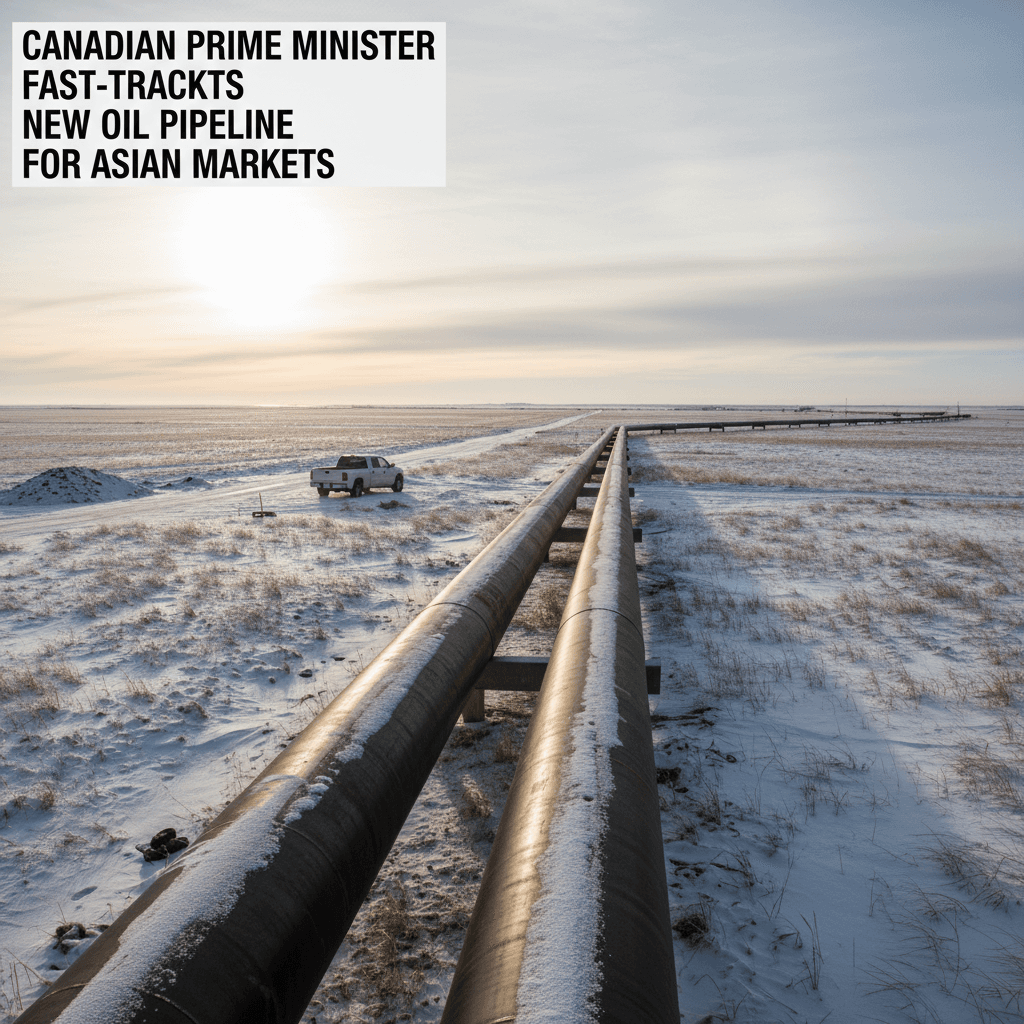
Canada Moves to Fast-Track Oil Pipeline for Asian Markets

Canadian Prime Minister Mark Carney is invoking new powers to fast-track regulatory approval for a major new oil pipeline, according to a report from Rigzone. The move aims to expand Canada's access to Asian crude markets. While the specific pipeline project was not named in the report, the push for increased export capacity from Canada represents a significant shift in North American energy infrastructure policy. For Bakken operators, the development carries both competitive and logistical considerations. Increased pipeline capacity from Western Canada could influence crude pricing benchmarks across the continent, including the Bakken's own local price at Clearbrook, Minnesota. Greater volumes of Canadian crude reaching global markets can affect the supply-demand balance for similar light sweet crudes produced in the Williston Basin. Historically, pipeline constraints have limited Canadian crude to primarily U.S. Midwest markets, keeping a lid on prices. A new high-capacity outlet to Asia could alter that dynamic, potentially...

☀️Morning Wire·Oct 4
Canadian Prime Minister Fast-Tracks New Oil Pipeline for Asian Markets - Bakken Wire
Pipeline & Infrastructure

Canadian Prime Minister Fast-Tracks New Oil Pipeline for Asian Markets

Prime Minister Mark Carney has invoked new powers to expedite regulatory approval for a new, high-capacity oil pipeline, according to a report from Rigzone. The move aims to expand Canada's access to Asian markets. The development, reported on October 2, signals a renewed push by Canada to move its crude oil to West Coast export terminals. For Bakken operators in North Dakota, new Canadian pipeline capacity can influence regional market dynamics. Increased pipeline takeaway capacity from Western Canada can affect the flow of competing crudes, including Bakken barrels, through existing midcontinent pipeline systems. Changes in these flows can impact local basis differentials—the difference between the price of Bakken crude at the wellhead and the U.S. benchmark price. While the Rigzone report did not specify a pipeline route or capacity, any major new Canadian export conduit could alter crude oil logistics in North America. Bakken crude often moves to market via...

🔆Midday Wire·Oct 3
Pipeline & Infrastructure

Canada Moves to Fast-Track Oil Pipeline for Asian Market Access

Canadian Prime Minister Mark Carney is expediting regulatory approval for a new, high-capacity oil pipeline intended to expand Canada's access to Asian markets, according to a report from Rigzone. The report, published October 2, stated Carney has invoked new powers to fast-track the project. The development highlights ongoing efforts by North American producers to reach lucrative overseas markets beyond domestic and traditional refining hubs. Increased Canadian export capacity to Asia could influence global crude pricing benchmarks and shipping routes. For operators in North Dakota's Bakken formation, new Canadian pipeline capacity represents a shifting competitive landscape. Bakken crude, which primarily moves to market via pipelines, rail, and truck, often competes with Canadian heavy and light crude grades in the U.S. Midwest and Gulf Coast refining markets. Enhanced Canadian access to Asian buyers could, over time, alter flow patterns and competition for pipeline space within the continent. However, the specific impact on...

🌅Afternoon Wire·Oct 2