** Federal judge vacates $28M Dakota Access judgment; North Dakota and feds reach settlement
** State will receive substantial payment from U.S. after nearly 7-year lawsuit over pipeline protest costs; separate $157 million federal grant targets enhanced oil recovery research.
BODY: A federal judge has agreed to vacate a nearly $28 million judgment against the U.S. government, clearing the way for North Dakota to settle a long-running lawsuit over costs from the Dakota Access Pipeline protests. The state is set to receive a substantial monetary payment from the United States, attorneys confirmed during a Friday hearing.
The agreement, if finalized, would end nearly seven years of litigation. "We're hoping we really don't need to fight any further," said Department of Justice attorney Jonathan Guynn. North Dakota Attorney General Drew Wrigley described the pending settlement as satisfactory, though the exact amount remains undisclosed.
The lawsuit, filed in 2019, stems from massive demonstrations against the construction of the Dakota Access Pipeline (DAPL) in rural south-central North Dakota during 2016-2017. The state alleged the federal government allowed protests to grow unlawfully by permitting demonstrators to camp on federal land, forcing North Dakota to spend millions on policing and cleanup. The U.S. government has denied these allegations.
In April 2023, U.S. District Court Judge Daniel Traynor ruled in favor of the state and ordered the executive branch to pay $28 million. The Department of Justice appealed that decision to the Eighth Circuit. As part of the settlement, the DOJ seeks to have Traynor's judgment and related orders vacated. Both parties indicated that vacating the rulings is important, as keeping the legal conclusions on the books could influence future lawsuits. "The downstream consequences of keeping these on the books is troublesome for the United States," Guynn said. If the judge does not agree, the federal government would likely withdraw from the settlement and proceed with its appeal.
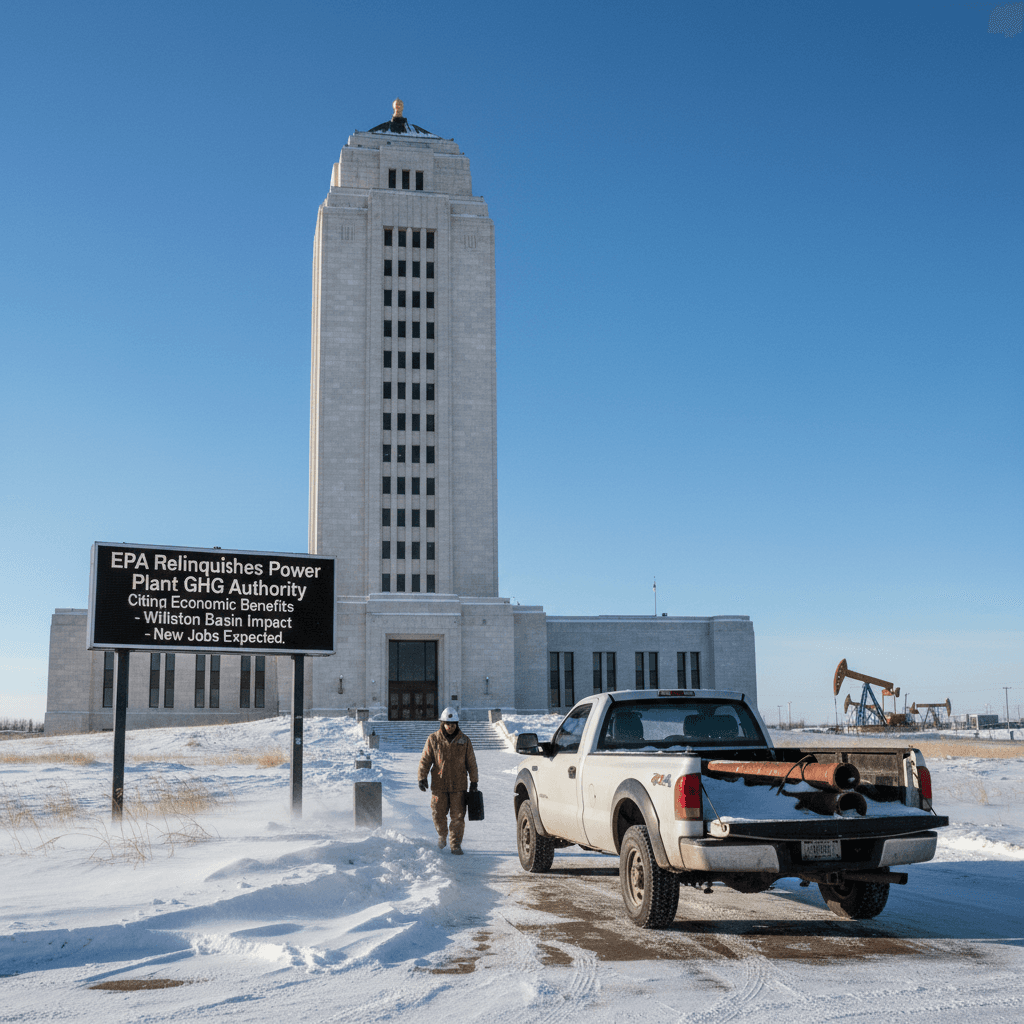
Separately, North Dakota's oil industry is poised for a potential boost from a major federal research grant aimed at unlocking the next stage of production from the Bakken formation. Sen. John Hoeven announced Friday that the U.S. Department of Energy has officially awarded $36 million to the "Cracking the Code" initiative, a project championed by the former governor. The total $157 million effort, including financial contributions from the state and several oil companies, aims to develop cost-effective enhanced oil recovery (EOR) technologies for shale formations like the Bakken.
"This is about enhanced oil recovery," Hoeven said. "It has national ramifications."
The research will be led by the Energy and Environmental Research Center at the University of North Dakota and will involve large-scale pilot projects with four oil companies. "The key component of all of this is the EERC," said North Dakota Petroleum Council President Ron Ness. "Every company and every engineer has a better idea than their competitor. We've got to bring the best of all those ideas together. That's what the EERC does."
The timing of the federal grant comes as the EERC faces operational challenges. UND confirmed Thursday that the center had made staffing cuts, including 27 positions eliminated and 13 employees furloughed, due to delays in federal funding. An EERC official told lawmakers in January that the center had been waiting for some federal awards for more than a year. Hoeven said the DOE commitment is available immediately and will help.
The industry has conducted small-scale EOR pilots in the Bakken with positive results, but the cost to increase production has not yet proven economically feasible, said Lynn Helms, North Dakota's former top oil regulator and now the leader of EOR efforts for the Petroleum Council. "That's what these major, large demonstration projects are all about. We've had smaller demonstration projects that have shown we can increase oil recovery, but not at economic levels," Helms said. The new pilot projects need to demonstrate a sufficient production increase "to make the technology an economic play. "The costs are very, very high."
The pilot projects are scheduled to begin within the next 12 months and on a much bigger scale, said John Harju, vice president for strategic partnerships at the EERC and one of the effort's leaders. The duration and volume of injections in the pilot projects will be significant, aiming to prove commercial viability.
TAGS: dakota-access-pipeline, bakken-oil, enhanced-oil-recovery, federal-lawsuit, north-dakota, regulatory-update
settlement
federal-grant
energy-research
oil-production
protest-costs
**
Source
** Bing News