WTI Crude--
Brent Crude--
Natural Gas--
ND Rig Count--
WTI Crude--
Brent Crude--
Natural Gas--
ND Rig Count--
Geopolitical Energy Laundering Could Undermine Bakken Market Share in Europe - Bakken Wire
Pipeline & Infrastructure

Geopolitical Energy Laundering Could Undermine Bakken Market Share in Europe

Sanctions-busting pipeline scheme risks extending Russian crude flows to EU, challenging Bakken's post-2027 export opportunities.

Bakken Wire Staff·🔆Midday Wire·

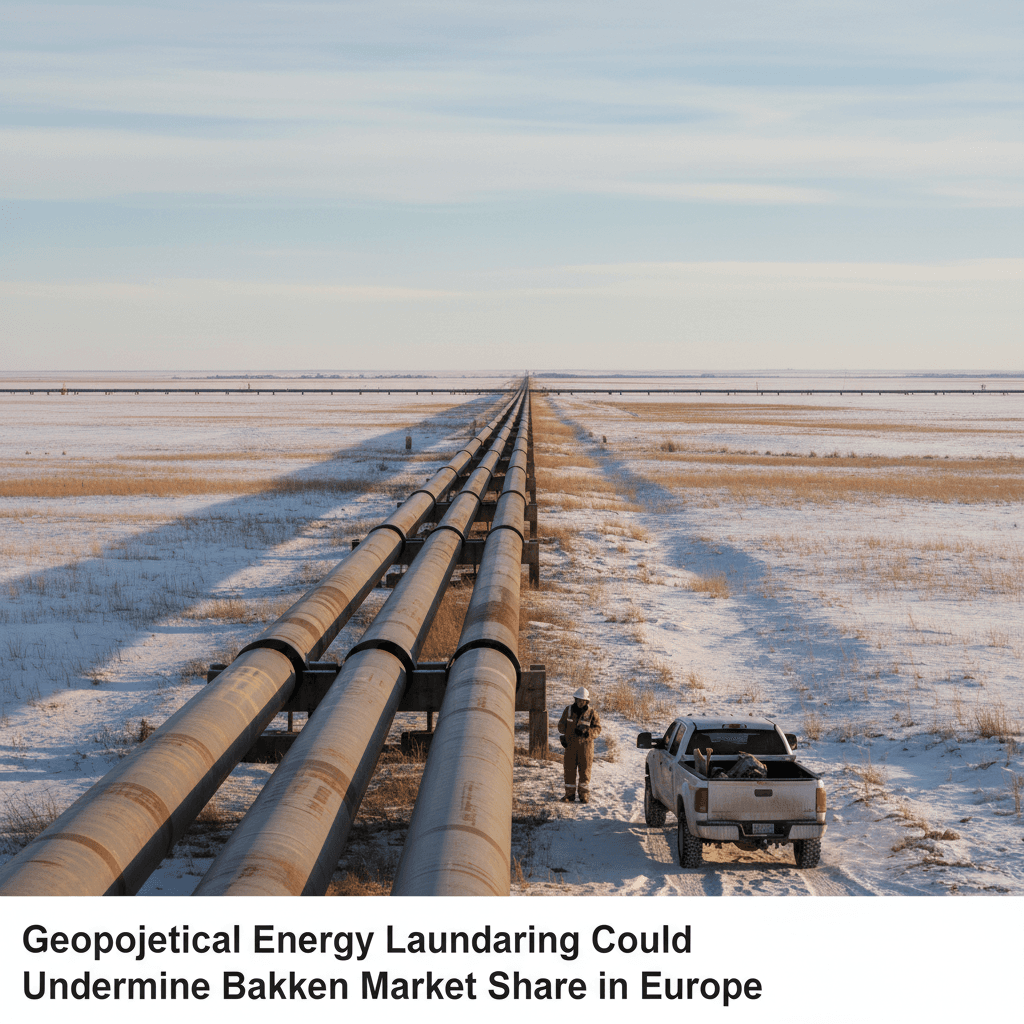
A sophisticated scheme to launder Russian and Iranian crude oil through a sanctioned pipeline corridor could prolong Europe's reliance on non-Western energy, directly impacting future export opportunities for Bakken producers, according to a report from OilPrice.com.

European Union regulations call for a complete phase-out of Russian piped gas and crude oil exemptions by December 31, 2027. However, a "massive, highly sophisticated infrastructure back door" is being exploited via the Caspian Pipeline Consortium (CPC), according to the OilPrice.com report. The EU granted a specific legal exemption for the "CPC Blend" crude oil stream on June 3, 2022, justified on the grounds that the underlying volumes originate in Kazakhstan.

Since that exemption was granted, annual throughput of this crude has surged from 52 million metric tonnes (about 1.04 million barrels per day) to a record 72 million metric tonnes, a 38.5% increase. However, Kazakhstan’s actual domestic oil production has grown less than 2% over that period, with its output this year having fallen significantly. A senior EU energy security source told OilPrice.com that this discrepancy represents an active "ghost volume" where heavily discounted Russian crude mixed with Iranian oil is being blended and laundered directly to European destinations outside of G7 monitoring.

This infrastructure-backed flow, which the EU has committed to phasing out by the end of 2027, presents a direct challenge to Bakken crude exports seeking to fill the void left by sanctioned Russian barrels in the European market. The continued laundering operation provides a financing mechanism that could sustain non-Western crude flows and delay market openings for North Dakota producers.

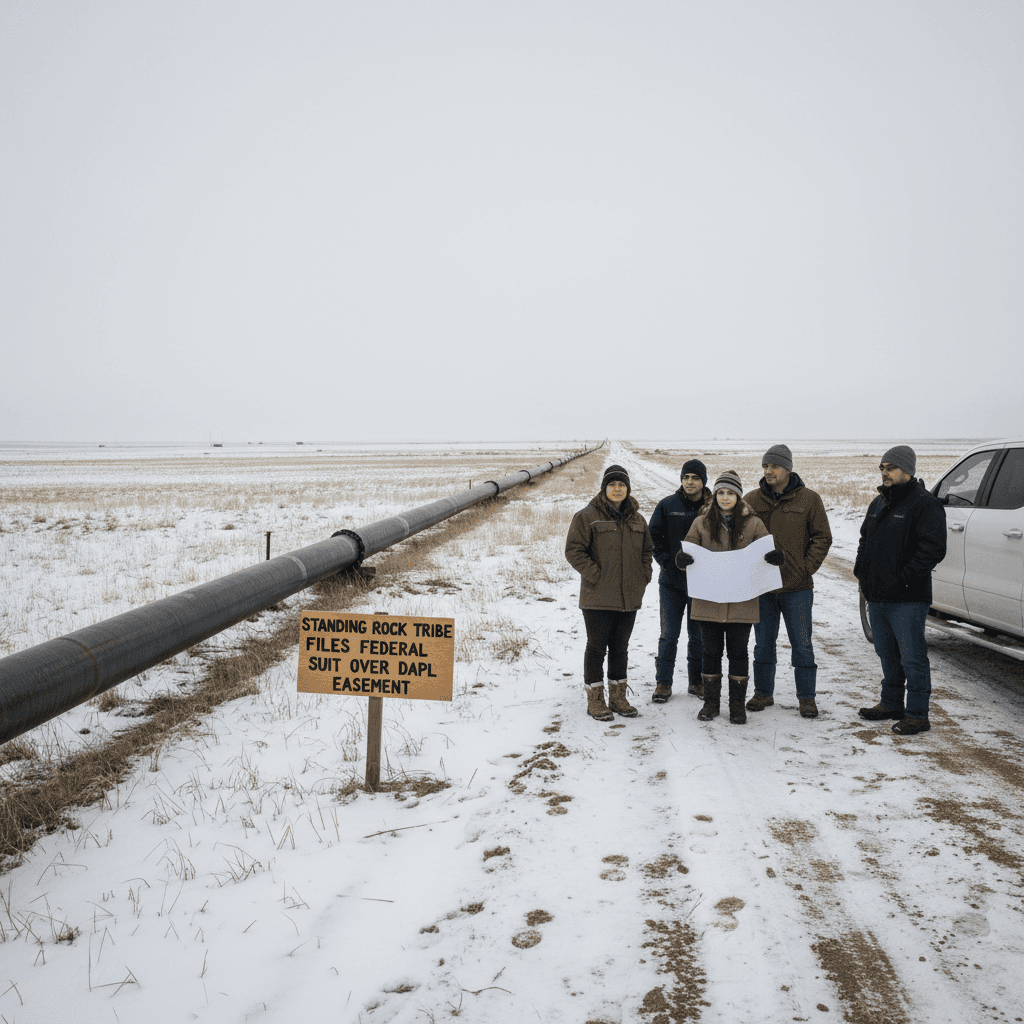
Separately, on the domestic legal front, the Standing Rock Sioux Tribe filed a new federal lawsuit on Friday, October 9, 2026, challenging the Army Corps of Engineers’ approval of a new Dakota Access Pipeline (DAPL) easement beneath Lake Oahe, according to Bing News. The 570,000 barrel-per-day DAPL is a critical conduit for Bakken crude to reach markets.

While the two pipeline stories are distinct, together they highlight the complex global and local challenges facing Bakken oil flows. Internationally, geopolitical maneuvers threaten to extend competition for European buyers beyond sanctioned deadlines. Domestically, legal challenges continue to pose operational risks to key export infrastructure.

Source

OilPrice.com, Bing News
pipelineexportsgeopoliticseuropean unionsanctionsdakota access pipelinelitigation

Share this article

Related Articles

Pipeline & Infrastructure

Standing Rock Tribe Challenges New DAPL Easement in Federal Court

The Standing Rock Sioux Tribe filed a federal lawsuit Friday, Oct. 9, challenging the Army Corps of Engineers’ approval of a new Dakota Access Pipeline easement beneath Lake Oahe, according to Bing News. The lawsuit, reported by Bing News from Native News Online, contests the Corps’ approval of a new easement for a crossing that is central to moving crude oil from the Williston Basin to market. For Bakken operators, the case underscores how pipeline infrastructure decisions remain tied to federal permitting, tribal consultation and environmental review. The Dakota Access Pipeline is a major crude oil export route for North Dakota production, and easement approvals beneath Lake Oahe are among the critical land and water crossings that support long-term pipeline operations. Any new federal challenge to a DAPL easement can create uncertainty for producers, midstream companies and royalty owners who depend on stable transportation capacity. Bakken development economics often assume...

🌅Afternoon Wire·Oct 11
Standing Rock Tribe Files Federal Suit Over DAPL Easement - Bakken Wire
Pipeline & Infrastructure

Standing Rock Tribe Files Federal Suit Over DAPL Easement

The Standing Rock Sioux Tribe filed a federal lawsuit Friday, Oct. 9, challenging the U.S. Army Corps of Engineers’ approval of a new Dakota Access Pipeline easement beneath Lake Oahe, according to a report carried by Bing News. The filing revives a long-running legal and permitting dispute over a corridor that matters to crude oil transport from the Williston Basin. The Bakken formation is North Dakota’s primary oil-producing region, and pipeline access remains a critical link between wellsites, storage hubs and downstream markets. DAPL is widely understood as a major crude takeaway route for Bakken production, making easement decisions and court filings a recurring concern for operators, royalty owners and local communities. The lawsuit centers on the Army Corps’ approval of the new easement at Lake Oahe. Easements crossing federal water bodies or Corps-managed land typically involve questions about the agency’s permitting process, environmental review, tribal consultation and compliance with...

🔆Midday Wire·Oct 10
Pipeline & Infrastructure

New Canadian West Coast Pipeline Designation Challenged by First Nations

The federal designation of a major new Canadian oil pipeline as a project of national interest is facing a legal challenge from an Indigenous group, creating uncertainty for a project that could alter long-term crude flow patterns affecting the Bakken. According to a report from OilPrice.com, Cold Lake First Nations (CLFNS) has filed an application for judicial review in Federal Court challenging the Canadian government's decision. The challenged project, named Pacific Link, is a proposed 1 million-barrels-per-day pipeline to the British Columbia coast. It is being advanced in partnership by the governments of Canada and Alberta, which will share equal ownership. The federal government made the national interest designation last week, a move intended to fast-track development. The ambition behind the pipeline is to export additional Canadian crude oil to destinations in Asia and reduce high dependence on exports to the United States. For Bakken producers, who also rely heavily...

🔆Midday Wire·Oct 9