WTI Crude--
Brent Crude--
Natural Gas--
ND Rig Count--
WTI Crude--
Brent Crude--
Natural Gas--
ND Rig Count--
Global Pipeline, Security Shifts Impact Bakken Market Dynamics - Bakken Wire
Pipeline & Infrastructure

Global Pipeline, Security Shifts Impact Bakken Market Dynamics

Petrofac asset sale finalizes as Mid-East conflict strains shipping, with implications for global oil flows and project stability.

Bakken Wire Staff·🌅Afternoon Wire·

The completion of Petrofac Ltd's Asset Solutions business sale to CB&I provides new stability for a major global contractor, according to a company statement. The Woodlands, Texas-based CB&I, which designs and builds bulk liquid storage facilities, tanks and terminals, finalized the acquisition on April 10, 2026, saving jobs for about 3,000 workers. CB&I President and CEO Mark Butts stated the deal strengthens the company's portfolio with a complementary reimbursable contracting business, delivering predictable cash flow and enhancing service capabilities.

Petrofac, under administration since last year, completed the divestment following a creditor vote and a resolved legal challenge. Proceeds from the sale, agreed on a "debt-free, cash-free" basis in December 2025, will be used to settle creditor claims through an allocation plan that prioritizes secured creditors, according to a March 25 court ruling. The acquisition provides the Asset Solutions business access to CB&I's strong, debt-free balance sheet, ensuring continuity for customers, CB&I said.

Meanwhile, ongoing conflict in the Middle East continues to disrupt global energy logistics, a factor critical to Bakken crude oil market access. A two-week ceasefire between the U.S. and Iran, brokered by Pakistan and agreed on April and 10, 2026, is being severely tested, according to an OilPrice.com analysis published April 12. Israel has maintained strikes in Lebanon, arguing it is not part of the ceasefire, while Iran insists continued Israeli action violates the agreement.

The conflict has led to a de facto closure of the Strait of Hormuz, halting a massive portion of oil and LNG tankers and leading to force majeure declarations by many energy companies. Analysis from StanChart estimates the war has reduced global oil flows by approximately 8 million barrels per day, with Saudi Arabia alone losing 700,000 barrels per day in pipeline flows. The disruption has also caused war-risk insurance premiums for ships in the Persian Gulf to surge by up to 1,000%, dramatically increasing the cost of moving crude.

For Bakken operators, these global events underscore the importance of stable midstream partners and the vulnerability of international oil prices to supply shocks. The Petrofac-CB&I transaction points to consolidation and financial strengthening among engineering firms that support global pipeline and storage infrastructure. Concurrently, the prolonged blockage of the Strait of Hormuz—through which about a fifth of global oil flows—maintains a risk premium on global crude benchmarks, which directly affect the price received for North Dakota production. Any sustained reduction in global flows supports higher price environments, but also highlights reliance on volatile maritime chokepoints for world market balance.

Source

Rigzone, OilPrice.com
pipelinesmergers and acquisitionsglobal conflictshippingoil pricesmidstream

Share this article

Related Articles

Pipeline & Infrastructure

Canada Moves to Fast-Track Oil Pipeline for Asian Markets

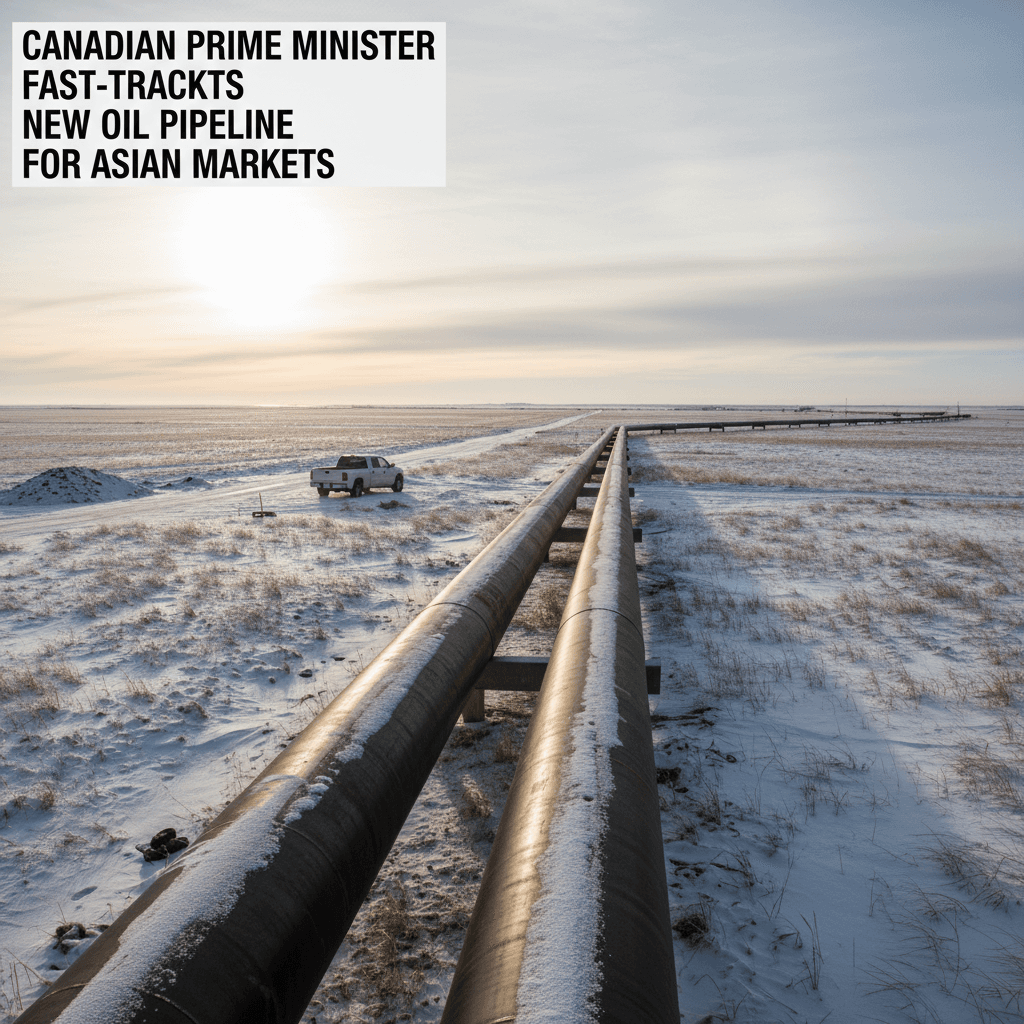
Canadian Prime Minister Mark Carney is invoking new powers to fast-track regulatory approval for a major new oil pipeline, according to a report from Rigzone. The move aims to expand Canada's access to Asian crude markets. While the specific pipeline project was not named in the report, the push for increased export capacity from Canada represents a significant shift in North American energy infrastructure policy. For Bakken operators, the development carries both competitive and logistical considerations. Increased pipeline capacity from Western Canada could influence crude pricing benchmarks across the continent, including the Bakken's own local price at Clearbrook, Minnesota. Greater volumes of Canadian crude reaching global markets can affect the supply-demand balance for similar light sweet crudes produced in the Williston Basin. Historically, pipeline constraints have limited Canadian crude to primarily U.S. Midwest markets, keeping a lid on prices. A new high-capacity outlet to Asia could alter that dynamic, potentially...

☀️Morning Wire·Oct 4
Canadian Prime Minister Fast-Tracks New Oil Pipeline for Asian Markets - Bakken Wire
Pipeline & Infrastructure

Canadian Prime Minister Fast-Tracks New Oil Pipeline for Asian Markets

Prime Minister Mark Carney has invoked new powers to expedite regulatory approval for a new, high-capacity oil pipeline, according to a report from Rigzone. The move aims to expand Canada's access to Asian markets. The development, reported on October 2, signals a renewed push by Canada to move its crude oil to West Coast export terminals. For Bakken operators in North Dakota, new Canadian pipeline capacity can influence regional market dynamics. Increased pipeline takeaway capacity from Western Canada can affect the flow of competing crudes, including Bakken barrels, through existing midcontinent pipeline systems. Changes in these flows can impact local basis differentials—the difference between the price of Bakken crude at the wellhead and the U.S. benchmark price. While the Rigzone report did not specify a pipeline route or capacity, any major new Canadian export conduit could alter crude oil logistics in North America. Bakken crude often moves to market via...

🔆Midday Wire·Oct 3
Pipeline & Infrastructure

Canada Moves to Fast-Track Oil Pipeline for Asian Market Access

Canadian Prime Minister Mark Carney is expediting regulatory approval for a new, high-capacity oil pipeline intended to expand Canada's access to Asian markets, according to a report from Rigzone. The report, published October 2, stated Carney has invoked new powers to fast-track the project. The development highlights ongoing efforts by North American producers to reach lucrative overseas markets beyond domestic and traditional refining hubs. Increased Canadian export capacity to Asia could influence global crude pricing benchmarks and shipping routes. For operators in North Dakota's Bakken formation, new Canadian pipeline capacity represents a shifting competitive landscape. Bakken crude, which primarily moves to market via pipelines, rail, and truck, often competes with Canadian heavy and light crude grades in the U.S. Midwest and Gulf Coast refining markets. Enhanced Canadian access to Asian buyers could, over time, alter flow patterns and competition for pipeline space within the continent. However, the specific impact on...

🌅Afternoon Wire·Oct 2