WTI Crude--
Brent Crude--
Natural Gas--
ND Rig Count--
WTI Crude--
Brent Crude--
Natural Gas--
ND Rig Count--
Hormuz Strait Reopens Then Faces New Shutdown, Roiling Oil Prices - Bakken Wire
Pipeline & Infrastructure

Hormuz Strait Reopens Then Faces New Shutdown, Roiling Oil Prices

Geopolitical whiplash in the Middle East creates market volatility as a major Permian landowner files for an IPO.

Bakken Wire Staff·🔆Midday Wire·

Oil markets experienced extreme volatility Friday and into Saturday after Iran declared the Strait of Hormuz "completely open" before reportedly moving to shut it down again, according to separate wire reports. The price swings have direct implications for Bakken crude pricing and operator revenues.

On Friday, April 17, Iranian Foreign Minister Abbas Araghchi announced the critical waterway was open for commercial traffic, a move tied to a ceasefire between Lebanon and Israel, according to Rigzone. The announcement sent oil prices plunging, with Brent crude falling more than 11% to around $88 a barrel.

However, by Saturday, April 18, the situation appeared to reverse sharply. OilPrice.com reported that Iran has turned back at least 20 vessels and declared the strait closed, citing a failure by the U.S. to uphold ceasefire commitments. The report states total disruptions now involve more than 20 tankers, with merchant vessels receiving radio warnings from Iranian naval forces.

The conflicting reports create significant uncertainty for global oil flows. The Strait of Hormuz is a vital chokepoint for seaborne crude, and any prolonged disruption risks supply shocks. OilPrice.com noted that the recent sharp selloff in prices "may prove short-lived if physical constraints persist."

Permian Land Company Files for IPO In separate industry news, EagleRock Land LLC filed for an initial public offering on Thursday, according to a separate Rigzone report. The Houston-based company owns or controls 236,000 acres across the Permian Basin and holds an interest in another 70,000 acres.

EagleRock reported a net loss of $73.1 million on revenue of $72.2 million for the year ended Dec. 31, 2025. The company stated it plans to use IPO proceeds to repay debt and fund operations and land acquisitions. Its revenue comes from royalties and leases with major oil and gas operators drilling on its land, including Chevron, ConocoPhillips, Devon Energy, and Diamondback Energy.

The filing indicates the company hopes to attract additional development from data centers, renewable energy projects, and other industrial uses to its land portfolio. The offering is being led by Goldman Sachs, Barclays, and JPMorgan Chase.

Context for the Bakken The rapid shift in Middle East tensions underscores the geopolitical risks embedded in global oil prices. For Bakken producers, who price their crude against international benchmarks, such volatility can swiftly alter cash flow and hedging strategies. The potential for a sustained supply disruption could provide price support, but the current contradictory reports make near-term direction difficult to assess.

The EagleRock IPO filing highlights continued investor interest in oil and gas adjacent land and royalty platforms, a model with parallels to mineral and surface ownership in the Williston Basin.

Source

According to Rigzone and OilPrice.com.
strait of hormuziranoil pricesgeopoliticsipopermian basinroyaltiesland management

Share this article

Related Articles

Pipeline & Infrastructure

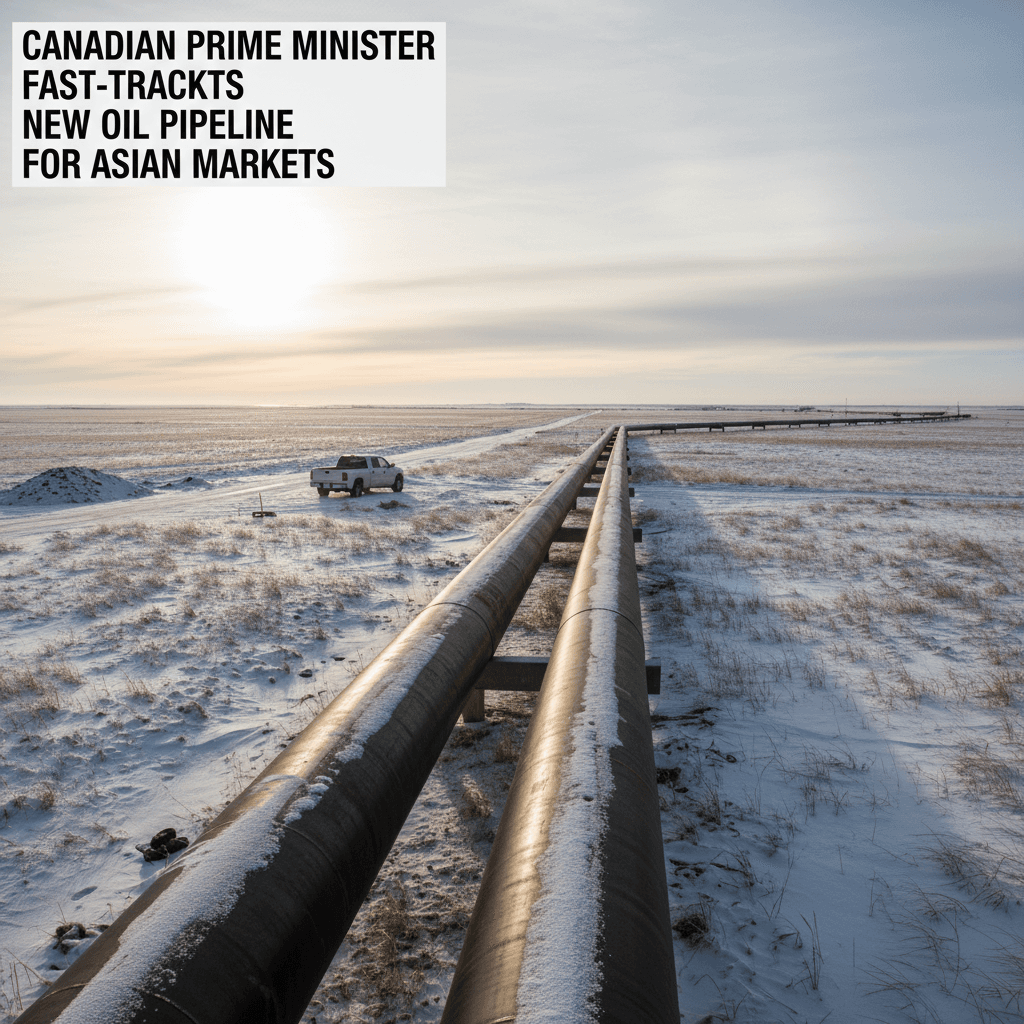
Canada Moves to Fast-Track Oil Pipeline for Asian Markets

Canadian Prime Minister Mark Carney is invoking new powers to fast-track regulatory approval for a major new oil pipeline, according to a report from Rigzone. The move aims to expand Canada's access to Asian crude markets. While the specific pipeline project was not named in the report, the push for increased export capacity from Canada represents a significant shift in North American energy infrastructure policy. For Bakken operators, the development carries both competitive and logistical considerations. Increased pipeline capacity from Western Canada could influence crude pricing benchmarks across the continent, including the Bakken's own local price at Clearbrook, Minnesota. Greater volumes of Canadian crude reaching global markets can affect the supply-demand balance for similar light sweet crudes produced in the Williston Basin. Historically, pipeline constraints have limited Canadian crude to primarily U.S. Midwest markets, keeping a lid on prices. A new high-capacity outlet to Asia could alter that dynamic, potentially...

☀️Morning Wire·Oct 4
Canadian Prime Minister Fast-Tracks New Oil Pipeline for Asian Markets - Bakken Wire
Pipeline & Infrastructure

Canadian Prime Minister Fast-Tracks New Oil Pipeline for Asian Markets

Prime Minister Mark Carney has invoked new powers to expedite regulatory approval for a new, high-capacity oil pipeline, according to a report from Rigzone. The move aims to expand Canada's access to Asian markets. The development, reported on October 2, signals a renewed push by Canada to move its crude oil to West Coast export terminals. For Bakken operators in North Dakota, new Canadian pipeline capacity can influence regional market dynamics. Increased pipeline takeaway capacity from Western Canada can affect the flow of competing crudes, including Bakken barrels, through existing midcontinent pipeline systems. Changes in these flows can impact local basis differentials—the difference between the price of Bakken crude at the wellhead and the U.S. benchmark price. While the Rigzone report did not specify a pipeline route or capacity, any major new Canadian export conduit could alter crude oil logistics in North America. Bakken crude often moves to market via...

🔆Midday Wire·Oct 3
Pipeline & Infrastructure

Canada Moves to Fast-Track Oil Pipeline for Asian Market Access

Canadian Prime Minister Mark Carney is expediting regulatory approval for a new, high-capacity oil pipeline intended to expand Canada's access to Asian markets, according to a report from Rigzone. The report, published October 2, stated Carney has invoked new powers to fast-track the project. The development highlights ongoing efforts by North American producers to reach lucrative overseas markets beyond domestic and traditional refining hubs. Increased Canadian export capacity to Asia could influence global crude pricing benchmarks and shipping routes. For operators in North Dakota's Bakken formation, new Canadian pipeline capacity represents a shifting competitive landscape. Bakken crude, which primarily moves to market via pipelines, rail, and truck, often competes with Canadian heavy and light crude grades in the U.S. Midwest and Gulf Coast refining markets. Enhanced Canadian access to Asian buyers could, over time, alter flow patterns and competition for pipeline space within the continent. However, the specific impact on...

🌅Afternoon Wire·Oct 2