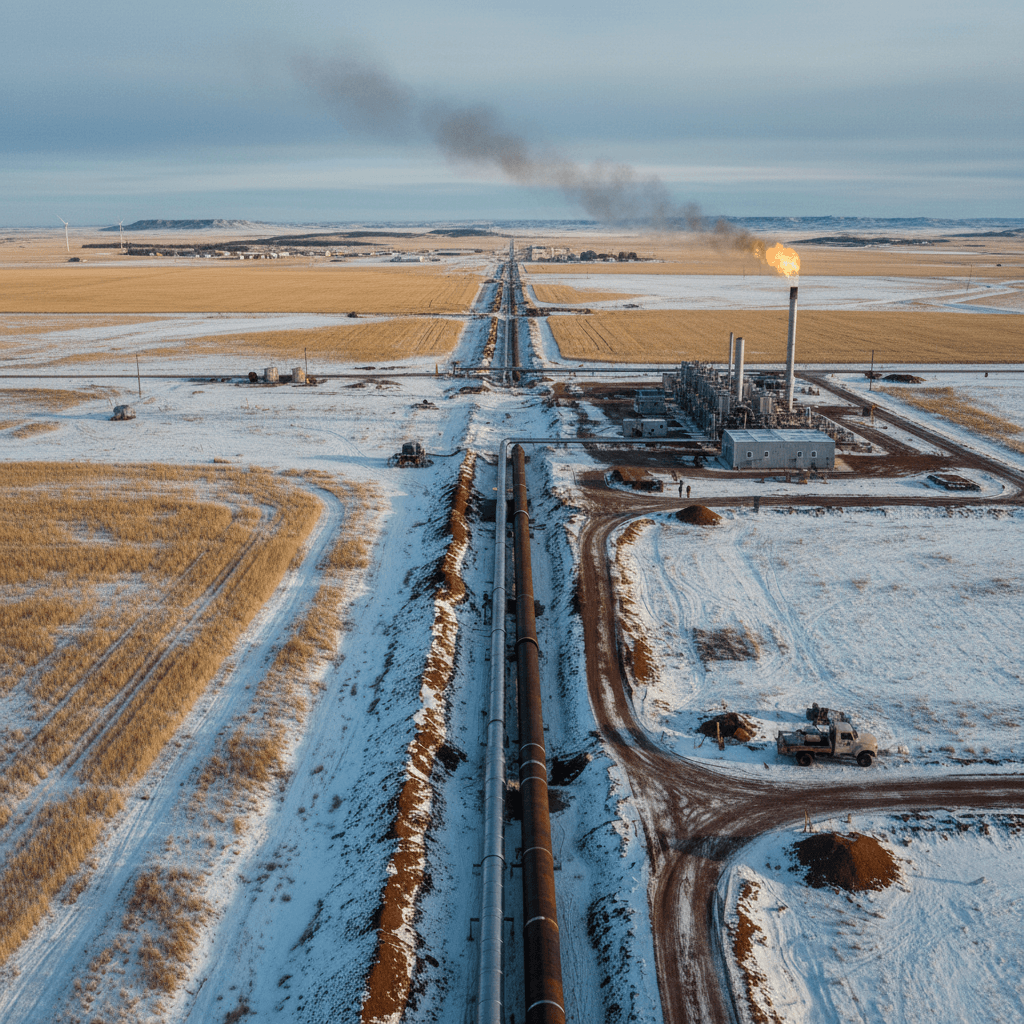
Israel-Egypt Gas Pipeline Expansion Completed
Infrastructure upgrade could influence global LNG markets, indirectly affecting Bakken gas economics.
State-owned Israel Natural Gas Lines has completed a project to expand the pipeline system delivering Israeli natural gas to Egypt, according to a report from Rigzone. The development, reported on July 10, paves the way for increased Israeli gas exports to its neighbor.
For Bakken operators and royalty owners, this international infrastructure development is a reminder of the interconnected nature of global natural gas markets. While the Bakken formation in North Dakota is primarily an oil play, it also produces significant associated natural gas. The economics of this gas are tied to broader supply and demand fundamentals.
Increased gas exports from the Eastern Mediterranean to Egypt could potentially affect global liquefied natural gas (LNG) flows. Egypt has LNG export facilities, and greater feedstock availability from Israel could allow for more Egyptian LNG cargoes to reach the international market. This adds to global supply.
In a well-supplied global market, additional LNG volumes can contribute to price pressure on benchmark prices like Henry Hub. Bakken gas prices are often discounted relative to Henry Hub due to regional pipeline constraints, but they are not isolated from broader trends. Sustained lower global prices can ultimately weigh on the value of natural gas produced in North Dakota.
The completion of this pipeline project underscores the ongoing global competition in natural gas. For Bakken producers, maximizing the value of gas continues to depend on local factors, including pipeline takeaway capacity and gas processing infrastructure within the Williston Basin, as well as these wider market dynamics.
Source
Rigzone