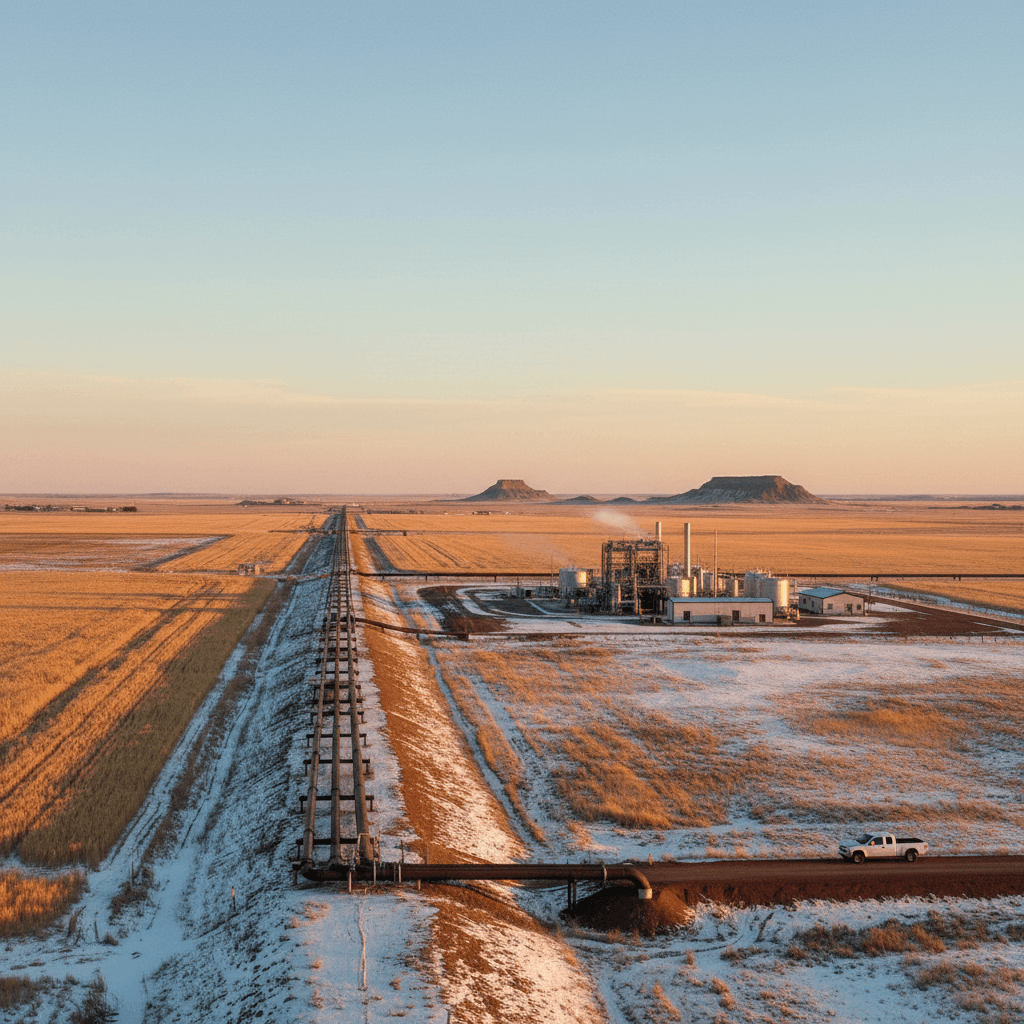
Israeli Pipeline Expansion Completed, Could Impact Global Gas Flows
A new pipeline project increasing Israeli exports to Egypt may add to global LNG supply, indirectly affecting Bakken gas markets.
State-owned Israel Natural Gas Lines has completed a project to expand the pipeline system delivering Israeli natural gas to Egypt, according to a report from Rigzone. The development, published July 10, paves the way for increased Israeli gas exports to its neighbor.
While this infrastructure project is geographically distant from North Dakota, its completion has implications for global natural gas markets. Increased gas flow from the Eastern Mediterranean into Egypt boosts feedstock for the country's liquefied natural gas (LNG) export facilities. This can add to the global supply of LNG, which competes in international markets.
For Bakken operators, the global LNG market is a key determinant for the price of natural gas produced alongside crude oil in the Williston Basin. The Bakken formation is a significant oil play, but its associated gas production is substantial. When global LNG supplies increase, it can place downward pressure on natural gas prices, which are already historically low in the region due to pipeline constraints.
Lower natural gas prices directly impact the economics of drilling in the Bakken, where gas is often a secondary revenue stream. Operators facing reduced gas revenues may prioritize drilling in areas with higher crude oil yields or defer development of wells with high gas-to-oil ratios. Furthermore, persistent low gas prices underscore the critical need for expanded gas capture and pipeline infrastructure within North Dakota to reduce flaring and improve wellhead economics.
The completion of the Israeli pipeline expansion is a reminder that Bakken energy markets are connected to global supply dynamics. Infrastructure developments anywhere that affect global oil and gas supply can have ripple effects on producer decisions in North Dakota.
Source
Rigzone