Japan Plans Support for Pipelines Bypassing Strait of Hormuz
The initiative could impact global oil flow and market dynamics relevant to Bakken crude exports.
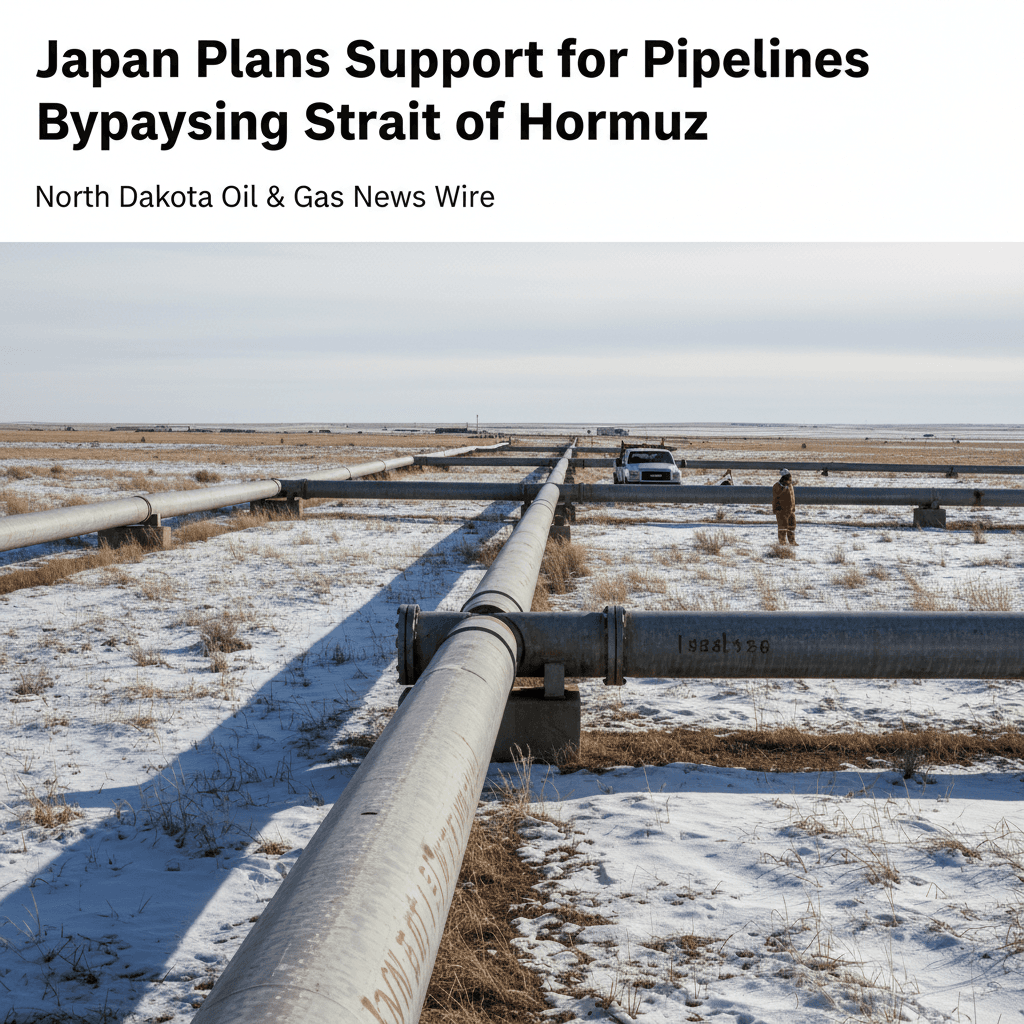
Japan plans to support the construction of pipelines that bypass the Strait of Hormuz, according to a report from Rigzone. The news service reported the development on Wednesday, August 26, 2026.
The strategic chokepoint is a critical maritime route for global oil shipments, particularly crude from the Middle East bound for Asian markets. Any significant shift in how that oil reaches market can influence global supply chains and price benchmarks.
For Bakken operators, global trade flows directly impact the competitiveness of North Dakota crude. Brent and other international benchmarks often dictate the price received for Bakken oil shipped to coastal refineries or exported. Diversions in global supply routes can alter the supply-demand balance in key markets.
Increased pipeline capacity bypassing Hormuz could, over time, contribute to more stable and secure crude deliveries to Asia from alternative sources. This could affect the pricing differentials between landlocked Bakken crude and waterborne international grades. Stability in global shipping lanes is generally viewed favorably by producers managing export economics.
The development is a reminder of the interconnected nature of global energy infrastructure. While the Bakken formation is insulated by domestic pipeline and rail networks, its crude ultimately competes in a world market shaped by such geopolitical infrastructure projects. Japan's plan underscores ongoing efforts by major consuming nations to secure energy supplies.
Source
Rigzone