WTI Crude--
Brent Crude--
Natural Gas--
ND Rig Count--
WTI Crude--
Brent Crude--
Natural Gas--
ND Rig Count--
Midcontinent Pipeline Project Advances as Global Refinery Fire Impacts Supply - Bakken Wire
Pipeline & Infrastructure

Midcontinent Pipeline Project Advances as Global Refinery Fire Impacts Supply

Phillips 66 and Kinder Morgan secure shippers for Texas-to-Arizona line, while an Australian refinery fire highlights global fuel logistics.

Bakken Wire Staff·☀️Morning Wire·

Phillips 66 and Kinder Morgan Inc. have secured enough long-term customer commitments to proceed with the proposed Western Gateway refined products pipeline from Texas to Arizona, according to a joint statement reported Monday. For Bakken operators, the project represents a potential new outlet for Midcontinent refinery output, which processes crude from regions like the Bakken.

The Western Gateway project would move refined products like gasoline and diesel. It includes a newbuild pipeline from Borger, Texas, to Phoenix, Arizona, with a planned capacity of 200,000 barrels per day and a target completion date of 2029, according to Rigzone. To supply the line, the Phillips 66-operated Gold Pipeline, which currently flows from Borger to St. Louis, would be reversed to carry refined products from Mid-Continent refineries to Borger.

"Customer response during the open season underscores the importance of Western Gateway in addressing long-term refined products logistics needs in the region," Phillips 66 chair and CEO Mark Lashier said in the statement. Kinder Morgan CEO Kim Dang added the project leverages existing assets for growth in Arizona and California markets. The final investment decision is still subject to final agreements and board approvals.

Separately, a fire at the Geelong Refinery in Australia underscores the fragility of global fuel supply chains. The fire hit the refinery on April 15, but the operator, Viva Energy Group Ltd., expects to restore production of transportation fuels to over 90 percent of capacity within a few weeks, according to a statement Wednesday. The refinery has a processing capacity of 120,000 barrels per day and supplies over 50 percent of Victoria's fuel.

Viva Energy CEO Scott Wyatt said the company does not expect disruptions to fuel availability or price increases for its customers due to the incident. However, the Australian government has moved to secure additional diesel stocks, procuring over 570,000 barrels of diesel through its Strategic Reserve powers in partnership with suppliers like Viva and BP Australia, according to the prime minister's office.

The two developments highlight the interconnected nature of refined product markets. The advancement of the Western Gateway pipeline aims to improve supply flexibility and reliability for West Coast markets, which could indirectly benefit Bakken crude producers by enhancing the value and flow of refined products from the Midcontinent region. Meanwhile, the rapid response to the Australian refinery fire demonstrates how localized supply shocks can trigger government intervention to secure inventories, a dynamic that can influence global diesel pricing and trade flows relevant to North Dakota's energy sector.

Source

According to Rigzone reports published April 21 and April 22, 2026.
pipelineinfrastructurerefined productsphillips 66kinder morganrefinerysupply chainbakken

Share this article

Related Articles

Pipeline & Infrastructure

Pipeline Outage Forces Bakken Producers to Rely on Trucking

North Dakota oil producers are moving crude by truck as a prolonged outage of an Enbridge Inc. pipeline in the state forces them to seek alternatives to avoid shutting in production, according to a Seeking Alpha report. The disruption is creating logistical challenges and increased costs for Bakken operators who typically rely on pipeline networks for efficient transportation to market. While the specific Enbridge line affected was not named in the report, such outages directly impact the takeaway capacity critical to the region's oil fields. "Some producers and marketers are trucking out production to delivery points," the report stated, highlighting the immediate industry response to maintain crude flow. Trucking is a more expensive and less efficient transport method compared to pipelines, squeezing operator margins. The continued outage underscores the vulnerability of regional production to infrastructure disruptions. For Bakken operators, the inability to access a major pipeline necessitates rapid adjustments in...

☀️Morning Wire·Nov 22
Bakken Producers Turn to Trucks Amid Enbridge Pipeline Outage - Bakken Wire
Pipeline & Infrastructure

Bakken Producers Turn to Trucks Amid Enbridge Pipeline Outage

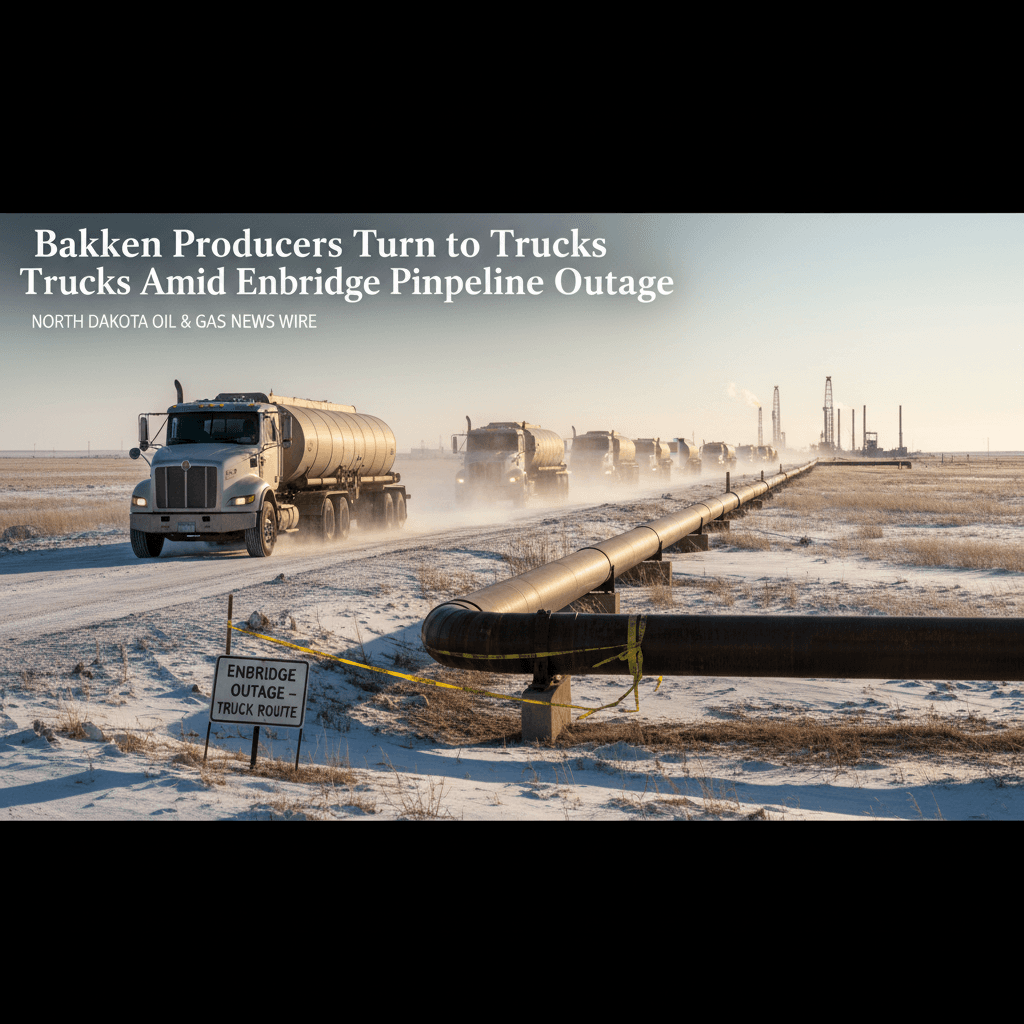
North Dakota oil producers are moving crude by truck as a prolonged outage of Enbridge Inc.'s pipeline in the state continues, according to a Seeking Alpha report. The disruption is forcing operators to seek alternative transportation to avoid shutting in production. "Some producers and marketers are trucking out production to delivery points," the report stated. This shift to trucking represents a significant logistical and economic change for Bakken operators, who typically rely on pipelines for cost-effective transport. The increased reliance on trucking comes with higher costs and logistical challenges compared to pipeline shipments. For Bakken operators and royalty owners, these added expenses can compress margins and complicate daily operations. The ongoing outage highlights the critical nature of pipeline infrastructure for the Williston Basin's oil economy. Pipeline capacity is essential for maintaining steady, economical crude transportation from the wellhead to market. While the specific cause and expected duration of the Enbridge...

🔆Midday Wire·Nov 21
Pipeline & Infrastructure

Enbridge Pipeline Outage Forces Bakken Producers to Truck Crude

North Dakota oil producers are turning to trucks to move crude to market as a continued outage on a key Enbridge pipeline system restricts flows, according to a Bloomberg report cited by Seeking Alpha. The disruption is forcing operators to find alternative transport methods to avoid shutting in production. The shift to trucking represents a significant operational and economic challenge for Bakken producers. Pipeline transport is typically the most cost-effective and efficient method for moving large volumes of crude from the wellhead to refineries and hubs. Relying on trucks increases transportation costs per barrel and introduces logistical complexities. For operators in the Bakken formation, North Dakota's primary oil-producing region, prolonged pipeline constraints can directly impact cash flow and drilling plans. While trucking provides a necessary outlet to keep wells online, sustained use at scale can erode profit margins, especially if the outage continues indefinitely. The specific Enbridge pipeline involved and...

🌅Afternoon Wire·Nov 20