WTI Crude--
Brent Crude--
Natural Gas--
ND Rig Count--
WTI Crude--
Brent Crude--
Natural Gas--
ND Rig Count--
The Morning Take - Energy Market Briefing
Global Markets

Energy Market Briefing

Bakken Wire Staff·☀️Morning Wire·
Listen
0:00 / 4:08

Daily Energy Market Briefing
Date: Wednesday, November 18, 2026


1. Headlines

Oil prices are mixed this morning, with WTI crude down 0.44% at $84.28 and Brent crude essentially flat at $90.38. The Bakken differential stands at $-3.42 vs. WTI. Natural gas is up $0.04 to $3.25. The primary focus across energy markets remains the ongoing disruption on Enbridge’s 475,000 bpd North Dakota Pipeline (NDPL) system, which multiple market sources report has been shut in since November 14 due to organic chloride contamination detected in Bakken crude at the Clearbrook, Minnesota hub. Enbridge has not confirmed a full shutdown, stating only that routine quality testing is causing delays and that it is working to restore normal operations.

Create a free account to continue reading

Sign up for free to get full access to Bakken Wire's daily energy market analysis, audio briefings, and more.

Create Free Account

Already have an account? Sign in

Share this article

Related Articles

Global Markets

Global Events Create Uncertain Backdrop for Bakken Crude

Global energy developments are creating a complex price and market environment for Bakken shale operators as 2026 draws to a close. A series of reports from Tuesday highlight factors that could influence crude oil volatility and export logistics. Ukrainian drone strikes targeted two oil refineries deep inside Russia, according to a report from Rigzone. Such attacks on refining capacity can tighten global fuel supplies, potentially supporting crack spreads and providing indirect support to crude prices. For Bakken producers, this geopolitical tension adds another layer of uncertainty to an already fragile global supply chain. On the domestic front, the U.S. Energy Information Administration forecasts that American crude oil production will average 13.99 million barrels per day in the fourth quarter of 2026, Rigzone reported. This high-level national figure suggests a stable output plateau. For the Bakken formation, a key contributor to this national total, it underscores the ongoing challenge of maintaining...

☀️Morning Wire·Nov 18
Global Markets

Ukrainian Drone Strikes on Russian Refineries Reported; Bakken Watches

According to Rigzone, Ukraine reported drone strikes Tuesday against two oil refineries deep inside Russia. The available summary did not provide further details on the locations, impact or follow-on market effects. For Bakken operators, royalty owners and North Dakota producers, the significance lies less in the direct effect on any single refinery than in what such attacks signal for global oil markets. The Bakken is an export-oriented crude production basin, and its producers are exposed to international supply disruptions, refining capacity constraints and shipping risk. When attacks target refining infrastructure in a major oil-producing country, markets often reassess the balance between crude supply, refinery throughput and product availability. That can affect the way traders price crude, especially light sweet barrels like Bakken crude that compete in global markets. If refineries in Europe or Asia lose capacity, crude may need to move differently, potentially widening or narrowing the discount between Bakken...

🌅Afternoon Wire·Nov 17
EIA Forecasts 13.99MM Bpd U.S. Crude Output in Q4 - Bakken Wire
Global Markets

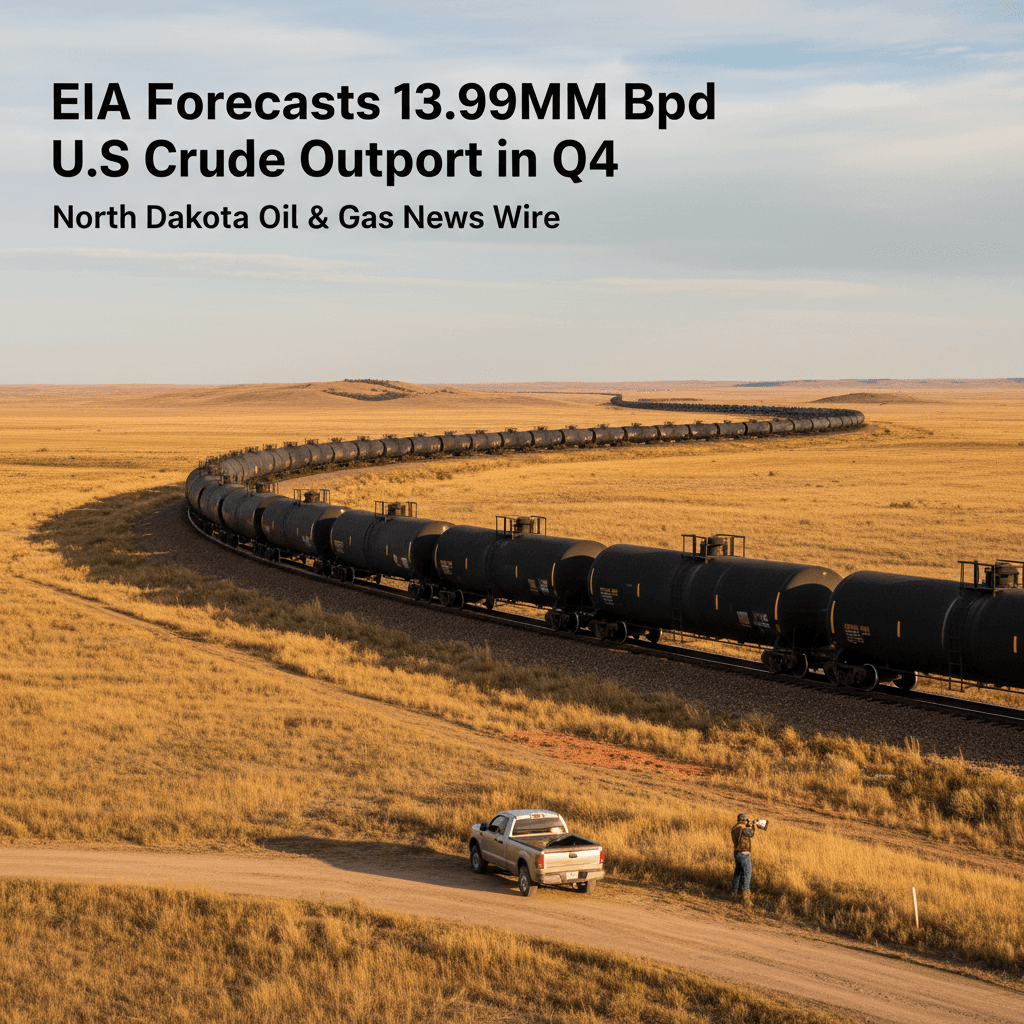
EIA Forecasts 13.99MM Bpd U.S. Crude Output in Q4

U.S. crude oil production is expected to average 13.99 million barrels per day in the fourth quarter of 2026, according to the U.S. Energy Information Administration, as reported by Rigzone. The forecast provides a national supply benchmark that will influence global crude balances, benchmark pricing and the competitive environment for barrels from the Bakken and wider Williston Basin. The EIA figure is a national average, so its effect on individual basins will depend on regional differentials, pipeline access and export economics. For North Dakota producers, a high U.S. output level can affect wellhead realizations in two ways. It may add to global supply pressure if exports and refinery demand do not keep pace, while also reinforcing the importance of takeaway capacity, crude quality and logistics flexibility. Bakken operators that can move barrels efficiently to refineries or export terminals may be better positioned when national volumes remain elevated. The production outlook...

🔆Midday Wire·Nov 17