WTI Crude--
Brent Crude--
Natural Gas--
ND Rig Count--
WTI Crude--
Brent Crude--
Natural Gas--
ND Rig Count--
North Dakota Commits $500M to WBI Energy's Bakken East Gas Pipeline - Bakken Wire
Pipeline & Infrastructure

North Dakota Commits $500M to WBI Energy's Bakken East Gas Pipeline

The state Industrial Commission's financial backstop aims to move 1 Bcf/d from the oil field eastward by 2030.

Bakken Wire Staff·☀️Morning Wire·

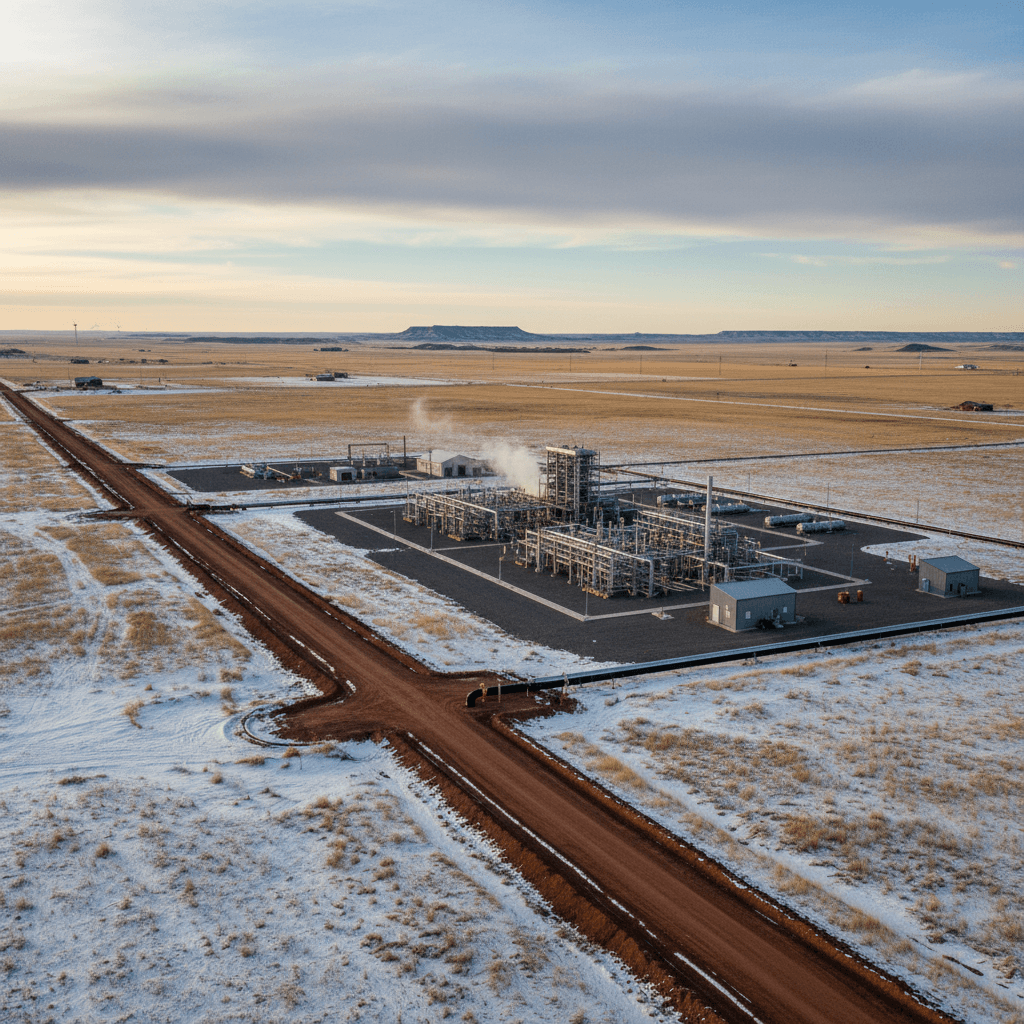
The North Dakota Industrial Commission has formally committed up to $500 million in state financing to backstop a major new natural gas pipeline from the Bakken, according to a report from the North Dakota Monitor. The commission's unanimous vote on Tuesday, April 28, 2026, finalizes an agreement with WBI Energy for its planned Bakken East pipeline project.

The pipeline is designed to move 1 billion cubic feet of natural gas per day from McKenzie County in the heart of the Bakken oil field to central and eastern North Dakota. WBI Energy, a subsidiary of MDU Resources, expects to bring the pipeline into service by the end of 2030.

Governor Kelly Armstrong, who chairs the three-member Industrial Commission, said the project aligns with legislative goals. “The goal of the Legislature was both financial incentive and promotional incentive. I think both of those things are occurring,” Armstrong said, according to the North Dakota Monitor. “This is going to be great in the short term, and it’s going to be great for the long term for North Dakota.”

The commitment fulfills a 2025 legislative authorization of up to $500 million for a pipeline to connect western North Dakota's oil fields to the eastern part of the state. The Industrial Commission selected WBI Energy’s two-phase project for the financial backstop last summer over a competing applicant.

The state's financing is structured as a purchase of a portion of the pipeline’s transport capacity. Justin Kringstad, executive director of the North Dakota Pipeline Authority, stated that after a recent review of negotiated agreements with potential shippers and customers, the need for state support remained. “Those details were revealed, and the need remained for that $50 million per year from the state side to continue advancing this forward,” Kringstad said.

The vote comes as North Dakota marks the 75th anniversary of the modern oil discovery that launched its energy industry, according to a separate news summary. Crews first struck oil near Tioga on April 4, 1951.

For Bakken operators, the pipeline project represents a critical long-term solution for natural gas takeaway capacity. Moving 1 Bcf/d eastward could help reduce flaring in the oil field and provide a new market for gas currently constrained by pipeline limits. The state's financial guarantee de-risks the project, ensuring its advancement to support both current and future production.

Source

North Dakota Monitor (Source 1), AOL News (Source 3)
pipelinenatural gasinfrastructurewbi energymdu resourcesnorth dakota industrial commissionfinancingbakken

Share this article

Related Articles

Pipeline & Infrastructure

Canada Moves to Fast-Track Oil Pipeline for Asian Markets

Canadian Prime Minister Mark Carney is invoking new powers to fast-track regulatory approval for a major new oil pipeline, according to a report from Rigzone. The move aims to expand Canada's access to Asian crude markets. While the specific pipeline project was not named in the report, the push for increased export capacity from Canada represents a significant shift in North American energy infrastructure policy. For Bakken operators, the development carries both competitive and logistical considerations. Increased pipeline capacity from Western Canada could influence crude pricing benchmarks across the continent, including the Bakken's own local price at Clearbrook, Minnesota. Greater volumes of Canadian crude reaching global markets can affect the supply-demand balance for similar light sweet crudes produced in the Williston Basin. Historically, pipeline constraints have limited Canadian crude to primarily U.S. Midwest markets, keeping a lid on prices. A new high-capacity outlet to Asia could alter that dynamic, potentially...

☀️Morning Wire·Oct 4
Canadian Prime Minister Fast-Tracks New Oil Pipeline for Asian Markets - Bakken Wire
Pipeline & Infrastructure

Canadian Prime Minister Fast-Tracks New Oil Pipeline for Asian Markets

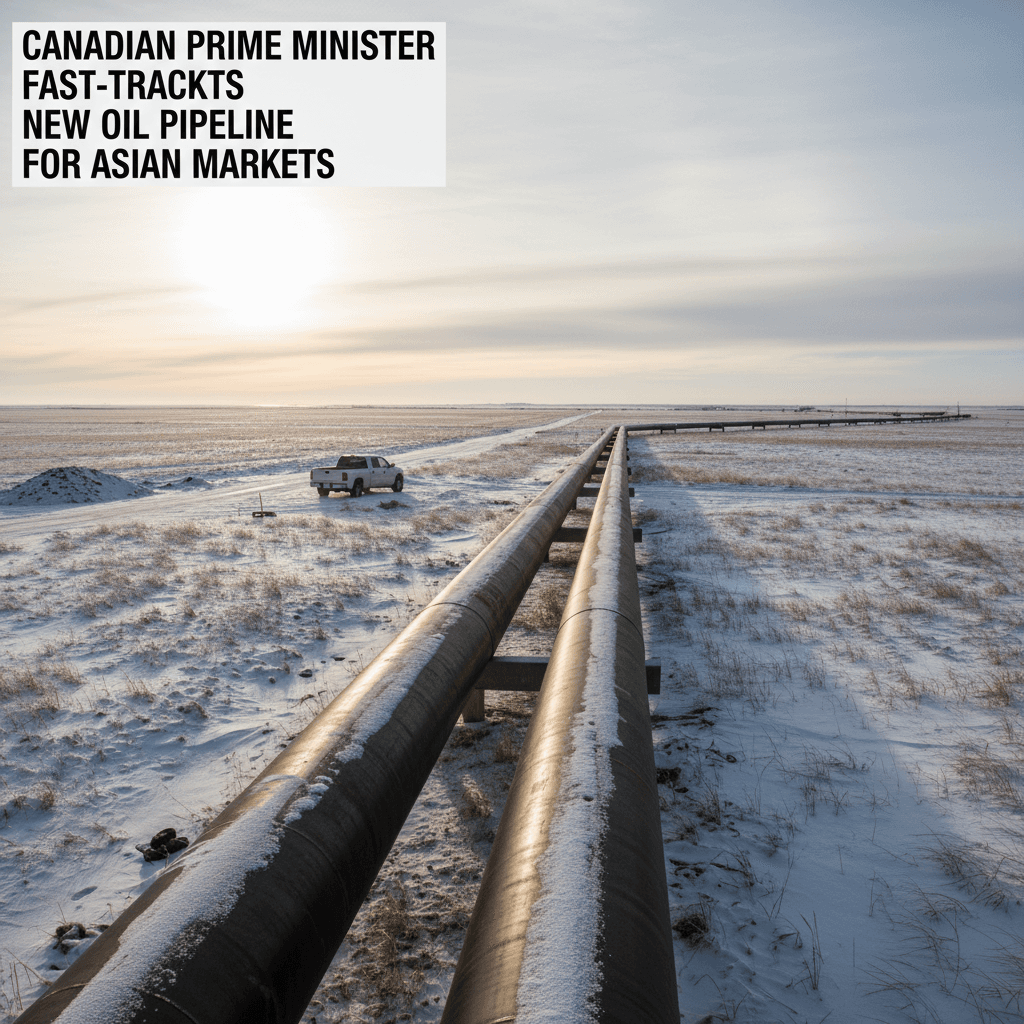
Prime Minister Mark Carney has invoked new powers to expedite regulatory approval for a new, high-capacity oil pipeline, according to a report from Rigzone. The move aims to expand Canada's access to Asian markets. The development, reported on October 2, signals a renewed push by Canada to move its crude oil to West Coast export terminals. For Bakken operators in North Dakota, new Canadian pipeline capacity can influence regional market dynamics. Increased pipeline takeaway capacity from Western Canada can affect the flow of competing crudes, including Bakken barrels, through existing midcontinent pipeline systems. Changes in these flows can impact local basis differentials—the difference between the price of Bakken crude at the wellhead and the U.S. benchmark price. While the Rigzone report did not specify a pipeline route or capacity, any major new Canadian export conduit could alter crude oil logistics in North America. Bakken crude often moves to market via...

🔆Midday Wire·Oct 3
Pipeline & Infrastructure

Canada Moves to Fast-Track Oil Pipeline for Asian Market Access

Canadian Prime Minister Mark Carney is expediting regulatory approval for a new, high-capacity oil pipeline intended to expand Canada's access to Asian markets, according to a report from Rigzone. The report, published October 2, stated Carney has invoked new powers to fast-track the project. The development highlights ongoing efforts by North American producers to reach lucrative overseas markets beyond domestic and traditional refining hubs. Increased Canadian export capacity to Asia could influence global crude pricing benchmarks and shipping routes. For operators in North Dakota's Bakken formation, new Canadian pipeline capacity represents a shifting competitive landscape. Bakken crude, which primarily moves to market via pipelines, rail, and truck, often competes with Canadian heavy and light crude grades in the U.S. Midwest and Gulf Coast refining markets. Enhanced Canadian access to Asian buyers could, over time, alter flow patterns and competition for pipeline space within the continent. However, the specific impact on...

🌅Afternoon Wire·Oct 2