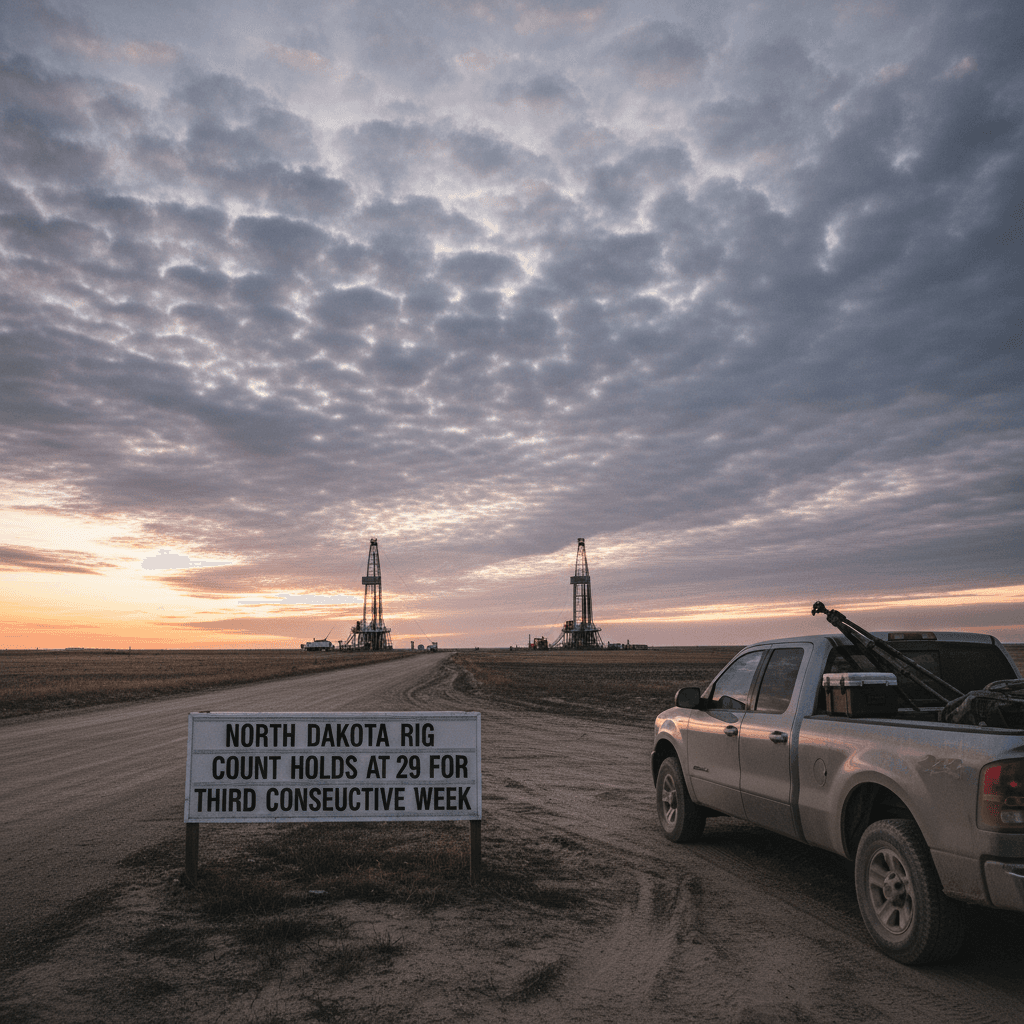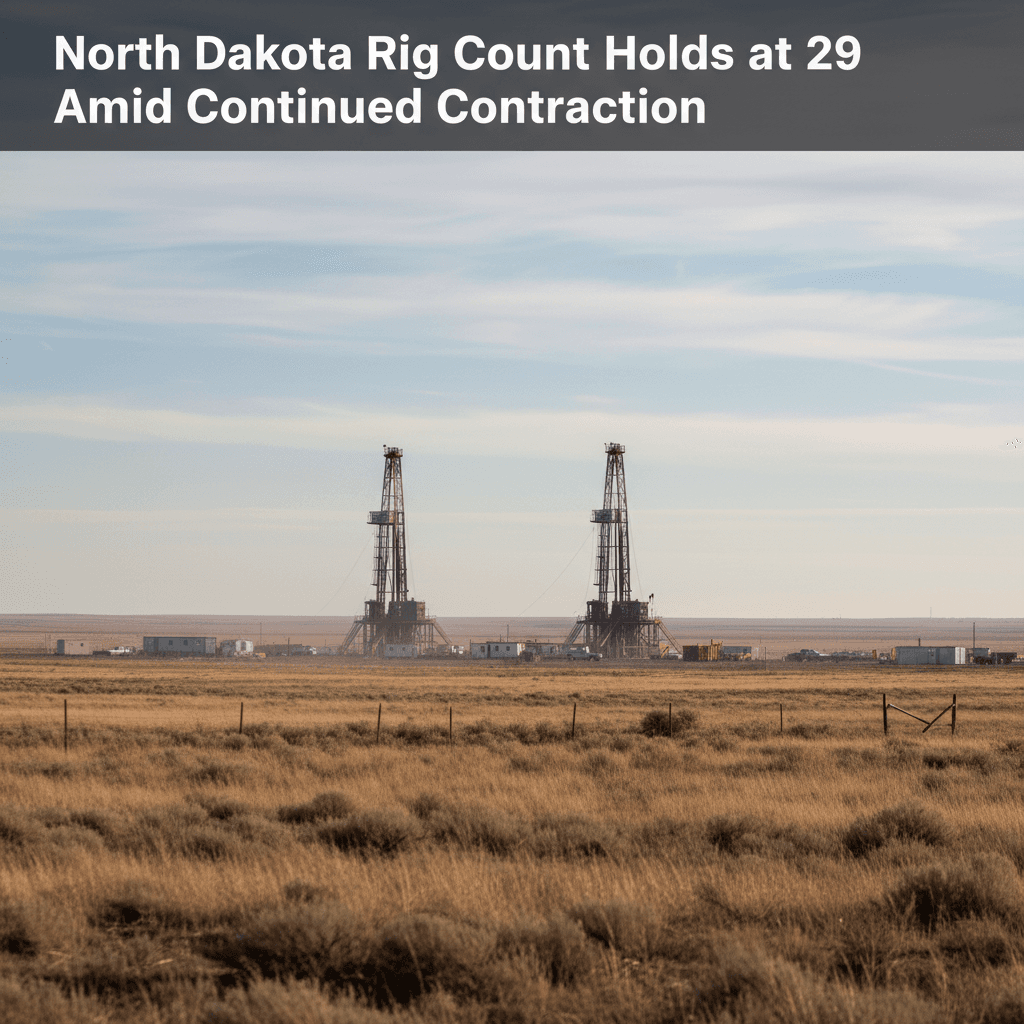
North Dakota Rig Count Holds at 29 Amid Continued Contraction
The state's active drilling fleet remains unchanged from Saturday but is down 3 rigs over the past week and 7 from late August, signaling a sustained pullback in activity.
The number of active drilling rigs in North Dakota held steady at 29 on Sunday, September 27, with no rigs added, removed, or relocated over the previous 24 hours, according to live rig data.
While activity was flat day-over-day, the current count reflects a continued decline in the state's drilling footprint. The rig count is down by three units compared to one week ago, when 32 rigs were active on September 20.
The broader trend shows a more significant contraction over the past month. Compared to the 36 rigs working on August 28, North Dakota's active fleet has fallen by seven rigs, a reduction of nearly 20%.
The Bakken formation is North Dakota's primary oil-producing region, and the rig count is a closely watched leading indicator of future production and operator investment. The current level of 29 rigs represents a relatively low level of drilling activity for the play, which has historically supported over 50 active rigs during periods of strong commodity prices and operator confidence.
The sustained multi-week decline suggests operators in the Williston Basin are exercising capital discipline or responding to softer oil price environments, though specific company plans are not detailed in the data. A lower rig count typically precedes a plateau or decline in crude oil production several months later, as new well completions fail to offset natural declines from existing wells.
The stability in the count on Sunday indicates no immediate new adjustments, but the overarching downward trend from the past month points to a cautious operational stance among Bakken producers. This pullback aligns with industry patterns where companies often recalibrate drilling programs heading into the final quarter of the year.
For royalty owners and service companies in the region, a shrinking active rig fleet can translate to reduced near-term drilling royalty income and lower demand for pressure pumping, trucking, and other well completion services. The state's oil production, which had shown resilience through much of the year, may face downward pressure if the rig count remains at or below current levels.
Market observers will monitor whether the count stabilizes near 30 rigs or if the recent downward trajectory continues in the weeks ahead, particularly as operators finalize 2027 capital budgets.
Source
Bakken Wire Live Rig Data, historical context data